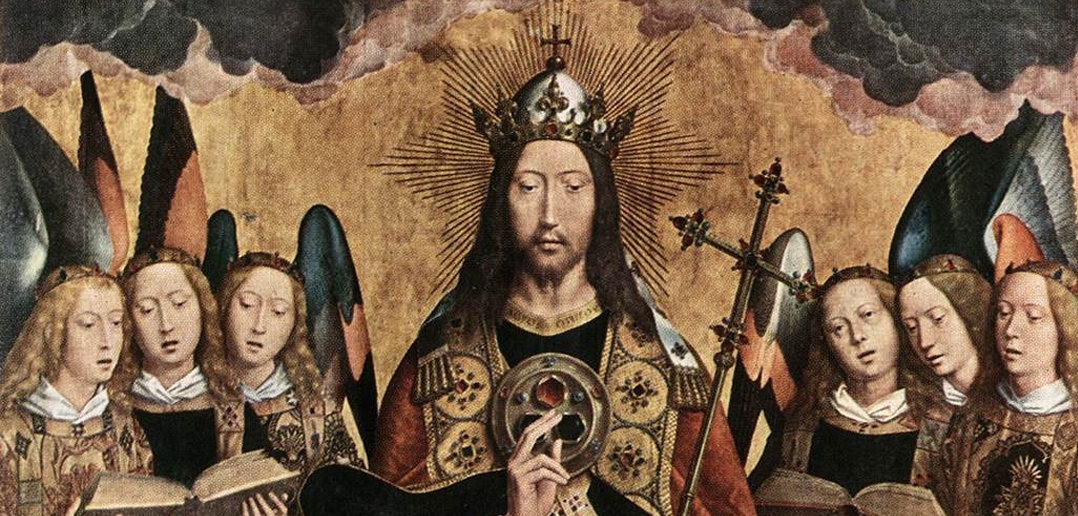

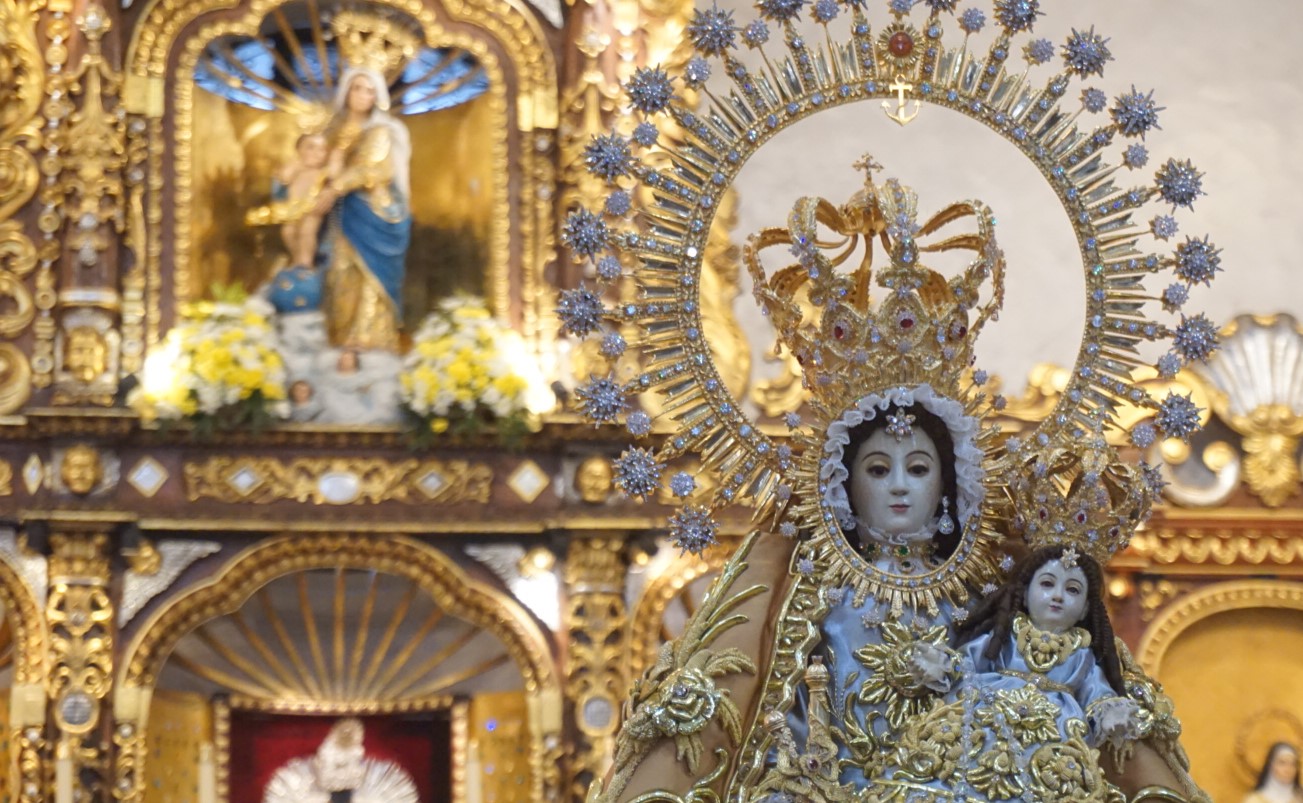
Photo credit: Our Lady of Victories Church, Manila.
Vincent of Lérins, Newman, and True Development
John Henry Newman embraced the Vincentian Canon as a clear standard against doctrinal innovations. He saw doctrinal truths as unfolding organically over time. Like the author of the canon (Vincent of Lerins), who utilized natural analogies (such as seed plant and growth), Newman used seeds, plants, and biological imagery to emphasize that doctrine grows through expansion, clarification, and application—yet remain fundamentally the same in its core, preserving its ‘type.’ It must not morph into something essentially different. In Commonitorium, Vincent writes:
So that it may be consolidated with years, developed with time, exalted with age; but yet remain in its own kind, in its own species, in its own order, and in its own nature. That it lose nothing proper to itself, change nothing, add nothing foreign, but that all its parts may be completed and perfected in the same kind and the same species.
In An Essay on the Development of Christian Doctrine, John Henry Newman writes:
The adult animal has the same make as it had in its birth; young birds do not grow into fishes.
St. Vincent wrote in the context of early Church controversies, particularly the fight against heresies like Pelagianism and Nestorianism, and aimed to give ordinary Christians a clear, objective test for what constitutes true Catholic doctrine. Commonitorium was written shortly after the Council of Ephesus (431 AD), when debates about the nature of Christ and grace were intense. New teachings, often framed as “developments,” were emerging rapidly, and St. Vincent wanted a simple standard to distinguish legitimate growth from heretical novelty. His goal was to guard the faithful from being misled by theological innovations that contradicted the deposit of faith. Hence, according to the canon, for a doctrine to be truly Catholic, it must have:
- Universality (ubique) – accepted throughout the whole Church, not just in a local region or group;
- Antiquity (semper) – held from the earliest times, going back to the Apostles; and
- Consensus (ab omnibus) – affirmed by the consensus of bishops and faithful, not merely a few influential teachers.
As Newman reaffirmed, “… in the dictum of Vincent of Lerins, that revealed and Apostolic doctrine is quod semper, quod ubique, quod ab omnibus, a principle infallibly separating, on the whole field of history, authoritative doctrine from opinion, rejecting what is faulty, and combining and forming a theology.” That “Christianity is what has been held always, everywhere, and by all.” As this article declares, both Vincent and Newman:
…understand ‘doctrinal development’ as the homogeneous, organic growth of the teachings of the Church. Such teachings can develop but development can never mean ‘reversal’. On the contrary, development means growth according to the same meaning and the same judgment (in eodem sensu). As Vincent says, and Newman repeats, true growth is a profectus non permutatio fidei, that is, an advance not a corruption of the faith.
Both insist on profectus, non permutatio: advance, not alteration. This distinction—growth versus mutation—frames the question this article addresses: how did the Church historically balance purity of worship with pastoral adaptations, especially in lands shaped by Spanish Catholic culture such as the Philippines?
The Cecilian Movement in Context
In the mid-19th to early-20th centuries, the Cecilian Movement sought to restore the sacred character of liturgical music, emphasizing Gregorian chant and dignified polyphony. Although it reacted against real abuses—especially operatic styles that overshadowed the prayer of the Mass—its most zealous applications sometimes alienated communities steeped in older baroque and folk-inflected traditions. Regensburg-based editors produced chant books “regularized” to 19th-century aesthetics. By 1904, however, Rome re-centered practice on the Editio Vaticana, informed by the Solesmes restorations, effectively ending the Regensburg project. The principle was sound—restore authenticity and reverence—but Rome rejected any execution that distorted chant’s living tradition.
While Pius X’s motu proprio Tra le Sollecitudini (1903) echoed Cecilian ideals it did not impose a universal ban on orchestral Masses, nor did it claim universal jurisdiction at promulgation. Pius X explicitly limited the document’s legal scope, even as its doctrinal principles soon influenced the wider Church. The practical result: bishops continued to judge local situations prudently, applying the ideals without erasing legitimate customs overnight.
In Spain, cathedral chapels (capillas de música) maintained robust traditions of polychoral and orchestral music for major feasts—Christmas, Easter, Corpus Christi, and Marian solemnities—often with trumpets, timpani, and characteristic Spanish fanfares (see here, here, here, here, here, and here). These practices did not spring from theatrical caprice; they were embedded in a centuries-old Catholic culture where art, ceremony, and devotion were interwoven.
As a Territorio Español de Ultramar (Spanish Overseas Territory) until 1898, the Philippines naturally reflected this model (see here, here, and here). Solemn feasts commonly featured polychoral and orchestral forces; local ensembles blended European forms with indigenous performance resources. Over time, a devotional ecosystem formed around the liturgy: confraternities, processions, and paraliturgical gatherings fostered vernacular sacred song alongside the Latin texts of the Mass.
Manila: A Baroque Catholic City
In his article, New Perspectives on the Performing Arts in Historic Manila: Baroque Music in Rite, Ritual and Spectacle from the volume Latin Humanism in the Asian-Pacific Area, William Summers portrays a city where music served as public theology and Catholic identity. Manila—university town, port of the galleon trade, and seat of major religious orders—mounted grand civic-religious rites using architecture, visual art, drama, and music as catechesis in action. Events like indulgence ceremonies, church dedications, royal festivities, and confraternity observances deployed multiple choirs, orchestras, and newly composed works, often under episcopal sponsorship.
While modern writers sometimes label these events “spectacle,” the better theological reading is pastoral intentionality: the hierarchy aimed to elevate, instruct, and bind a diverse populace to the mysteries of the faith. Crucially, much of the exuberance occurred around the core liturgy—processions, devotions, and sacred dramas—while the Mass itself remained anchored in Latin chant or dignified polyphony. Music played an integral role in confraternities and devotions. For instance, the Hermandad de los Esclavos del Santo Cristo funded Friday Masses and elaborate services. The music and poetry reflected local spirituality and international Catholic aesthetics. These events were so huge that wealthy patrons, governors, confraternities, and even archbishops funded liturgical music, processions, and building campaigns. Major religious orders (Jesuits, Dominicans, Franciscans, Augustinians) not only approved these performances but competed in hosting feasts, colloquies, and pageants involving music and drama. The Catholic Church hierarchy in Manila during the 17th–18th centuries did not just permit this ‘spectacle’ and ‘theater’ — they institutionalized, funded, and celebrated it as part of Manila’s baroque Catholic identity.
Church Approval in Context
In Mediator Dei (1947) Pope Pius XII, a staunch defender of tradition, taught that the Church’s worship can “grow, mature, and adapt to temporal needs…provided the integrity of doctrine is safeguarded.” He warned against two extremes—reckless innovation and rigid antiquarianism, a term which Archbishop Lefebvre echoes, as “narrowness of mind, an outdated and fossilized traditionalism,” which we cited in our first article here. This balance illuminates the Spanish-Philippine experience: bishops tolerated or even encouraged culturally resonant expressions in the right place, while protecting the integrity of the Mass itself. As Summers shows, accounts from the Spanish era describe packed churches where locals delighted in festive polyphonic music at Mass, or in musical dramas and processions around the liturgy. Far from condemning these practices outright, Church authorities of the time often praised their evangelizing effect. Colonial-era bishops frequently encouraged composers to write vernacular devotional songs and villancicos for Christmas, Corpus Christi, and saints’ feasts. These songs were imbued with local musical flavor – even a touch of the theatrical – yet directed to pious themes. It is important to note that much of this “theatrical” music, while part of Catholic culture, was technically outside the core liturgy. The Mass itself remained in Latin with Gregorian chant or polyphony, but around it grew a vibrant tradition of vernacular religious songs.
Drawing Pastoral Lines
The Church has always walked a delicate line between preserving the purity of worship and adapting to the culture of the people. The key is understanding where and how these “theatrical” elements were allowed.
Within the Mass itself, the Church was cautious. The Ordinary and Propers (e.g. Kyrie, Gloria, Antiphons) were ideally sung in authentic sacred styles. A beautiful but overly operatic Mass setting might be tolerated by a local choirmaster, but it was not the official ideal. In fact, by Pius X’s time such florid “opera Masses” (with long solo arias) were explicitly discouraged as incongruent with the solemnity of Mass. In para-liturgical contexts (around the Mass) or popular devotions, more freedom was given. Christmas carols, Passion plays, religious dramas, and vernacular hymns flourished with Church encouragement. These had teaching and evangelizing value. For example, the colorful moro-moro folk dramas in the Philippines – though essentially plays with costumes and dances – were created by Spanish friars in 1637 to instill Catholic faith. They surrounded liturgical life and kept the people engaged. The hierarchy often made prudent distinctions. A 17th-century Pope might shut down public secular theaters in Rome for moral reasons, yet allow sacred oratorios (essentially concerts on biblical themes) as an edifying alternative. Likewise, a bishop in Baroque Mexico or Manila would ban undignified music from the Canon of the Mass, but happily sponsor grand polyphonic concerts for a cathedral dedication and commission work for major feast—while curbing what undermined sacred focus. In sum, Catholic Church tradition never truly endorsed irreverence; she did, however, tolerate a measure of cultural richness and emotional expression when it served devotion and did not subvert the liturgy. This is precisely the sort of practical wisdom envisioned by Tra le Sollecitudini and clarified by Mediator Dei.
Newman and Vincent Revisited: a Test for Music
Returning to Vincent and Newman, the pastoral tradition seen in Spain and the Philippines qualifies as development, not alteration. The “type” remains: the Roman Mass in Latin with chant and sacred polyphony at its heart. What grows organically are the circumambient forms of devotion—hymns, processions, dramatized catechesis—subordinated to the liturgy. Where music at Mass itself aims at theatrical effect or prioritizes emotional display over prayer, it slips from profectus into permutatio. Where devotional music outside the liturgy elevates minds to God, teaches the faith, and fortifies Catholic identity—under episcopal guidance—it exemplifies the truly Catholic pastoral.
Conclusion and Next Step
Spain and the Philippines demonstrate how a baroque sacred culture, when rightly governed, can support the liturgy without swallowing it. Mediator Dei articulates the principle; Tra le Sollecitudini gives practical criteria; and the lived experience of Manila shows prudent application.
In our final installment, we will return to the Fiesta Mass at the SSPX Priory in Manila and highlight overlooked gems in Philippine sacred music that model this balance—organic development faithful to the Vincentian Canon and to Newman’s insight that true growth never changes the “species” of the faith.
Source not linked
Summers, William John. 1999. “New Perspectives on the Performing Arts in Historic Manila: Baroque Music in Rite, Ritual and Spectacle” in L’umanesimo Latino nell’area Asiatico-Pacifica Prospettive: Atti del Congresso.