This text is taken from The Liturgical Year, authored by Dom Prosper Gueranger (1841-1875). There is no Patristic sermon appointed today in Matins. Rather, Jeremiah 11 and 12 are read.
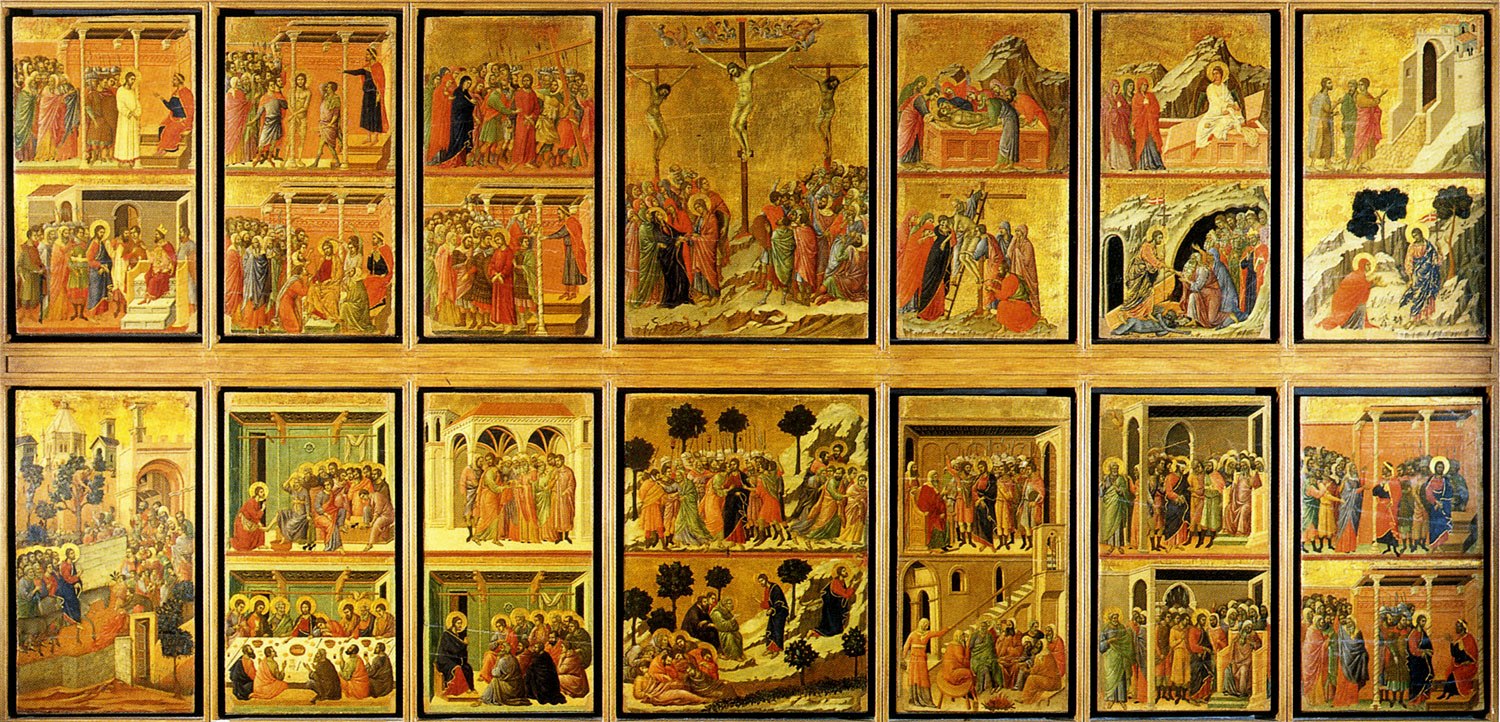
Today, again, our Savior sets out in the morning for Jerusalem. His intention is to repair to the temple, and continue his yesterday’s teachings. It is evident that his mission on earth is fast drawing to its close. He says to his Disciples: You know that after two days shall be the Pasch, and the Son of Man shall be delivered up to be crucified.
On the road from Bethania to Jerusalem, the Disciples are surprised at seeing the fig-tree, which their Divine Master had yesterday cursed, now dead. Addressing himself to Jesus, Peter says: Rabbi, behold, the fig-tree, which thou didst curse, is withered away. In order to teach us that the whole of material nature is subservient to the spiritual element, when this last is united to God by faith—Jesus replies: Have the faith of God. Amen I say to you, that whosoever shall say to this mountain: Be thou removed and cast into the sea! and shall not stagger in his heart, but believe, that whatsoever he saith shall be done, it shall be done unto him.
Having entered the City, Jesus directs his steps towards the Temple. No sooner has he entered, than the Chief Priests, the Scribes, and the Ancients of the people accost him with these words: By what authority dost thou these things? and who has given thee this authority, that thou shouldst do these things? We shall find our Lord’s answer given in the Gospel. Our object is to mention the leading events of the last days of our Redeemer on earth; the holy Volume will supply the details.
As on the two preceding days, Jesus leaves the City towards evening: he passes over Mount Olivet, and returns to Bethania, where he finds his Blessed Mother and his devoted friends.
In today’s Mass, the Church reads the history of the Passion according to St.Mark, who wrote his Gospel the next after St. Matthew: hence it is that the second place is assigned to him. His account of the Passion is shorter than St. Matthew’s, of which it would often seem to be a summary; and yet certain details are peculiar to this Evangelist, and prove him to have been an eyewitness. Our readers are aware that St. Mark was the disciple of St. Peter, and that his Gospel was written under the very eye of the Prince of the Apostles.
In Rome, the Station for today is in the Church of St. Prisca, which is said to have been the house of Aquila and his wife Prisca, to whom St. Paul sends his salutations, in his Epistle to the Romans. In the 3rd century, Pope St. Eutychian had translated thither, on account of the sameness of the name, the body of St. Prisca, a Virgin and Martyr of Rome.
MASS
Three days hence, and the Cross will be lifted up on Calvary, bearing upon itself the Author of our Salvation. The Church, in the Introit of today’s Mass, bids us at once pay our homage to this trophy of our victory, and glory in it.
| Introit | |
| Nos autem gloriari oportet in cruce Domini nostri Jesu Christi: in quo est salus, vita, et resurrectio nostra, per quem salvati, et liberati sumus. | We ought to glory in the Cross of our Lord Jesus Christ, in whom is our salvation, life, and resurrection; by whom we have been saved and delivered. |
| Ps. Deus misereatur nostri, et benedicat nobis: illuminet vultum suum super nos, et misereatur nostri. | Ps. May God have mercy on us, and bless us; may his countenance shine upon us, and may he have mercy on us. |
In the Collect, the Church prays that the sacred anniversaries of our Savior’s Passion may be to us a source of pardon; and that they may work in us a full reconciliation with the Divine Justice.
| Collect | |
| Omnipotens sempiterne Deus, da nobis ita Dominicæ Passionis sacramenta peragere, ut indulgentiam percipere mereamur. Per eumdem. | O Almighty and everlasting God, grant that we may so celebrate the mysteries of our Lord’s Passion, as to obtain thy pardon. |
Lectio Jeremiæ Prophetæ
Again, we have the plaintive words of Jeremias: he gives us the very words used by his enemies, when they conspired his death. It is evident, however, that the Prophet is here a figure of one greater than himself. Let us, say these enemies, put wood upon his bread: that is, let us put poisonous wood into what he eats, that so we may cause his death. This is the literal sense of these words, as applied to the Prophet; but how much more truly were they fulfilled in our Redeemer! He tells us that his Divine Flesh is the True Bread that came down from heaven. This Bread, this Body of the Man-God, is bruised, torn, and wounded; the Jews nail it to the Wood; so that it is, in a manner, made one with the Wood, and the Wood is all covered with Jesus’ Blood. This Lamb of God was immolated on the Wood of the Cross: it is by his immolation that we have had given to us a Sacrifice which is worthy of God; and it is by this Sacrifice that we participate in the Bread of Heaven, the Flesh of the Lamb, our true Pasch.
The Gradual, which is taken from the 34th Psalm, shows us the humility and meekness of our Jesus under his sufferings. How they contrast with the haughty pride of his enemies!
After the Gradual, is sung the Passion according to Saint Mark. The same ceremonies are observed as during the Passion, which was read to us on Sunday, excepting only what regarded the Palms.
Passio Domini nostri Jesu Christi secundum Marcum
At that time, The Feast of the Pasch and of Azymes was after two days; and the chief priests and the scribes sought how they might by some wile lay hold on Jesus, and kill him. But they said: Not on the festival day, lest there should be a tumult among the people.
And when Jesus was in Bethania, in the house of Simon the Leper, and was at meat, there came a woman having an alabaster box of ointment of precious spikenard…
At the Offertory, the Messias asks his Eternal Father to defend him from the enemies that are preparing his destruction.
| Offertory | |
| Custodi me, Domine, de manu peccatoris: et ab hominibus iniquis eripe me. | Keep me, O Lord, from the hands of the sinful man; and from unjust men deliver me. |
In the Secret, the Church offers to the Majesty of God the tribute of our fasts, in union with the Holy Host on our Altar, and from which they derive all their merit and efficacy.
| Secret | |
| Sacrificia nos, quæsumus, Domine, propensius ista restaurent: quæ medicinalibus sunt instituta jejuniis. Per Dominum. | May these sacrifices, O Lord, we beseech thee, which are accompanied with healing fasts, mercifully repair us. |
The words of the Psalmist, used by the Church in her Communion-Anthem, show us the blasphemous daring of our Savior’s enemies, as also the dispositions in which this dear Jesus himself was during his sacred Passion.
| Communion | |
| Adversum me exercebantur, qui sedebant in porta: et in me psallebant, qui bibebant vinum: ego vero orationem meam ad te, Domine: tempus beneplaciti Deus, in multitudine misericordiæ tuæ. | The judges in the gate spoke against me, and they that drank wine made songs against me. But I poured forth my prayer to thee, O Lord: it is time, O God, to shew thy good will to me, according to the multitude of thy mercies. |
In the Postcommunion, the Church prays that, by the merits of the Sacrifice she has just offered, we may obtain the perfect cure of our spiritual infirmities; for the Blood of the Lamb takes away the sins of the world.
| Postcommunion | |
| Sanctificationibus tuis, omnipotens Deus, et vitia nostra curentur: et remedia nobis sempiterna proveniant. Per Dominum. | May these thy holy mysteries, O Almighty God, both cure our vices and become an eternal remedy to us. |
| Oremus | Let us pray |
| Humiliate capita vestra Deo. | Bow down your heads to God. |
| Tua nos misericordia, Deus, et ab omni subreptione vetustatis expurget, et capaces sanctæ novitatis efficiat. Per Dominum. | May thy mercy, O God, purify us from the corruption of the old man, and enable us to put on the new. |
We may close this day by saying these few verses, taken from a Hymn of the Greek Church on the Passion of our Lord.
| Hymn (In Parasceve) | |
| Vitale latus tuum, tanquam fons ex Eden scaturiens, Ecclesiam tuam, Christe, tanquam rationalem hortum adaquat: inde tanquam in quædam initia se dividens i quatuor Evangelis: mundum irrigans; creaturam lætificans, gentesque fideliter docens venerari regnum tuum. | The life-giving Wound of thy Side, O Jesus! like the fountain that sprang from Eden, waters the spiritual garden of thy Church. Thence, dividing itself into the four Gospels, as into so many master-streams, it freshens the world, gladdens creation, and teaches all nations to bow down in faith, and venerate thy Kingdom. |
| Crucifixus es propter me; ut velut ex fonte mihi effunderes remissionem. Punctus es in latere, ut mihi vitæ scaturgines aperires; clavis confixus es, ut ego in passionum tuarum profundo altitudinem tuæ potentiæ confessus, clamen ad te, vitæ largitor Christe: Gloria Cruci tuæ, Salvator, ac Passioni tuæ. | Thou wast crucified for me, that thou mightest be to me as a fountain, pouring out forgiveness upon me. Thou wast wounded in thy Side, that thou mightest open to me the sources of life. Thou wast nailed to the Cross, that I, confessing the greatness of thy power in the depth of thy Passion, might sing to thee, O Christ, thou giver of life: Glory be to thy Cross and Passion, O Savior! |
| Chirographum nostrum in cruce dirupisti, Christe: et inter mortuos reputatus, tyrannum illic ligasti, liberatis omnibus ex vinculis mortis resurrectione tua. Per qua illuminati sumus, o amans hominum Domine! tibique clamamus: Memento et nostri Salvator in Regno tuo. | Thou, O Christ, didst, on thy Cross, tear the hand-writing that was against us. Thou wast numbered among the dead, and there didst bind down the tyrant, and, by thy Resurrection, didst set us all free from the chains of death. It is thy Resurrection that has given us light, O God, thou lover of mankind! To thee do we sing: Remember us, also, O Savior, in thy Kingdom! |
| Tuam, Christe, Matrem, quæ te in carne sine virili semine peperit, et vere virgo etiam post partum incorrupta permansit; hanc tibi adducimus ad intercessionem, Domine multum misericors: ut offensarum condonationem jugiter largiaris iis qui clamant: Memento et nostri Domine in Regno tuo. | To thee, most merciful Lord, we bring thy Mother, that she may intercede for us—she that conceived thee and was a Virgin, she that gave thee birth, and was a spotless Virgin. May her prayers obtain from thee the unceasing pardon of sin to all that cry out to thee: Remember us, also, O Lord, in thy Kingdom! |