
Part I: On the Third Part of the Secret of Fátima: Introduction to Recent Scholarship
Part II: A History of the Third Part of the Secret of Fátima: Composition
Part IV: Did Pope St. John XXIII Disobey Fatima?
Third Part of the Secret of Fatima, Part 5:
the 2000 Publication by the Vatican
After 1967, there was continued talk and discussion about the third part. In May 1981, one person even hijacked an airplane in an effort to force the pope to release the text.[1] Days later, there was the assassination attempt on the life of Pope St. John Paul II on May 13, 1981. During his convalescence, John Paul sent for the text and read it. He met with Sr. Lúcia in May of 1982 in Fátima, and they discussed the third part. Ultimately, they agreed that it should not be released.[2]
In the early 1980s, a French priest named Abbé Georges de Nantes made an effort to gather and synthesize the available documentation on the third part of the Secret. The Abbé de Nantes tasked Frère Michel de la Sainte Trinité to write on the subject. The result was an impressive three-volume opus entitled Toute le vérité sur Fátima that were published between 1983 and 1985. These books came to the attention of the Canadian priest Fr. Nicholas Gruner who had the books translated into English. This translation was published between 1989-1990 as The Whole Truth about Fatima with Fr. Gruner’s organization “The Fatima Center.”
Based not in small part upon the work of Frère Michel, various opinions were formed on the third part of the Secret. For example, it was believed that the text was comprised of twenty to twenty-five lines.[3] This opinion came about because the bishop who succeeded Bishop da Silva in Leiria, João Venâncio, had been tasked with delivering the envelope to the Papal Nuncio (Mons. Fernando Cento) in Lisbon in early 1957. Document in hand, Bishop Venâncio had taken note of various details in 1957 and spoke with Frère Michel in the 1980s.[4]
The Holy See’s decision not to publish the text meant that opinions could form and take root in the minds of many people—even more so after the publication of the works of Frère Michel. This state of affairs remained until the late 1990s when John Paul II decided that it was time to publish the text. The general rationale for this change of mind was that the twentieth century was drawing to a close and the events foretold in the third part were believed to have come to pass.
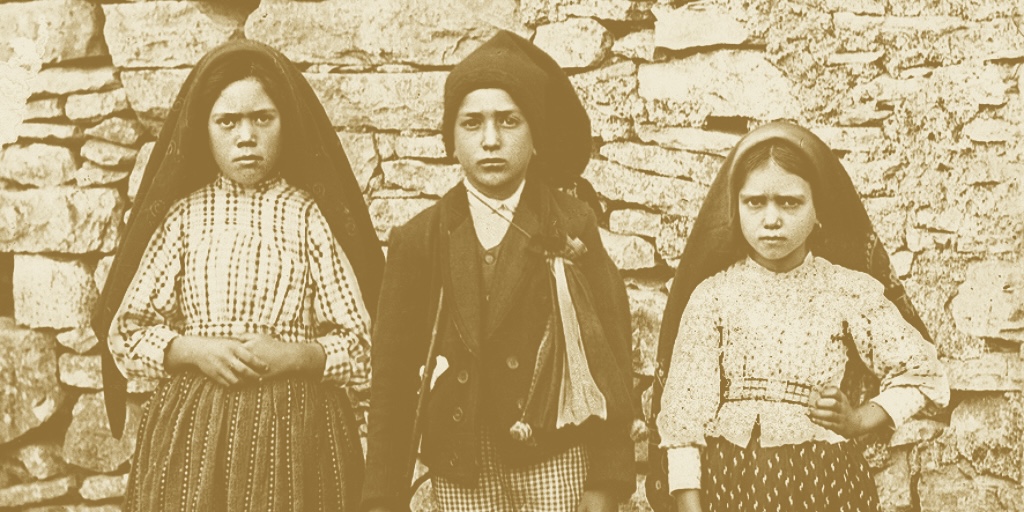
The announcement came on May 13, 2000, during the Beatification of Francisco and Jacinta Marto, that the third part was going to be published. Angelo Cardinal Sodano announced it from the pulpit in Fátima. On June 26, 2000, during a press conference, the text was officially published, along with supporting documents and a theological commentary from Joseph Cardinal Ratzinger in the booklet The Message of Fatima.[5] Presentations were given by Ratzinger and his secretary, Archbishop Tarcisio Bertone, followed by a question-and-answer period. During the Q&A, Ratzinger broadly characterized the third part of the Secret as being a “very profound synthesis of the history of this century.”[6]
There is no need to go into all the ins and outs of the text. It is available online for all to read. For our purposes here, the official publication did not satisfy everyone. Debates and arguments continued, many of which to this very day.[7] For example, the earlier mentioned twenty to twenty-five lines of text interpretation conflicted with the text published by the Vatican as this text had over sixty lines. In 2017, this matter was resolved when it was discovered that Frère Michel was misunderstood. He did not claim that Bishop Venâncio had given him the number of twenty to twenty-five lines.[8]
Now that over twenty-five years have passed since the publication of the text and the Holy See’s interpretation, there is a lot of water under that bridge. New evidence has come to light via various publications, such as the publication of the Carmelites’ 2013 biography mentioned earlier. This information has brought some new perspectives on old debates. Some matters have been laid to rest, while new ones have developed. In all, the Vatican’s interpretation can be respectfully scrutinized in some aspects, but the theological principles it espoused remain sound.
In the end, by all the available evidence that we possess today in the public forum, the year 1960 remains a poignant year for Fátima studies. The decision not to publish the text was made by the Holy Father and this decision’s relationship to the express command of Our Lady in January 1944 admits of some debate. That said, what would have happened if it had been published? What effect would it have had upon people without a proper interpretation? These and other questions can be posed, but one thing is for sure: the Church acted in a maternal manner to protect the message of Our Lady of Fátima.
[1] John Goodbody. “A defrocked monk hijacked an Irish jetliner with 113….” UPI (May 2, 1981).
[2] Cf. Carmelo de Santa Teresa – Coimbra, Um caminho sob o olhar de Maria, 416-417.
[3] Cf. Frère Michel de la Sainte Trinité, The Whole Truth about Fatima, Volume III: The Third Secret (1942-1960), (Buffalo, New York: Immaculate Heart Publications, 1990), 707; Frère Michel de la Sainte Trinité, Le troisième secret de Fatima (Sherbrooke, Quebec: Editions Kolbe, Inc., 1987), 12.
[4] Frère Michel de la Sainte Trinité, The Whole Truth about Fatima, Volume III; see also Aura Miguel, O segredo que conduz o Papa (S. João do Estoril: Principia, 2000), 136.
[5] Congregation for the Doctrine of the Faith, The Message of Fatima (Vatican City: Libreria Editrice Vaticana, 2000).
[6] See Kevin J. Symonds, On the Third Part of the Secret of Fátima, 2nd ed. (St. Louis, Missouri: En Route Books & Media, 2025), 312.
[7] Cf. Fr. Jason Charron. “Fatima Secret: Why the Official Story Doesn’t Fit.” Fr. Jason Charron YouTube Channel (May 5, 2026); Kevin J. Symonds. “Managing or Maternal? Responding to Fr. Jason Charron.” Kevinsymonds.com (April 28, 2026)
[8] Cf. Kevin J. Symonds, On the Third Part of the Secret of Fátima, 1st ed. (St. Louis, Missouri: En Route Books & Media, 2017), 62-68.