“CANON V. If any one saith, that on account of heresy, or irksome cohabitation, or the affected absence of one of the parties, the bond of matrimony may be dissolved; let him be anathema.”
“CANON XII. If any one saith, that matrimonial causes do not belong to ecclesiastical judges; let him be anathema.”
– Council of Trent, session 24 (1543)
“The least inexactitude, the smallest lapse, in the mouth of a Pope is intolerable.”
– Pope Paul VI*
Steve Skojec recently argued that while Cdl. Walter Kasper has leveraged the appearance of papal backing for his own proposals about granting communion to divorced Catholics living as remarried, Pope Francis has yet to drop the proverbial hammer on the misguided German theologian. In a similar vein, as Cdl. Raymond Burke explained on September 30, Pope Francis does not have laryngitis, a sentiment he reinforced on October 14 by saying that a decisive clarification from the Holy Father is “long overdue.” The Tridentine canons noted above suffice to explode two of Kasper’s key claims (i.e. that a failed marriage bespeaks an invalid marriage and that the internal forum is a legitimate recourse for the divorced), but for a fuller treatment of what’s wrong with what I call the “accommodationist” theory of remarriage, see my previous piece here at 1P5.
By all accounts, there is a sizable faction of bishops in the synod backing Kasper and related liberal aims, or perhaps there are simply too few cardinals willing to oppose the liberalizing aims openly. Kasper has been running away with Pope Francis’s implicit endorsement for too long, and the time has come for the Holy Father to rein him in – especially now that it has come to light that Kasper openly lied about things he said in an interview with Edward Pentin. The focus of our prayers for the next few days (and beyond) must be that as the synod draws to a close — and as its impact makes its way through the Church — Pope Francis will be aided by the graces of his office and will ratify a fresh statement of the Church’s teaching which both inspires fidelity among the laity and precludes further insubordination from the likes of Cdl. Kasper. Far from providing an anti-Kasper polemic or a rant about ecclesiastical politics, I offer a call to prayer and hope.
Each pope is unique, of course, and brings his own pastoral and administrative style to the Holy See. In his interview last year with Fr. Antonio Spadaro, published in America, Pope Francis explained his own philosophy of governance, saying that he had learned over time to delegate more than to dictate. He explains that
when I entrust something to someone, I totally trust that person. He or she must make a really big mistake before I rebuke that person. … [As provincial of the Jesuits in Argentina my] authoritarian and quick manner of making decisions led me to have serious problems and to be accused of being ultraconservative … but I have never been a right-winger. It was my authoritarian way of making decisions that created problems.
Earlier in the interview the Holy Father had cited one of role models for pastoral leadership, Pope John XXIII. “According to St. Ignatius,” he explains
great principles must be embodied in the circumstances of place, time and people. In his own way, John XXIII adopted this attitude with regard to the government of the church, when he repeated the motto, ‘See everything; turn a blind eye to much; correct a little.’ John XXIII saw all things, the maximum dimension, but he chose to correct a few, the minimum dimension.
Pope Francis also elaborated on why he is inclined to allow a sense more limited closure in ecclesiastical debates, by citing his Jesuit formation:
When you express too much, you run the risk of being misunderstood. The Society of Jesus can be described only in narrative form. Only in narrative form do you discern, not in a philosophical or theological explanation, which allows you rather to discuss. The style of the Society is not shaped by discussion, but by discernment, which of course presupposes discussion as part of the process. The mystical dimension of discernment never defines its edges and does not complete the thought. The Jesuit must be a person whose thought is incomplete, in the sense of open-ended thinking.
So, despite the cases when he has taken a very hands-on approach to some matters (e.g. summarily canonizing Peter Faber, deposing Bp. Livieres, etc.), Pope Francis prefers a widely distributed model of indirect leadership. This is a commendable display of humility, to be sure, but I think the consensus of the faithful at the present moment is that now is the time for Pope Francis, as the supreme authority in the Church, to dust off his old “authoritarian” ways, and, as the supreme Judge in the Church, to demonstrate exactly who he is to judge. Lest we forget, the words “Roma locuta est” comprise one of the great consolations of being Catholic.
Nor can we assume that Pope Francis is confused about the necessity for “top-down” authority to weigh in. As he told Fr. Spadaro in the same interview:
We should not even think, therefore, that ‘thinking with the church’ means only thinking with the hierarchy of the church. … [W]e must be very careful not to think that this infallibilitas of all the faithful I am talking about in the light of Vatican II is a form of populism. No; it is the experience of ‘holy mother the hierarchical church,’ as St. Ignatius called it, the church as the people of God, pastors and people together. The church is the totality of God’s people.
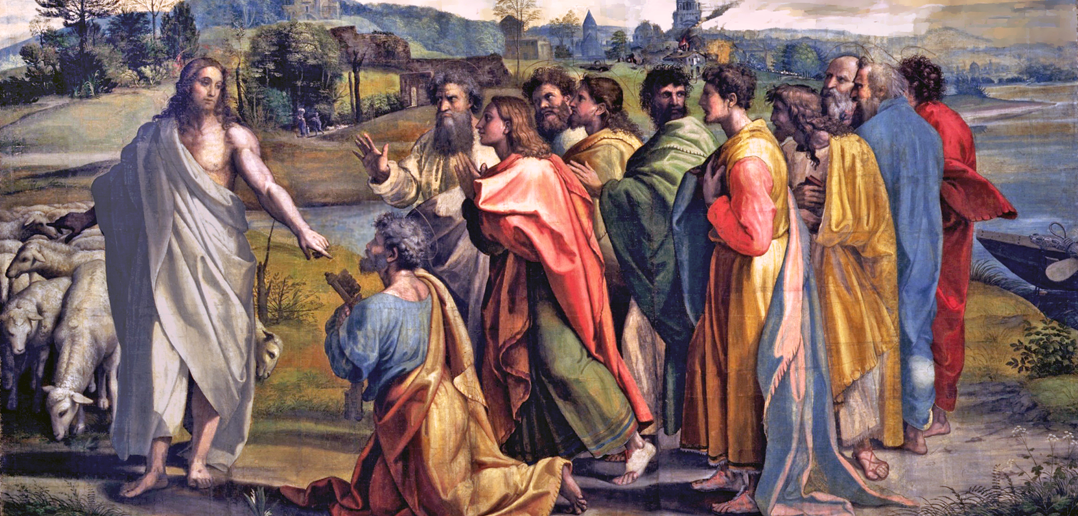
On that note, let us review some instances of how popes in the past have invoked their supreme authority to settle disputes at “crunch time,” so to speak. Hearing how previous popes have spoken when the flock is threatened with error, we can have a reasonable picture of how the current Vicar of Christ will “untie the knots” (one of Francis’s favorite spiritual metaphors) and provide yet another vindication of Christ’s assurance to St. Peter and, by extension, to all valid successors of the Petrine See: “Simon, Simon, behold Satan hath desired to have you, that he may sift you as wheat: But I have prayed for thee, that thy faith fail not: and thou, being once converted, confirm thy brethren” (Luke 22:31-32).
+ + +
Writing in 1910 in Notre Charge Apostolique, Pope Pius X explained his papal duty in this way:
Our Apostolic Mandate requires from Us that We watch over the purity of the Faith and the integrity of Catholic discipline. It requires from Us that We protect the faithful from evil and error; especially so when evil and error are presented in dynamic language which, concealing vague notions and ambiguous expressions with emotional and high-sounding words, is likely to set ablaze the hearts of men in pursuit of ideals which, whilst attractive, are nonetheless nefarious.
As an occupant of the same Chair, Pope Francis is surely aware of his grave duties, so let us pray that much more boldly that, when the providential moment arrives, he will speak in a way that silences the “emotional and high-sounding words” currently filling the synod hall.
In 1930, Pius XI was clearly just as mindful of his supreme authority obliged him to intervene with clarity and firmness to repel errors about matrimony and sexual morality. And so he penned Casti Connubii, his landmark encyclical about marriage, sex, and contraception. It must be kept in mind that Casti connubii was composed shortly after the Anglican Church, at its seventh plenary “Lambeth Conference” in 1930, made an unprecedented move. For the first time in history, a mainstream Christian body had endorsed, even if only very grudgingly and with great nuance, the permissibility of contraception in Christian marriage. According to the official minutes, in Resolution 15, the Anglican Church officially taught:
Where there is clearly felt moral obligation to limit or avoid parenthood, the method must be decided on Christian principles. The primary and obvious method is complete abstinence from intercourse (as far as may be necessary) in a life of discipline and self-control lived in the power of the Holy Spirit. Nevertheless in those cases where there is such a clearly felt moral obligation to limit or avoid parenthood, and where there is a morally sound reason for avoiding complete abstinence, the Conference agrees that other methods may be used, provided that this is done in the light of the same Christian principles. The Conference records its strong condemnation of the use of any methods of conception control from motives of selfishness, luxury, or mere convenience. (Voting: For 193; Against 67.) [my emphasis]
In light of the subtle shift from divine obligation to human accommodation that occurred at the 1930 Lambeth Conference, the recent bruiting about of the moral theory called “gradualism” among the synod fathers should give us pause. Thankfully, Pope John Paul II addressed the perils of a false notion of graduality in his own post-synodal encyclical, Familiaris consortio (1981), pronouncing:
Married people … are called upon to progress unceasingly in their moral life…. They cannot however look on the law as merely an ideal to be achieved in the future: they must consider it as a command of Christ the Lord to overcome difficulties with constancy. “And so what is known as ‘the law of gradualness’ or step-by-step advance cannot be identified with ‘gradualness of the law,’ as if there were different degrees or forms of precept in God’s law for different individuals and situations. In God’s plan, all husbands and wives are called in marriage to holiness, and this lofty vocation is fulfilled to the extent that the human person is able to respond to God’s command with serene confidence in God’s grace and in his or her own will.” On the same lines, … husbands and wives should first of all recognize clearly the teaching of Humanae vitae as indicating the norm for the exercise of their sexuality…. (my emphasis)
But to return to Casti connubii: in response to Anglicanism’s unprecedented defection from unanimous Christian tradition, Pope Pius XI knew that it behooved him, as chief pastor of all Christian souls, to speak promptly, clearly, and definitively in order to repel a similar error from infiltrating the Catholic Church. Pius XI does not impugn the motives of the accommodationist agitators, but he insists on the absolute incompatibility of certain modern accommodations and Christian truth:
Not all the sponsors of these new doctrines are carried to the extremes of unbridled lust; there are those who, striving as it were to ride a middle course, believe nevertheless that something should be conceded in our times as regards certain precepts of the divine and natural law. But these likewise, more or less wittingly, are emissaries of the great enemy who is ever seeking to sow cockle among the wheat. We, therefore, whom the Father has appointed over His field, We who are bound by Our most holy office to take care lest the good seed be choked by the weeds, believe it fitting to apply to Ourselves the most grave words of the Holy Ghost with which the Apostle Paul exhorted his beloved Timothy: “Be thou vigilant . . . Fulfill thy ministry . . . Preach the word, be instant in season, out of season, reprove, entreat, rebuke in all patience and doctrine.” … [E]ven though We prefer not to name these iniquities “as becometh saints,” yet for the welfare of souls We cannot remain altogether silent. (my emphasis)