.jpg)
℣. Grant, Lord, a blessing.
Benediction. May God the Father Omnipotent, be to us merciful and clement.
℟. Amen.
Reading 4
Lucy was a maiden of Syracuse, the daughter of a noble Christian family. Her mother Eutychia, being afflicted with an issue of blood, went with her to Catania, to pray before the body of the blessed Agatha. Lucy, by her earnest prayers at the grave, obtained her mother’s cure, through the intercession of Agatha, and then immediately begged her to give to Christ’s poor the whole dowry which had been set apart for herself. As soon, therefore, as they returned to Syracuse, they sold the property, and distributed the money among the poor.
℣. But thou, O Lord, have mercy upon us.
℟. Thanks be to God.
℟. Maiden Lucy, why seekest thou of me that which thou thyself canst presently give thy mother? For thy faith hath helped her, and, behold, she is made whole;
* Because thou hast made in thy virginity a pleasant dwelling-place for thy God.
℣. Even as Christ hath by me glorified Catania, so by thee shall He glorify Syracuse.
℟. Because thou hast made in thy virginity a pleasant dwelling place for thy God.
℣. Grant, Lord, a blessing.
Benediction. May Christ to all His people give, for ever in His sight to live.
℟. Amen.
Reading 5
When this came to the ears of one to whom her parents had betrothed her against her will, he accused Lucy before Paschasius, the Prefect of being a Christian. The Prefect could not move her to commit idolatry, either by his entreaties or his threats; nay, the more he strove to persuade her, so much the bolder did she become in her confession. Then, seeing that he could prevail nothing, words, saith he, will cease when we come to blows. To whom the virgin answered, God’s servants will never want words, for the Lord Christ hath said: When ye shall stand before kings and governors, take no thought how or what ye shall speak, for it shall be given you in that same hour what ye shall speak, for it is not ye that speak, but the Holy Ghost Which speaketh in you (Matth. x. 18-20; Mark xiii. 9-11).
℣. But thou, O Lord, have mercy upon us.
℟. Thanks be to God.
℟. I besought my Lord Jesus Christ that this fire might not take hold upon me;
* And I obtained from the Lord that I should not finish my testimony for yet a while.
℣. For so much as they loved me, so bitterly spake they against me: but I gave myself unto prayer.
℟. And I obtained from the Lord that I should not finish my testimony for yet a while.
℣. Grant, Lord, a blessing.
Benediction. May the Spirit’s fire Divine in our hearts enkindled shine.
℟. Amen.
Reading 6
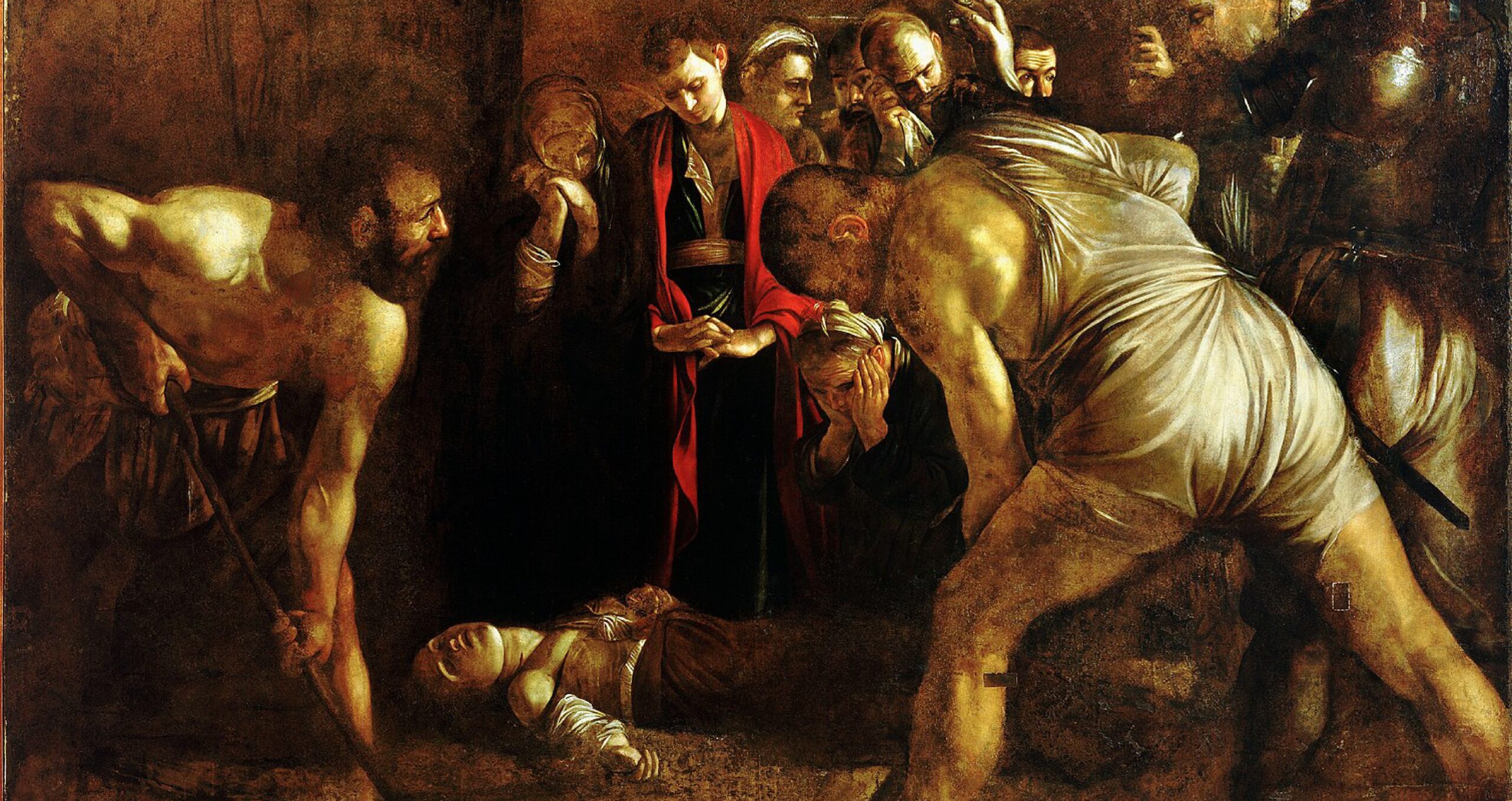
Then Paschasius asked her, saying: Is the Holy Ghost in thee? Whereto she answered: They that live in chastity and piety are the temples of the Holy Ghost. Then, said he, I will send thee to be prostituted in a brothel, and get the Holy Ghost out of thee. To whom she made reply: Thou canst not prostitute my will. If thou cause this poor body to be violated, the crown of my soul’s purity will be brighter through suffering. Then he bade them take her to the place of shame, but by the power of God it became impossible to move her. Whereupon, being inflamed with anger, he had pitch, resin, and boiling oil poured upon her, and then set on fire. But the fire did not take hold upon her. Therefore he practised many other cruelties upon her, and at last thrust a sword through her neck. When Lucy had received this wound, she began to speak of the peace of the Church, which it should enjoy after the death of Diocletian and Maximian, and presently returned her soul into the hands of God. She testified on the thirteenth day of December. Her body was buried at Syracuse, but afterwards taken to Constantinople, and lastly to Venice.
℣. But thou, O Lord, have mercy upon us.
℟. Thanks be to God.
℟. The Lord made her to prevail in the battle, and she was glorified in the sight of God and man; she spake wisdom before princes;
* And the Lord of all loved her.
℣. God shall help her with His countenance; God is in the midst of her, she shall not be moved.
℟. And the Lord of all loved her.
℣. Glory be to the Father, and to the Son, * and to the Holy Ghost.
℟. And the Lord of all loved her.
℣. Grant, Lord, a blessing.
Benediction. May the Gospel’s holy lection Be our safety and protection.
℟. Amen.
Reading 7
From the Holy Gospel according to Matthew
Matt 13:44
At that time Jesus spake unto His disciples this parable The kingdom of heaven is like unto treasure hid in a field. And so on.
Homily by Pope St Gregory the Great
11th on the Gospels
Dearly beloved brethren, the kingdom of heaven is likened unto the things of earth, to the end that by the mean of things which we know, our mind may rise to the contemplation of the things which we know not by the example of things which are seen, may fix her gaze on things which are not seen by the touch of things which she useth, may be warmed towards the things which she useth not; by things which she knoweth and loveth, to love also the things which she knoweth not. For, behold, “the kingdom of heaven is likened unto treasure hid in a field, the which when a man hath found, he hideth, and, for joy thereof, goeth and selleth all that he hath and buyeth that field.”
℣. But thou, O Lord, have mercy upon us.
℟. Thanks be to God.
℟. Because of truth, and meekness, and righteousness;
* And thy right hand shall lead thee wonderfully.
℣. In thy comeliness, and thy beauty, go forward, fare prosperously, and reign.
℟. And thy right hand shall lead thee wonderfully.
℣. Grant, Lord, a blessing.
Benediction. She whose feast-day we are keeping, be our Advocate with God.
℟. Amen.
Reading 8
And herein we must remark that the treasure, when once it hath been found, is hidden to keep it safe. He whose intimate yearnings after God are not hidden from the praise of men, is open thereby to the attacks of evil spirits. In this life we are, as it were, journeying homewards on a road beset by evil spirits who are like highwaymen. He therefore inviteth robbery who carrieth his treasure ostentatiously. Doubtless our neighbour should be able to see our good works, as it is written: “Let your light so shine before men that they may see your good works, and glorify your Father which is in heaven.” But this is not to be understood to mean that we are to seek the praise of men by what we do. Rather, let us in such wise work in the open that the inner intention of devotion is not advertised. So we shall give an example to our neighbour, and yet keep hidden, except from the sight of God, our purpose of pleasing him.
℣. But thou, O Lord, have mercy upon us.
℟. Thanks be to God.
℟. Thou hast loved righteousness, and hated iniquity;
* Therefore God, thy God, hath anointed thee with the oil of gladness.
℣. Because of truth, and meekness, and righteousness.
℟. Therefore God, thy God, hath anointed thee with the oil of gladness.
℣. Glory be to the Father, and to the Son, * and to the Holy Ghost.
℟. Therefore God, thy God, hath anointed thee with the oil of gladness.
℣. Grant, Lord, a blessing.
Benediction. May He that is the Angels’ King to that high realm His people bring.
℟. Amen.
Reading 9
The treasure is the desire for heaven, the field wherein it is hidden is the earnest observance wherewith this desire is surrounded. Whosoever turneth his back upon the enjoyments of the flesh, and by earnest striving heavenward, putteth all earthly lusts under the feet of discipline, so that he smileth back no more when the flesh smileth at him, and shuddereth no more at anything that can only kill the body whosoever doth thus, hath sold all that he had, and bought that field.
℣. But thou, O Lord, have mercy upon us.
℟. Thanks be to God.
Te Deum