Editor’s note: this post combines the Roman Office of the Octave of the Immaculate Conception with the American office of the feast.
℣. Grant, Lord, a blessing.
Benediction. May God the Father Omnipotent, be to us merciful and clement.
℟. Amen.
Reading 4
From the Dogmatic Bull of Pope Pius IX.
The language used in public worship is the necessary offspring of the teaching which it expresseth, and the former can have no safety unless the latter be settled. Wherefore Our Predecessors the Roman Pontiffs, while encouraging the pious love of the faithful for the Conception of the Blessed Virgin, have taken care ceaselessly to inculcate the sinlessness of the same. They have always particularly insisted that the Feast should be observed not in honour of Mary’s sanctification, a false opinion, most foreign to the mind of the Church (but which hath nevertheless been maintained by some), but in honour of her Conception itself.
℣. But thou, O Lord, have mercy upon us.
℟. Thanks be to God.
℟. I came out of the mouth of the Most High, the first-begotten before every creature. I made the unfading light to arise in the heavens.
* When there were no depths I was conceived.
℣. For the Lord hath created me in righteousness, and hath held mine hand, and hath kept me.
℟. When there were no depths I was conceived.
℣. Grant, Lord, a blessing.
Benediction. May Christ to all His people give, for ever in His sight to live.
℟. Amen.
Reading 5
The same Our Predecessors have likewise resisted the dreams of those who have imagined that in the sinless Conception there were Two Instants, and that the Church celebrateth the Second and not the First. Indeed, Our said Predecessors have considered the sinlessness of the First Instant to be as much a truth for their assertion, protection, and promulgation, as the sinlessness of the Conception at all. Hence came those words in which Our Predecessor Alexander VII, in a decree declareth the mind of the Church, and saith, Christ’s faithful people, drawn by love to His most blessed Mother, the Virgin Mary, have of a long time believed that God, at the very First Instant in which He made her soul and joined it to her body, by a special grace and privilege granted to her, through the merits of His dear Son, Christ Jesus, the Saviour of the world, Whose precious death He foreknew, cleansed her from all sin, original as well as actual; and it is in this belief, and no other, that the said faithful of Christ have always kept with devotion and joy
℣. But thou, O Lord, have mercy upon us.
℟. Thanks be to God.
℣. But thou, O Lord, have mercy upon us.
℟. Thanks be to God.
℟. No defiled thing can fall into her;
* She is the brightness of the everlasting light, and the unspotted mirror of the power of God.
℣. For she is more beautiful than the sun, and being compared with the light, she is found before it.
℟. She is the brightness of the everlasting light, and the unspotted mirror of the power of God.
℣. Grant, Lord, a blessing.
Benediction. May He that is the Angels’ King to that high realm His people bring.
℟. Amen.
Reading 3
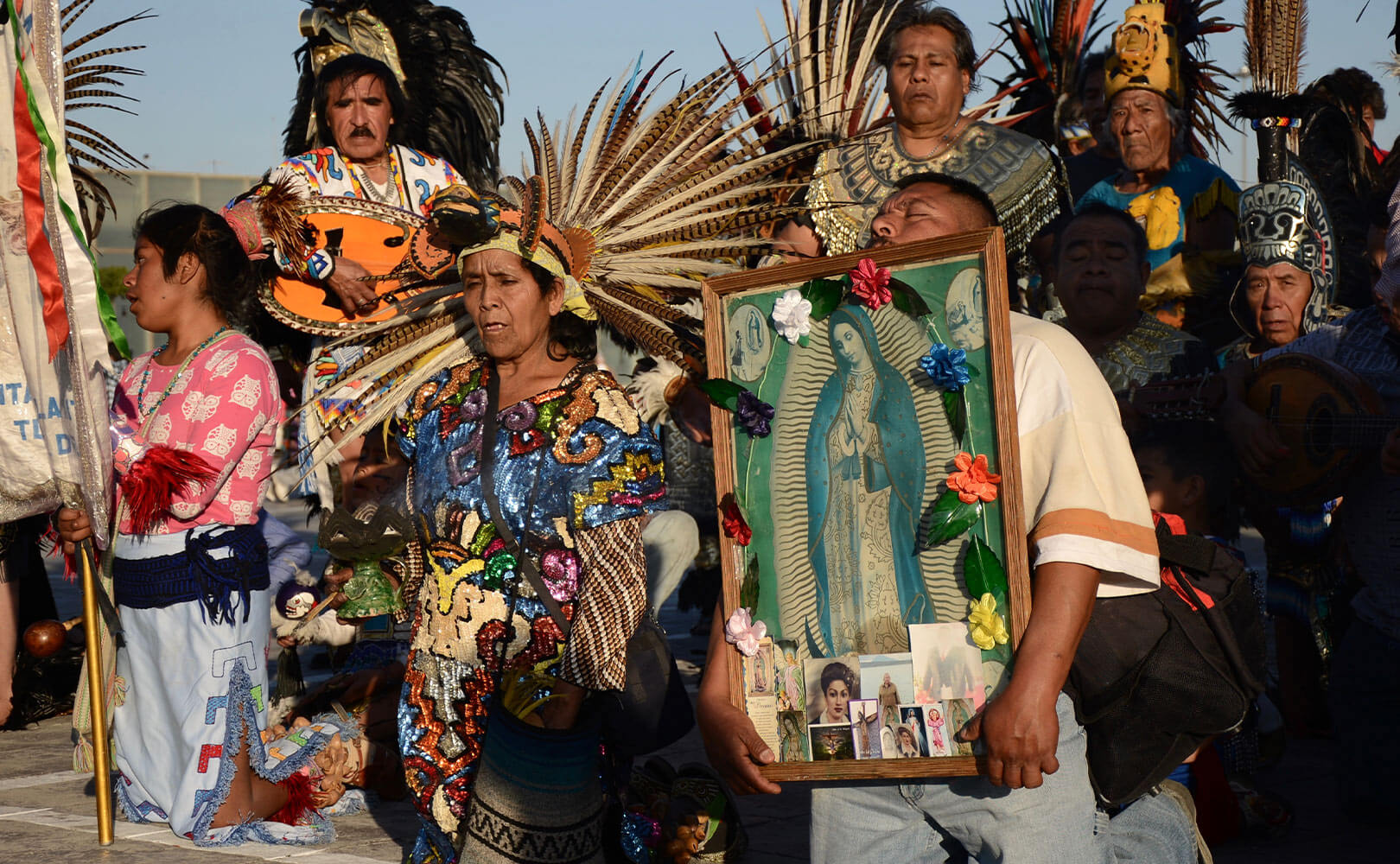
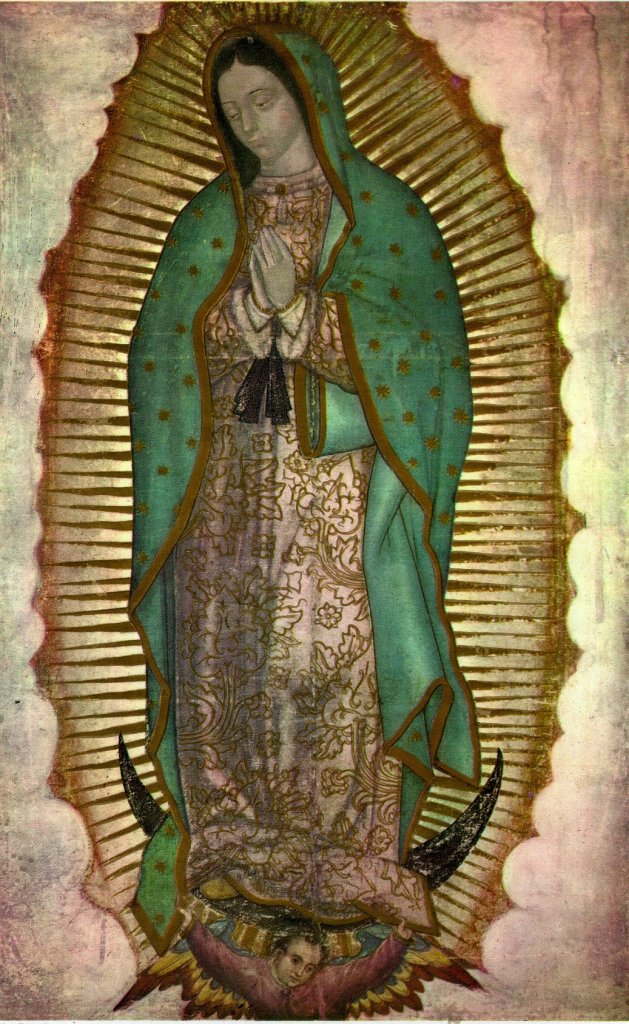
In Mexico, on the hill of Tepeyac, in the year 1531, the God-bearing Virgin Mary, as is piously handed down, appeared to the neophyte Juan Diego, and gave him a command for Bishop Juan de Zumarraga, which she urgently repeated, that a church was to be constructed in her name at that location. The bishop, however, requested a sign. Then, while he was seeking the sacraments for his dying uncle far from the place of the apparition, his loving Mother favored the neophyte with a third vision, assured him of his uncle’s health, and after he had gathered roses into his cloak that had blossomed out of season, she ordered him to take them to the bishop. The roses having spilled out in the sight of the bishop, an image of Mary, impressed upon the cloak itself, according to the tradition, appeared to those present in a wondrous manner. At first kept in the bishop’s chapel, then transferred to a shrine constructed on the hill of Tepeyac, it was finally moved to a magnificent temple, to which Mexicans increasingly began to gather in droves, for reasons of veneration and frequency of miracles. And therefore as an ever-present defense, the Mexican bishops, to the applause of the whole people, chose the Blessed Virgin Mary of Guadalupe as the first Patroness of the Mexican people, which was duly confirmed by the apostolic authority of Benedict XIV. Leo XIII adorned the sacred image with a golden crown on Columbus Day, 1895, by the agency of the archbishop of Mexico. And St. Pius X declared the blessed Guadalupan Virgin as the Patroness of all Latin America.
℣. But thou, O Lord, have mercy upon us.
℟. Thanks be to God.
Te Deum