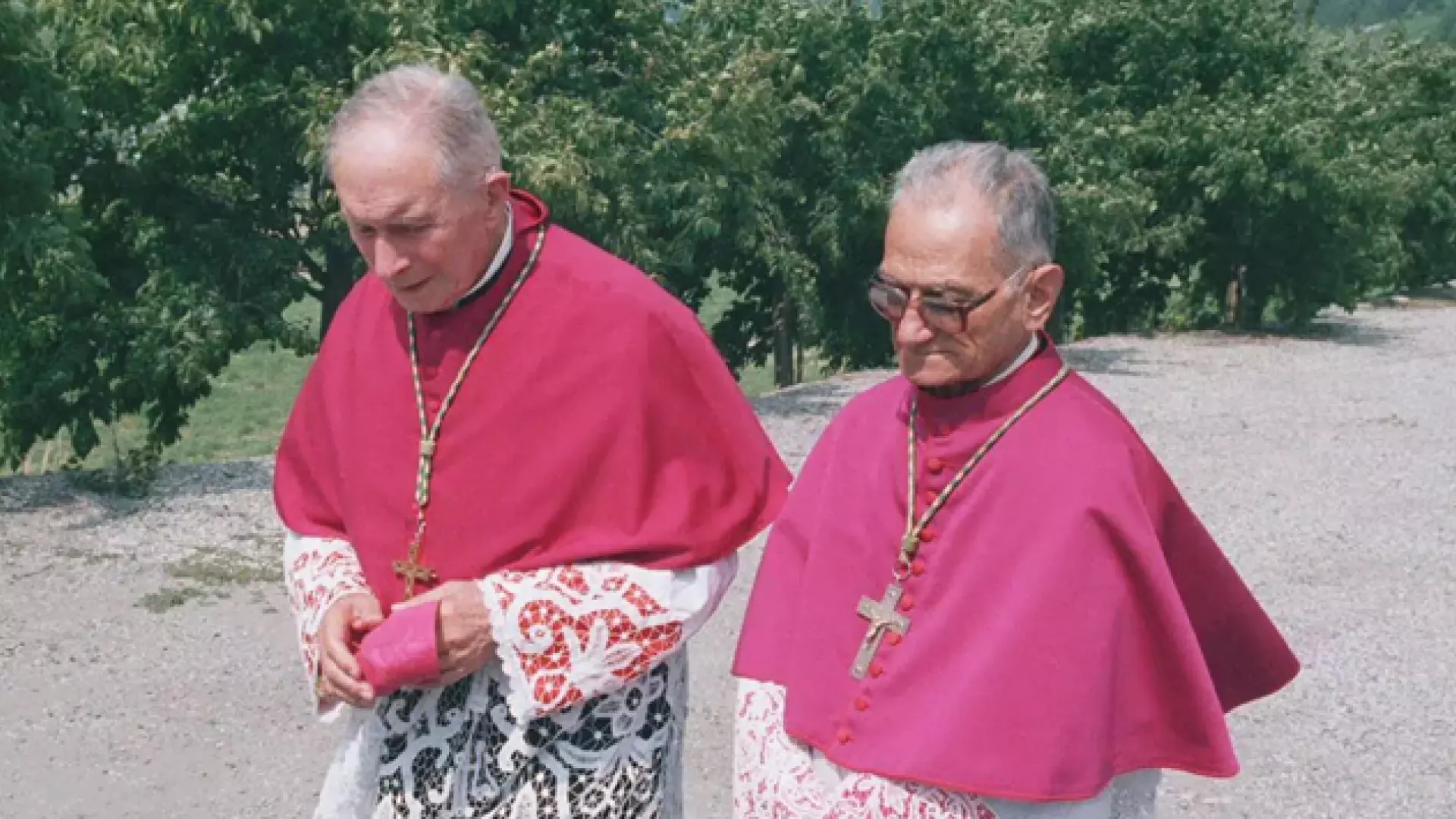
Above: Bishop de Castro Mayer and Archbishop Lefebvre. Photo Credit: SSPX anniversary eulogy of his death.
Introduction
The history of Catholic traditionalism after the Second Vatican Council is marked by intense debates concerning doctrine, liturgy, authority, and ecclesiastical obedience. Among the most significant episodes within this broader movement is the relationship between the traditionalist clergy of Campos dos Goytacazes, Brazil, and the Society of Saint Pius X (SSPX). For more than two decades, both groups worked closely together and shared many theological concerns regarding developments in the Church following the Council.
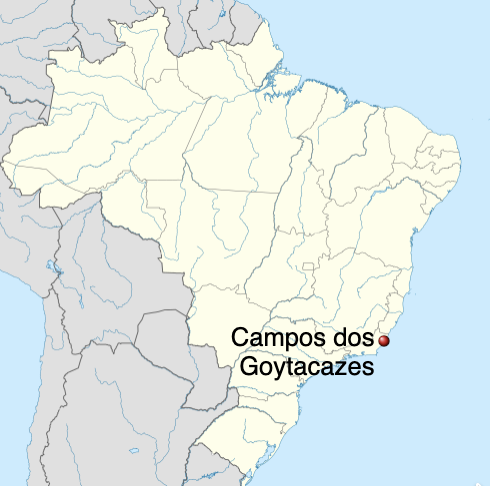
Their cooperation was rooted in a common desire to preserve traditional Catholic doctrine, liturgical practices, and spiritual life. Yet despite their shared origins and long-standing collaboration, the two movements ultimately reached different conclusions regarding their relationship with the Holy See. The reconciliation of Campos with Rome in 2002 and the continued independence of the SSPX revealed two distinct approaches to addressing what both regarded as a profound crisis within the Church.
This article examines the origins of traditionalism in Campos, the alliance between Bishop Antônio de Castro Mayer, the third bishop in the history of the Diocese of Campos, and Archbishop Marcel Lefebvre, the events surrounding the episcopal consecrations of 1988, and the subsequent divergence between Campos and the SSPX. It seeks to present the perspectives of all parties involved while maintaining historical neutrality.
The Origins of Traditionalism in Campos
The roots of the traditionalist movement in Campos can be traced to the episcopate of Bishop Antônio de Castro Mayer, who governed the Diocese of Campos from 1949 until his retirement in 1981. Known for his strong adherence to Thomistic theology and anti-modernist principles, Castro Mayer became one of the most prominent conservative bishops in Latin America during the twentieth century.
During the Second Vatican Council, Castro Mayer participated in the Coetus Internationalis Patrum, a group of bishops who expressed reservations about several proposed reforms. While the Council ultimately approved documents concerning religious liberty, ecumenism, and collegiality, Castro Mayer remained concerned about their interpretation and implementation within the life of the Church.
These concerns intensified after the promulgation of the Novus Ordo Missae in 1969. Unlike most dioceses around the world, Campos continued to celebrate the traditional Latin Mass under the protection of its bishop. As a result, the diocese developed a distinctive identity that would later become the foundation of one of the most important traditionalist movements in modern Catholic history.
Castro Mayer and Lefebvre: A Shared Vision
The friendship between Bishop Castro Mayer and Archbishop Marcel Lefebvre developed during the years of the Second Vatican Council and strengthened throughout the post-conciliar period. Both men believed that many of the changes introduced after the Council represented a significant departure from previous Catholic teaching and practice.
Although they came from different cultural and ecclesiastical backgrounds, they shared a common analysis of the crisis affecting the Church. Both were critical of religious liberty, ecumenism, and the liturgical reform, arguing that these developments created tensions with earlier magisterial teachings and weakened Catholic identity.
Their collaboration extended beyond theological discussions. They exchanged correspondence, supported one another publicly, and worked together in various initiatives designed to preserve traditional Catholic life. This close relationship would later play a decisive role in shaping the alliance between Campos and the SSPX.
The Formation of the Priestly Union of Saint John Mary Vianney
The retirement of Bishop Castro Mayer in 1981 marked a turning point for the Diocese of Campos. His successor, Bishop Carlos Alberto Navarro (1981-1990), the fourth bishop in the history of the Diocese of Campos, sought to implement the liturgical and pastoral reforms that had become standard throughout the Catholic Church following Vatican II.
A significant number of priests resisted these changes. Viewing themselves as faithful to the legacy of Castro Mayer, they refused to adopt the new liturgical practices and continued celebrating the traditional Mass. This resistance eventually led to their removal from many diocesan assignments and parishes.
The Development of the Alliance with the Society of Saint Pius X
As tensions with diocesan authorities increased, the priests of Campos found natural allies in the Society of Saint Pius X. Founded by Archbishop Lefebvre in 1970, the SSPX had become the most visible international organization dedicated to preserving traditional Catholic practices.
The relationship between the two groups was strengthened by their shared theological concerns and common experiences of conflict with ecclesiastical authorities. Seminarians from Campos frequently received their formation at SSPX institutions, particularly the seminary of La Reja in Argentina.
Despite this close cooperation, Campos and the SSPX remained separate entities. Campos continued to understand itself as a movement rooted in a local diocesan tradition, while the SSPX developed as a worldwide apostolate with a broader mission and organizational structure.
The Episcopal Consecrations of 1988
By the late 1980s, both Archbishop Lefebvre and Bishop Castro Mayer were advanced in age and increasingly concerned about the future of traditional Catholic communities. They feared that without traditional bishops capable of ordaining priests and administering confirmations, their work would gradually disappear.
On June 30, 1988, Archbishop Lefebvre consecrated four bishops at the seminary of Écône in Switzerland without papal authorization. Bishop Castro Mayer participated as co-consecrator and publicly defended the decision as necessary for preserving Catholic Tradition and ensuring the continuation of traditional sacramental life.
The Holy See viewed the event very differently. Pope John Paul II declared that the consecrations constituted a schismatic act and that those directly involved incurred automatic excommunication. The traditionalists, however, argued that exceptional circumstances justified their actions under the principle of necessity.
Shortly after this, the priests of Campos organized an independent pastoral structure that culminated in the formal creation of the Priestly Union of Saint John Mary Vianney on August 15, 1988. The Union aimed to preserve the traditional liturgy, theology, and spirituality that had characterized Campos for several decades.
The Consecration of Bishop Licínio Rangel in 1991
The deaths of both Lefebvre and Castro Mayer in 1991 created new challenges for their respective movements. In Campos, the clergy selected Father Licínio Rangel to continue the leadership established by Castro Mayer.
Bishop Antônio de Castro Mayer experienced two distinct successions during his lifetime. The first occurred in 1981, when he was succeeded by Bishop Carlos Alberto Navarro as the diocesan bishop of Campos following his retirement. The second took place after his death in 1991, when Father Licínio Rangel was consecrated bishop in order to provide the episcopal ministry required by the traditionalist clergy and faithful, particularly the administration of those sacraments reserved to bishops, according to the liturgy in use before the reforms of the Second Vatican Council.
Bishop Licínio Rangel was never regarded by the traditionalist community as the diocesan bishop of Campos or as the successor to Bishop Castro Mayer in the governance of the diocese. Rather, he was understood as the successor to Bishop Antônio de Castro Mayer within the traditionalist movement: a bishop whose mission was to administer the episcopal sacraments to the clergy and faithful attached to the pre-conciliar Roman Rite, without claiming ordinary jurisdiction over the Diocese of Campos.
Thus, Bishop Licínio Rangel was the second and final bishop of the Priestly Union of Saint John Mary Vianney. Although its origins date back to 1981, when Monsignor Henrique Conrado Fisher and the other traditionalist priests were removed from office, the Priestly Union was formally established on August 15, 1988, through the signing of its founding document by the priests dismissed under Bishop Carlos Alberto Navarro, then Bishop of Campos and successor to Bishop Antônio de Castro Mayer. The Priestly Union remained active until January 18, 2002, when the Holy See erected the Personal Apostolic Administration of Saint John Mary Vianney, which succeeded it both canonically and pastorally.
Therefore, the Personal Apostolic Administration of Saint John Mary Vianney operates within the territory of the Diocese of Campos, but it has its own seminary, clergy, bishop, and parishes, all of which are independent of the diocesan structure of the Diocese of Campos.
With the establishment of the Apostolic Administration, Bishop Licínio Rangel became its first Apostolic Administrator and bishop, serving until his death on December 16, 2002. On that same date, he was succeeded by Bishop Fernando Arêas Rifan, who became the second bishop of the Apostolic Administration.
Accordingly, Bishop Antônio de Castro Mayer was the third Bishop of Campos and, at the same time, the first bishop of the Priestly Union of Saint John Mary Vianney. Throughout its history, the Diocese of Campos has had seven diocesan bishops since its establishment in 1922. The Priestly Union of Saint John Mary Vianney had two bishops: Bishop Antônio de Castro Mayer and Bishop Licínio Rangel. Its successor, the Personal Apostolic Administration of Saint John Mary Vianney, has likewise had two bishops to date: Bishop Licínio Rangel and Bishop Fernando Arêas Rifan.
Nevertheless, one important question remains unanswered: who will become the third bishop of the Personal Apostolic Administration of Saint John Mary Vianney? That appointment will be made by Pope Leo XIV, and, as of now, the Holy See has not yet announced its decision.
After this overview, we now return to the history of the episcopal consecration of Bishop Licínio Rangel: the four SSPX bishops were in Brazil for the consecration of Bishop Licínio Rangel, which took place in the city of São Fidélis on July 28, 1991. Bishop Bernard Tissier de Mallerais presided over the celebration, in which Father Licínio Rangel was made bishop as the successor of Castro Mayer to administer the sacraments to the priests and faithful of the Priestly Union of Saint John Mary Vianney. Supporters regarded the consecration as essential for maintaining traditional sacramental life and preserving continuity with the movement’s founding principles.
On that occasion, the diocesan bishop of Campos was Bishop João Corso (1990-1995), the fifth bishop in the history of the Diocese of Campos, who offered a Mass of reparation in the city of São Fidélis, as he understood that the consecration without a papal mandate was a schismatic act against communion with the Roman Chair of John Paul II.
Critics argued that the consecration further complicated relations with Rome and deepened the canonical irregularities already associated with the traditionalist movement. Nevertheless, cooperation between Campos and the SSPX remained strong throughout the 1990s.
The Great Jubilee of 2000 and the Renewal of Dialogue
The Jubilee Year of 2000 marked the beginning of a significant shift in relations between traditionalist groups and the Vatican. Large numbers of traditionalist pilgrims traveled to Rome, creating new opportunities for dialogue with Church authorities.
Cardinal Darío Castrillón Hoyos played a central role in these discussions. As president of the Pontifical Commission Ecclesia Dei, he sought to establish channels of communication with groups that had remained outside normal canonical structures.
During this period, differences began to emerge between Campos and the SSPX. While both groups participated in conversations with Rome, the priests of Campos increasingly favored a negotiated solution, whereas the SSPX remained more cautious about the prospects for reconciliation.
The Reconciliation of Campos with the Holy See
In August 2001, Bishop Licínio Rangel and the priests of Campos sent a formal letter to Pope John Paul II expressing their desire for full canonical communion. The letter affirmed their loyalty to the papacy and requested a juridical solution that would preserve their traditional liturgical identity.
The Vatican responded favorably. On December 25, 2001, Pope John Paul II lifted the canonical censures affecting the group and welcomed them back into full communion with the Church. The process culminated on January 18, 2002, with the creation of the Personal Apostolic Administration of Saint John Mary Vianney.
On that occasion, the bishop of Campos was Bishop Roberto Guimarães (1996-2011), the sixth bishop in the history of the Diocese of Campos and the bishop who resolved the diocesan crisis in Campos dos Goytacazes, a priest ordained by Castro Mayer in 1961, whose purpose was to appease spirits in the diocese of Campos, which was deeply marked by division.
The new structure allowed the clergy of Campos to retain exclusive use of the 1962 Roman Missal while functioning within the canonical framework of the Church. The agreement represented an unprecedented attempt to reconcile traditionalist concerns with ecclesiastical unity.
Following the reconciliation, Father Fernando Rifan was chosen to be consecrated a bishop by Cardinal Darío Castrillón Hoyos, in order to replace Bishop Licínio Rangel, who was ill. On August 18, 2002, the consecration took place in Campos dos Goytacazes, in which Fernando Rifan was made a bishop, to the great joy of the Holy See and to yet another disappointment for the SSPX, given that in the past, the priests of Campos and the SSPX had been great friends.
The SSPX Critique of the Campos Agreement
The Society of Saint Pius X viewed the agreement with considerable skepticism. According to SSPX leaders, the central crisis facing the Church remained doctrinal rather than merely canonical or liturgical.
From their perspective, questions concerning religious liberty, ecumenism, collegiality, and the interpretation of Vatican II had not been adequately resolved. Therefore, they argued that entering into a practical agreement without first addressing these issues risked compromising the traditionalist mission.
The SSPX also expressed concern that canonical recognition could reduce the freedom of traditionalists to criticize what they regarded as problematic developments within the Church. For this reason, many within the Society considered the Campos agreement premature.
The Response of Campos to SSPX Criticism
The clergy of Campos offered a different interpretation of the situation. They maintained that their years of separation had always been considered temporary and exceptional rather than permanent or normative.
According to the leaders of the Apostolic Administration, full communion with the Successor of Peter is a fundamental principle of Catholic ecclesiology. Once Rome provided guarantees for the preservation of the traditional liturgy and spiritual heritage, they believed it was appropriate and necessary to regularize their canonical status.
Supporters of Campos argued that their agreement demonstrated that attachment to tradition and fidelity to the Pope were not mutually exclusive. In their view, reconciliation strengthened rather than weakened the traditionalist witness within the Church.
Two Different Ecclesiological Approaches
The divergence between Campos and the SSPX ultimately reflected different understandings of ecclesiology and authority. Both groups agreed that Catholic Tradition must be preserved and transmitted to future generations.
The priests of Campos concluded that this mission should be pursued within the visible and juridical structures of the Church whenever possible. They regarded canonical communion as an essential component of Catholic life and believed that traditionalism could flourish within full ecclesiastical unity.
The SSPX reached a different conclusion. While continuing to recognize the Pope and affirm their Catholic identity, they maintained that unresolved doctrinal concerns justified their continued independence. For them, doctrinal clarity had to precede any definitive canonical settlement.
Conclusion
The history of Campos and the Society of Saint Pius X illustrates one of the most important debates within contemporary Catholic traditionalism. Emerging from a common origin and sharing many of the same concerns, the two movements nevertheless followed different paths after the year 2000.
Campos chose reconciliation with Rome through the Personal Apostolic Administration of Saint John Mary Vianney, viewing canonical communion as compatible with the preservation of traditional Catholic life. The SSPX chose to continue its independent apostolate, arguing that deeper doctrinal issues remained unresolved.
More than two decades later, these two approaches continue to shape discussions within the traditionalist world. Their history demonstrates how Catholics sharing similar theological convictions can arrive at different conclusions regarding authority, obedience, and the best means of preserving tradition within the life of the Church.