This text is taken from The Liturgical Year, authored by Dom Prosper Gueranger (1841-1875)
The Station, in Rome, was formerly the church of the martyr Saint Cyriacus, and as such it is still given in the Roman Missal; but this holy sanctuary having been destroyed, and the relics of the holy deacon translated to the Church of Saint Mary in Via lata, it is here that the Station is now held.
May our fast, O Lord, we beseech thee, be acceptable to thee, and, having purified us from sin, make us worthy of thy grace, and procure us everlasting remedies. Through Christ our Lord. Amen.
Lectio Danielis Prophetæ.
The first Lesson was intended, in an especial manner, as an instruction to the Catechumens. They were preparing to enroll themselves as Christians; it was, therefore, necessary that they should have examples put before them, which they might study and imitate. Daniel, cast into the Lion’s Den for having despised and destroyed the idol Bel, was the type of a Martyr. This Prophet had confessed the true God in Babylon; he had put to death a Dragon, to which the people, after Bel had been destroyed, had given their idolatrous worship: nothing less than Daniel’s death could appease their indignation. The holy man, full of confidence in God, allowed himself to be thrown into the Lion’s Den, thus setting an example of courageous faith to the future Christians: they would imitate him, and, for three centuries, would nobly shed their blood for the establishment of the Church of Christ. In the Roman catacombs, we continually meet with the representation of Daniel surrounded by lions, and many of these paintings date from the ages of Persecution. Thus, the eye of the Catechumens could see what their ear heard-both told them to be ready for trial and sacrifice. It is true, the history of Daniel showed them the power of God interfering and delivering him from death; but they were fully aware that in order to merit a like deliverance, they would have to show a like constancy, and be ready to suffer death rather than deny their faith. From time to time, a Christian was led to the amphitheater, and the wild beasts would fawn at his feet; but such miracles only put off the Martyr’s sacrifice, and perhaps won others to the faith.
It was the Prophet’s courage, and not his victory over the lion’s, that the Church proposed to her Catechumens. The great thing for them to bear in mind was this maxim of our Lord: Fear not them that kill the body, and are not able to kill the soul; but rather fear him that can destroy both soul and body into hell. We are the descendants of these early Christians; but our faith has not cost us what it cost them. And yet we have a tyrant to try even ours: we have to confess our faith, not indeed before Proconsuls or Emperors, but before the World. Let the example of the brave Martyrs send us forth from our Lent with a courageous determination to withstand this tyrant, with his maxims, his pomps, and his works. There has been a truce between him and us, during these days of retirement and penance; but the battle will soon be renewed, and then we must stand the brunt, and show that we are Christians.
Sequentia sancti Evangelii secundum Joannem.
The facts here related refer to an earlier part of our Lord’s life; but the Church proposes them to our consideration today, on account of their connection with those given us in the Gospels read to us during the last few days. We learn from these words of St. John, that the Jews were plotting the death of Jesus, not only when this the last Pasch for the Synagogue was approaching, but even so far back as the Feast of Tabernacles, which, was kept in September. The Son of God was reduced to the necessity of going from place to place as it were in secret: if He would go to Jerusalem, He must take precautions! Let us adore these humiliations of the Man-God, who has deigned to sanctify every position of life, even that of the just man persecuted and obliged to hide Himself from His enemies. It would have been an easy matter for Him to confound His adversaries by working miracles, such as those which Herod’s curiosity sought for; He could have compelled them to treat Him with the reverence that was due to Him. But this is not God’s way; He does not force man to duty; He acts, and then leaves man to recognize his Creator’s claims. In order to do this, man must be attentive and humble, he must impose silence on his passions. The divine light shows itself to the soul that thus comports herself First, she sees the actions, the works, of God; then, she believes, and wishes to believe; her happiness, as well as her merit, lies in Faith, and faith will be recompensed in eternity with Light, with the Vision.
Flesh and blood cannot understand this; they love show and noise. The Son of God, having come down upon this earth, could not subject Himself to such an abasement as that of making a parade of His infinite power before men. He had to work miracles, in order to give a guarantee of his mission; but, as Man, everything He did was not to be a miracle. By far the longest period of His life was devoted to the humble duties of a creature; had it not been so, how should we have learned from Him what we so much needed to know? His Brethren, (the Jews gave the name of Brothers to all who were collaterally related,) His Brethren wished Jesus to make a display of His miraculous power, for some of the glory would have accrued to them. This their ambition caused our Lord to address them in these strong words, upon which we should meditate during this holy season, for, later on, we shall stand in need of the teaching: “The world cannot hate you; but me it hateth.” Let us, therefore, for the time to come, not please the world; its friendship would separate us from Jesus Christ.
Humiliate capita vestra Deo.
Grant us, O Lord, we beseech thee, perseverance in thy service; that in our days, thy faithful may increase both in number and goodness. Through Christ our Lord. Amen
The following devout Hymn, taken from the ancient Roman-French Missals, may serve us as an expression of the sentiments we entertain towards our loving Redeemer.
O Jesus! thou King and Creator of all, Redeemer, too, of believers, be appeased by the prayers and praise of thy humble suppliants.
‘Twas thy loving grace that, by the dear wounds of the Cross, broke so powerfully the fetters forged by our first Parents.
Thou, that art the Creator of the stars, didst deign to assume a body of flesh, and endure the most humiliating sufferings.
Thy hands were tied, that thou mightest loosen sinners, accomplices of a world condemned: thou didst suffer shame, so to cleanse away the manifold sins of the world.
Thou, our Redeemer, art fastened to the Cross, but thou movest the whole earth: thou breathest forth thy mighty Spirit, and the world is buried in darkness.
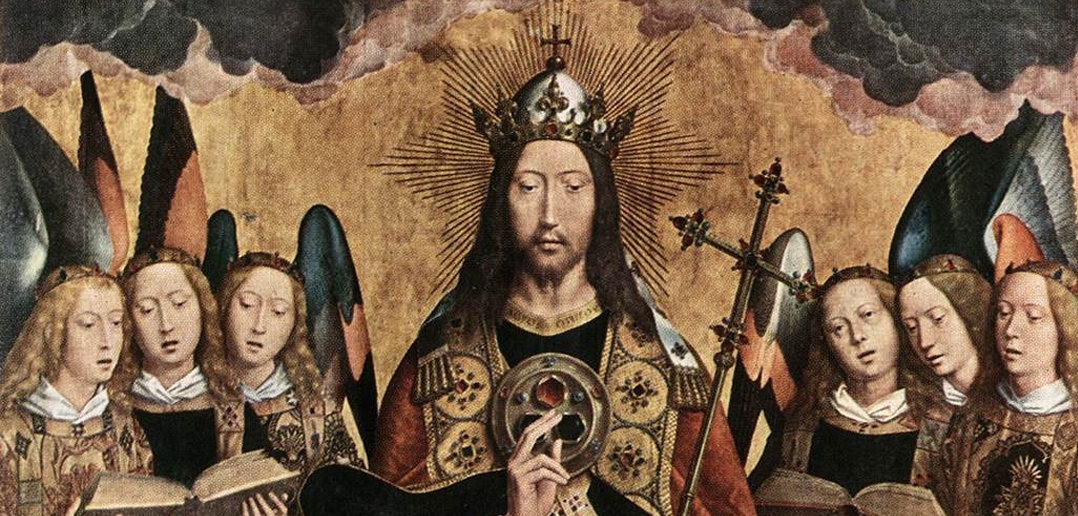
But soon we see thee shining triumphantly on the high throne of thy Father’s glory: do thou, O best of Kings, defend us by the protection of the Holy Spirit. Amen.
Let us pay our homage to the holy Cross, ion these words of the Greek Liturgy.
Thou, O Lord God, the Creator of all things, wast lifted up on the Cross, in the middle of the earth; thou didst draw up to thyself that human nature, which had fallen by the most wicked persuasion of the enemy. Wherefore we pay thee our loyal homage, for thy Passion has strengthened us.
The light of fasting has purified our senses; may we be most brightly enlightened by the spiritual rays of thy Cross. On this day it is exposed to our view; grant that we may devoutly kiss it, and venerate it in our hymns and hearts.
Let us adore the place where stood his feet, that is, the holy Cross, and beseech him to firmly fix the feast of our soul on the rock of his divine commandments, and, by his holy grace, guide her steps into the way of peace.
Loudly sing your hymns, O all ye ends of the earth, when ye behold men venerating that wood, whereon Christ was fastened, and whereby Satan received his wound.
The life-giving Cross is this day exposed: let us, then, with joy and fear, venerate the Cross of our Lord, that we may receive the Holy Ghost.
O life-giving Cross, my tongue and heart tremble with fear, as I draw nigh to touch thee, for I see the divine Blood of my Lord poured forth upon thee.
Strengthen, O Lord, thy Church, which thou didst purchase to thyself by the power of thy Cross; for by the Cross thou didst triumph over the enemy and enlighten the whole world.