
Above: Sydney, Australia, where Malcolm Williamson was born.
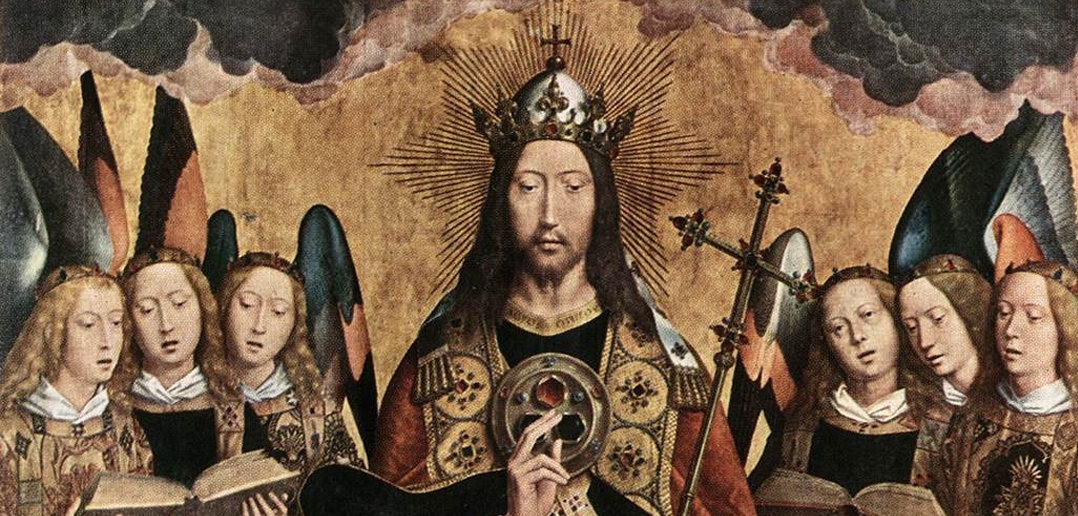
A century ago, on December 11, 1925, Pope Pius XI († 1939) promulgated the encyclical Quas primas as the crowning act of the Jubilee Year 1925, instituting the solemnity of the Kingship of Christ—Lord of time and history, the Alpha and the Omega, to whom all creation is subject.
Though anticipated in the writings of Pope Leo XIII († 1903), Quas primas systematically articulated Christ’s sovereignty over individuals, societies, and nations. The encyclical explores its scriptural and patristic foundations, distinguishing between its Old Testament foreshadowing and full revelation in the New. Pius XI emphasizes that Christ explicitly proclaims His Kingship, most notably in His dialogue with “the Roman magistrate” (n. 11), and roots this authority in the hypostatic union—the inseparable yet distinct union of His divine and human natures.
Pius XI further affirms that “Jesus Christ was given to man, not only as our Redeemer, but also as a lawgiver, to whom obedience is due” (n. 14). His Kingship is universal in scope, extending beyond Catholic nations, for His dominion is not confined to the spiritual realm alone but encompasses every facet of human existence, both private and public: “Men must recognize, both in private and in public life, that Christ is King” (n. 19).
Without Christ, the Pope warns, authority appears “not from God but from man” (n. 18), and paradoxically, it is only through obedience to Christ that true freedom can be attained. By submitting to His reign, humanity is liberated from the bondage of sin and the arbitrary dictates of human law. Moreover, a Kingdom that “receives […] all nations under its sway” becomes a wellspring of peace and harmony, for “the King of Peace […] came not to be ministered unto but to minister” (n. 20).
In the second part of the encyclical, Pius XI articulates the pastoral motivations for establishing “a special feast in honor of the Kingship of Christ” (n. 21). This solemnity was instituted to deepen the faithful’s awareness of Christ’s royal dignity and to foster peace and prosperity in society. The Pope stresses that while theological expositions are indispensable, it is the liturgical celebration of this truth that truly shapes and instructs the faithful, immersing them in the mysteries of the faith.
Significantly, the institution of this feast also serves as a response to “the plague of anti-clericalism”—a spiritual malady that had spread through modern society, leading to the rejection of “the empire of Christ over all nations” and the denial of the Church’s divine right “to teach mankind, to make laws, to govern peoples in all that pertains to their eternal salvation.” Over time, “the religion of Christ” was “likened to false religions” and subjected to state control, its transcendent authority supplanted by “some instinctive affection of the heart” or, in more radical cases, “impiety and the neglect of God.” This rebellion against Christ’s Kingship, Pius XI laments, has yielded bitter fruits—social discord, national rivalries, greed, unbridled selfishness, and the disintegration of the family and society.
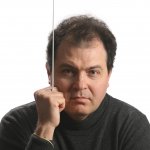
The theological and spiritual vision of Quas primas has also found expression in sacred music. Among the most significant compositions inspired by this solemnity is the Mass of Christ the King by Malcolm Williamson († 2003), a grand choral and orchestral work for two sopranos, tenor and baritone soli, SATB Echo choir, SATB Chorus, and full orchestra.
Williamson first conceived the idea of composing a Mass dedicated to this feast in 1953, but the project only materialized after his appointment as Master of the Queen’s Musick in 1975, following a commission from the Three Choirs Festival and the Royal Philharmonic Orchestra. Mass of Christ the King integrates both the Proper and the Ordinary of the Mass, structured in sixteen movements and incorporating the majestic hymn Te sæculorum Principem.
The composer felt a deep personal connection to the significance of this celebration, as reflected in his own words, cited by Anthony Boden in The Three Choirs: A History of the Festival (Alan Sutton, 1992, p. 227):
Messiaen said, ‘Je suis musicien surtout catholique,’and that’s what I am: I became Catholic when I was 20—it was terrible. I can’t imagine any other idea of life…
‘Come and look at this: I was struggling with it last night.’ On the piano was the Kyrie of a Mass of Christ the King… The Feast of Christ the King was only created in modern times. I’m very interested in it: what we need is this gentle authority of God. See: the soprano calls out, higher each time, above the choir. Kyrie eleison, have mercy on us—come on, you’re in a choir, let’s have a go!
This insight unveils not only Williamson’s deeply personal relationship with the Catholic faith but also his aspiration to translate the “gentle authority of God” into music, transforming the Kyrie into a fervent invocation of mercy, a collective plea for divine kingship.
The composition commenced in Australia in 1975 and was completed in England in 1977, with the orchestration finalized in 1978. Initially intended for the Three Choirs Festival, only half of the work was performed in Gloucester in 1977. Dedicated to Queen Elizabeth II († 2022) in honor of her Silver Jubilee, the piece—despite criticism over delays—was ultimately met with widespread acclaim.
The Agnus Dei was composed on the day of Benjamin Britten’s death (December 4, 1976) and is dedicated to his memory. Musically, the Mass employs serial techniques inspired by 14th- and 15th-century traditions, featuring an eight-note system and an independent rhythmic structure. Jewish influences are particularly evident in the rhythmic designs of the Gloria and Alleluia.
A century after the promulgation of Quas primas, its message remains strikingly relevant. In a time marked by conflict, division, and the erosion of moral and spiritual foundations, the recognition of Christ’s sovereignty stands as an urgent call to peace, justice, and reconciliation among nations.
The liturgical celebration of Christ the King is not merely a declaration of faith; it is a beacon of hope and unity—values that sacred music has powerfully and beautifully conveyed throughout history.