
Now that the Queen repose has won,
Enthroned beneath the only Son,
Comes Bernard yielding odors sweet,
And lays his spirit at her feet.
His fruit was pleasant to her taste;
His perfume sweet of spirit chaste
Was like to precious ointment poured,
The nard of holy living stored.
Behold he comes from Lebanon,
Espousal-crowned as Solomon
In all his glad magnificence,
With powder, myrrh and frankincense.
O who is this, as roseate dawn,
Who, looking forth as fair as morn,
With heart awakening from sleep
Upon the mountain heights doth leap?
O who is this, so lovable,
As bannered army terrible?
O thou who, drawn, thy course hast run,
As fair as moon and clear as sun.
By thy choice sprigs of gathered myrrh
Pray for us sinners when we err,
And plead before the Father’s face
With ardent, torch-like flame of grace.
All glory to the Trinity
To whom in sweet felicity
The Virgin in her triumph high
Brings Bernard, for eternity.
Amen.
℣. Grant, Lord, a blessing.
Benediction. May God the Father Omnipotent, be to us merciful and clement.
℟. Amen.
Reading 4
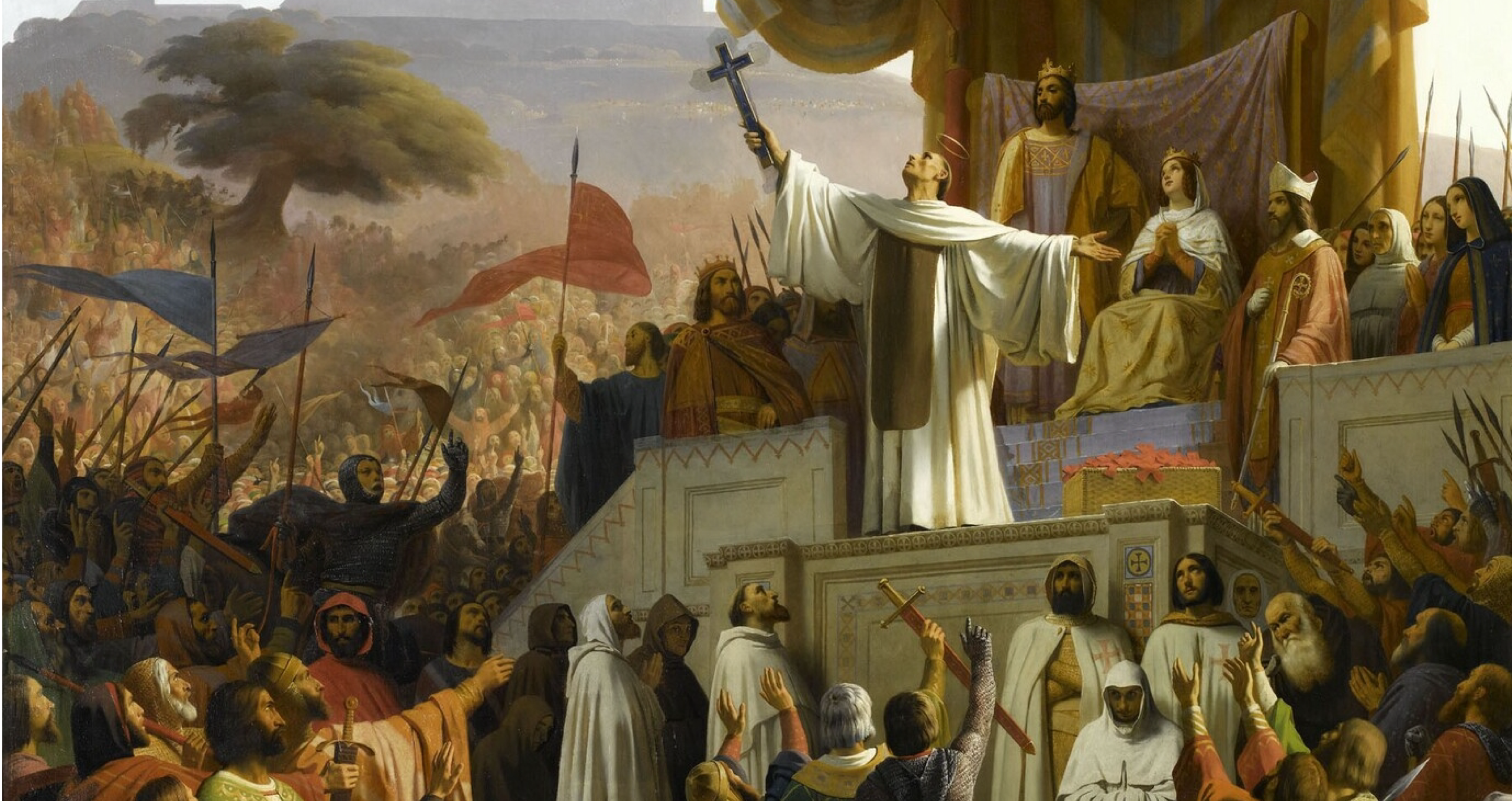
Bernard was born (in the year of salvation 1091) at a decent place in Burgundy called Fontaines. On account of extraordinary good looks, he was as a boy very much sought after by women, but he could never be turned aside from his resolution to keep chaste. To fly from these temptations of the devil, he determined at two-and-twenty years of age to enter the Monastery of Citeaux, whence the Cistercian Order took its rise. When this resolution of Bernard’s became known, his brothers did all their diligence to change his purpose, but he only became the more eloquent and happy about it. Them and others he so brought over to his mind, that thirty young men entered the same Order along with him. As a monk he was so given to fasting, that as often as he had to eat, so often he seemed to be in pain. He exercised himself wonderfully in watching and prayer, and was a great lover of Christian poverty. Thus he led on earth an heavenly life, purged of all care and desire for transitory things.
℣. But thou, O Lord, have mercy upon us.
℟. Thanks be to God.
℟. The Lord made him honourable, and defended him from his enemies, and kept him safe from those that lay in wait for him;
* And gave him perpetual glory.
℣. He went down with him into the pit, and left him not in bonds.
℟. And gave him perpetual glory.
℣. Grant, Lord, a blessing.
Benediction. May Christ to all His people give, for ever in His sight to live.
℟. Amen.
Reading 5
He was a burning and shining light of lowliness, mercifulness, and kindness. His concentration of thought was such, that he hardly used his senses except to do good works, in which latter he acted with admirable wisdom. Thus occupied, he refused the Bishoprics of Genoa, Milan, and others, which were offered to him, declaring that he was unworthy of so high a sphere of duty. Being made Abbot of Clairvaux in 1115, he built monasteries in many places, wherein the excellent rules and discipline of Bernard long flourished. When Pope Innocent II. in 1138, restored the monastery of St. Vincent and St. Anastasius at Rome, Bernard set over it the Abbot who was afterwards the Supreme Pontiff Eugene III, and who is also the same to whom he addressed his book upon Consideration.
℣. But thou, O Lord, have mercy upon us.
℟. Thanks be to God.
℟. The Lord loved him and beautified him; He clothed him with a robe of glory,
* And crowned him at the gates of Paradise.
℣. The Lord hath put on him the breast-plate of faith, and hath adorned him.
℟. And crowned him at the gates of Paradise.
℣. Grant, Lord, a blessing.
Benediction. May the Spirit’s fire Divine in our hearts enkindled shine.
℟. Amen.
Reading 6
He was the author of many writings, in which it is manifest that his teaching was rather given him of God, than gained by hard work. In consequence of his high reputation for excellence, he was called by the most exalted Princes to act as arbiter of their disputes, and for this end, and to settle affairs of the Church, he often went to Italy. He was an eminent helper to Pope Innocent II, in putting down the schism of Peter Leoni, and worked to this end, both at the Courts of the Emperor and of Henry King of England, and in the Council of Pisa. He fell asleep in the Lord at Clairvaux, on the 20th day of August, in the year 1153, the sixty-third year of his age. He was famous for miracles, and Pope Alexander III numbered him among the Saints. Pope Pius VIII, acting on the advice of the Congregation of Sacred Rites, declared and confirmed St. Bernard a Doctor of the Universal Church. He also commanded that all should use the Mass and Office for him as for a Doctor, and granted perpetual yearly plenary indulgences to all who should visit Churches of the Cistercian Order upon the Feast-day of this Saint.
℣. But thou, O Lord, have mercy upon us.
℟. Thanks be to God.
℟. This is he which did according unto all that God commanded him; and God said unto him: Enter thou into My rest,
* For thee have I seen righteous before Me among all people.
℣. This is he which loved not his life in this world, and is come unto an everlasting kingdom.
℟. For thee have I seen righteous before Me among all people.
℣. Glory be to the Father, and to the Son, * and to the Holy Ghost.
℟. For thee have I seen righteous before Me among all people.
℣. Grant, Lord, a blessing.
Benediction. May the Gospel’s holy lection Be our safety and protection.
℟. Amen.
Reading 7
From the Holy Gospel according to Luke
Luke 10:1-9
At that time, the Lord appointed other seventy-two also, and sent them two and two before His face into every city and place, whither He Himself would come. And so on.
Homily by Pope St. Gregory the Great.
17th Homily on the Gospels
Dearly beloved brethren, our Lord and Saviour doth sometimes admonish us by words, and sometimes by works. Yea, His very works do themselves teach us for that which He doth silently His example still moveth us to copy. Behold how He sendeth forth His disciples to preach by two and two since there are two commandments to love, that is, a commandment to love God, and a commandment to love our neighbour and where there are not two, the one, being alone, hath not whereon to do the Lord’s commandment. And no man can properly be said to love himself: for love tendeth outward toward our neighbour, if it be the love whereto the Gospel doth oblige us.
℣. But thou, O Lord, have mercy upon us.
℟. Thanks be to God.
℟. This is he which wrought great wonders before God, and praised the Lord with all his heart.
* May he pray for all people, that their sins may be forgiven unto them.
℣. Behold a man without blame, a worshipper of God in truth, keeping himself clean from every evil work, and abiding still in his innocency.
℟. May he pray for all people, that their sins may be forgiven unto them.
℣. Grant, Lord, a blessing.
Benediction. He whose feast-day we are keeping, be our Advocate with God.
℟. Amen.
Reading 8
Behold, the Lord sendeth forth His disciples to preach by two and two and thus doing, He doth silently teach us that whosoever loveth not his neighbour, such a one it behoveth not to take upon him the office of a preacher. Well also is it said that He sent them before His face into every city and place whither He Himself would come. The Lord followeth His preachers first cometh preaching, and then the Lord Himself cometh to the house of our mind, whither the word of exhortation hath come before and so cometh the truth into our mind.
℣. But thou, O Lord, have mercy upon us.
℟. Thanks be to God.
℟. Let your loins be girded about, and your lights burning;
* And ye yourselves like unto men that wait for their lord, when he will return from the wedding.
℣. Watch therefore, for ye know not what hour your Lord doth come.
℟. And ye yourselves like unto men that wait for their lord, when he will return from the wedding.
℣. Glory be to the Father, and to the Son, * and to the Holy Ghost.
℟. And ye yourselves like unto men that wait for their lord, when he will return from the wedding.
℣. Grant, Lord, a blessing.
Benediction. May He that is the Angels’ King to that high realm His people bring.
℟. Amen.
Reading 9
Therefore, to preachers saith Isaiah: Prepare ye the way of the Lord, make straight an highway for our God (xl. 3). And again the Psalmist saith: Spread a path before him that rideth upon the West (lxvii. 4). The Lord rideth upon the West above that from which in death He veiled His glory, hath He royally exalted that glory that excelleth, even the glory of His rising again. He rideth upon the West, Who, being risen again from the dead, is throned high above the death to which He bowed. Before Him, therefore, That rideth upon the West, we spread a path, when we set forth His glory before the eyes of your mind, to the end that He Himself may come after, and Himself enlighten the same your minds by His presence and His love.
℣. But thou, O Lord, have mercy upon us.
℟. Thanks be to God.
Te Deum