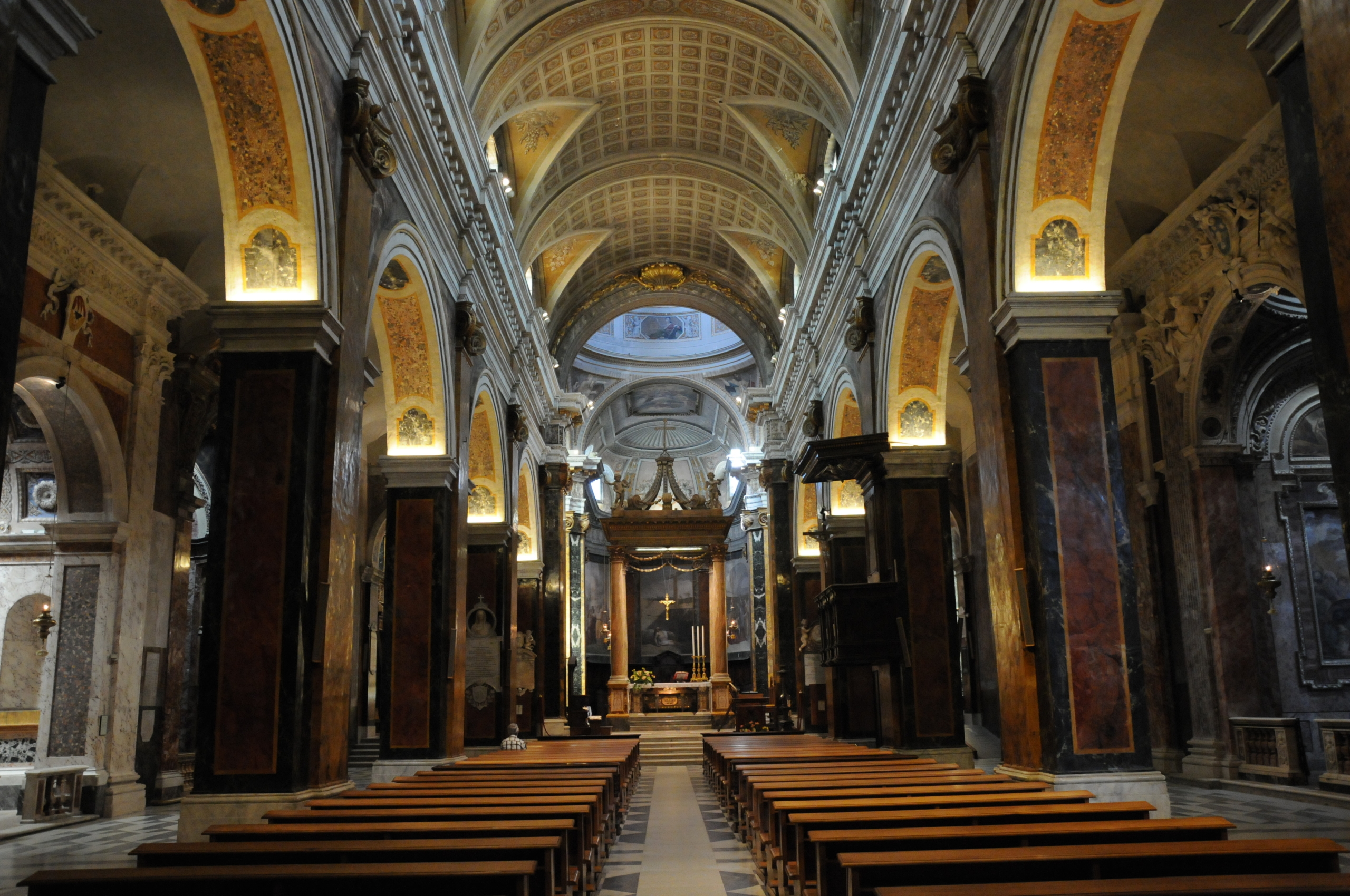
Above: the Basilica Cathedral of Santa Maria Assunta in Rieti
Nestled in the heart of central Italy, Rieti enchants visitors with its storied past, architectural splendor, and enduring cultural legacy. Renowned journalist and writer Guido Piovene († 1974) captured its essence with poetic precision:
A beautiful city, lively and of aristocratic structure. The Middle Ages of the Romanesque Cathedral, though rebuilt inside, the Papal Palace, dating to the late 13th century, with its imposing Gothic arches, and certain neighborhoods with narrow streets, external staircases, truncated towers, and archways, is overlain by the work of later centuries: Vignola’s loggia, many noble palaces. […] Rieti gathers a nucleus of Roman aristocracy and bears its imprint.[1]
At the heart of Rieti’s treasures stands the Basilica Cathedral of Santa Maria Assunta, which today celebrates a monumental milestone: 800 years since its consecration by Pope Honorius III on September 9, 1225.
The Cathedral’s origins date back to 1109, with its crypt consecrated in 1157. Over centuries, renovations, including the transformative works of 1639, enhanced its grandeur while preserving its Romanesque core. Its façade boasts a portal adorned with intricate vegetal and animal motifs, embodying the artistry of the era. Visitors are greeted by a cross-vaulted portico added in 1458, while the adjacent baptistery, now housing the Cathedral Treasury Museum, unveils a trove of sacred artifacts. Dominating the skyline, the majestic Romanesque bell tower, completed in 1252, stands as an enduring symbol of faith.
The interior of the Cathedral is a repository of spiritual and artistic treasures. Among these, the statue of Saint Barbara, a 3rd-century virgin and martyr, holds a place of reverence. Sculpted by Giovanni Antonio Mari († 1661) and attributed to the design of Gian Lorenzo Bernini († 1680), this masterpiece epitomizes the grace and drama of Italian Baroque.
The Basilica’s musical heritage is among Europe’s most prestigious, with an archive of over two thousand works, including manuscripts dating back to the 11th century. This remarkable collection reflects a rich and unbroken tradition of liturgical music, particularly vibrant from the 18th century onward.
As Angelo Sacchetti Sassetti († 1968) documented, the Cathedral’s musical life owes much to the approximately fifty directors who served between 1551 and 1918.[2] Figures such as Vincenzo Paci from Assisi (16th cen.), the Flemish Rinaldo Del Mel († ca. 1598), Alessandro Capece of Rome († after 1636), the Friar Minor Conventual Giacomo Antonio Piccioli from Corvara near Rieti (16th cen.), and Giovanni Battista Rocchigiani from Orvieto († after 1632) were central to its musical life. Angelo Fusacchia’s meticulous research[3] underscores the Cathedral’s enduring role as a hub of musical innovation.
Notably, Giuseppe Ottavio Pitoni († 1743), one of Rieti’s most illustrious sons, served as music director from 1676 to 1677. Later, he became the director of music at the Vatican’s Cappella Giulia, a position he held from 1719 until his death. A prolific composer, Pitoni excelled in sacred music, crafting monumental works for ensembles ranging from two to forty-eight voices. His Dixit Dominus for 16 voices in four choirs (1719) exemplifies his dramatic polyphony and his deep engagement with liturgical text, particularly in passages like Dominus a dextris tuis and Conquassabit capita. His studies of Giovanni Pierluigi da Palestrina († 1594) remain a cornerstone of musicology.
Antonio Rina († 1793), another of Rieti’s native sons, minore conventuale, served the Cathedral for over fifty years (1726–1779). Trained by Neapolitan masters, including Leonardo Leo († 1744), Rina skillfully blended the contrapuntal rigor of the Roman school with the lyrical elegance of Neapolitan traditions. His works (here’s a brief example), admired for their refinement, earned him admission to the prestigious Accademia Filarmonica in Bologna in 1761.[4]
Sebastiano Bolis († 1804), from Rome, served as music director from 1801 until his untimely death in 1804. A composer of considerable stature, Bolis enriched the Cathedral’s repertoire with sacred compositions characterized by technical mastery and expressive use of instruments to enhance liturgical texts. Among his notable works is the Dextera Domini from the Dixit Dominus for eight voices and basso continuo.
Valerio Valeri from Rieti († 1858), director of music from November 4, 1816, until his death, significantly contributed to the Cathedral’s musical archive. His only published work (Naples, 1824), 8 brilliant Variations for piano in F Major, based on the theme of the aria Non più mesta accanto al fuoco from the opera La Cenerentola by Gioachino Rossini († 1868), showcases a mastery of classic variation techniques, culminating in a brilliant final coda that revisits Rossini’s theme with grace and elegance.
The Cathedral of Rieti is far more than a structure of stone; it is a living testament to centuries of faith, artistry, and cultural achievement. Its sacred art, architectural splendor, and liturgical music serve as enduring symbols of human creativity in service of the divine. Here too, “the faith of countless believers has been nourished by melodies flowing from the hearts of other believers, either introduced into the liturgy or used as an aid to dignified worship.”[5]
In this sacred space, where art, music, and spirituality converge, Rieti’s remarkable legacy endures—a timeless tribute to the city’s profound cultural and spiritual heritage.
[1] Viaggio in Italia, Mondadori, Milan, 1963, p. 624; our translation.
[2] La cappella musicale del Duomo di Rieti, in Note d’archivio per la storia musicale, XVII, Rome 1940.
[3] Musica e Musicisti a Rieti tra Cinquecento e Settecento, Rieti 2019.
[4] cf. A. Sacchetti-Sassetti, ibidem, p. 156.
[5] John Paul II, Letter to Artists, April 4, 1999, n. 12.