
Dear OnePeterFive Confraternity members:
As I’ve written about before, I was Eastern Orthodox and I came into communion with Rome in May of 2013, a few short weeks after Pope Francis was elected.
My journey to Rome was a painful process of the Lord pruning my evil pride and softening my hardened heart toward the idea of a Papacy in general, and thus this Holy Father in particular.
However, knowing from history that I need not pay any attention to Rome, for years as a Catholic I never bothered to pay much attention to Pope Francis. But in 2018 everyone seemed to be angry about the “summer of shame” – and rightly – but they also seemed to start to harden their hearts toward our Holy Father and even doubt the Roman dogmas – that is, the dogmas about the Papacy in particular.
As a result I began to publicly write to defend the Roman dogmas and try my best to “encourage the doubtful.”
But allow me to make a confession: in my public writing career under the pontificate of Pope Francis – covering all the controversies therein since 2019 – I very rarely read the entire document in question.
For example, I heard about a controversy regarding Laudato Si’. But I never read through the whole document. The Amoris Laetitia controversy was all about a footnote. I never read the whole document. With Dilexit Nos in 2024, I began to read the entire document, and I have been absolutely astonished (more on that next week).
Bishop Schneider comments on the reception of documents which are promulgated by the Holy Father:
Some who criticize the [Vatican II] Council say that, although there are good aspects to it, it’s somewhat like a cake with a bit of poison in it, which needs to
be thrown out.
I have heard this comparison from the Society of St. Pius X. We cannot accept it because the Second Vatican Council was an event of the entire Church. In such an important phenomenon, even though there were negative points, we have to maintain an attitude of respect. We have to evaluate and esteem all that is really and truly good in the Council texts, without irrationally and dishonestly closing the eyes of reason to what is objectively and evidently ambiguous and even erroneous in some of the texts. One has always to remember that the texts of the Second Vatican Council are not the inspired Word of God, nor are they definitive dogmatic judgments or infallible pronouncements ofthe Magisterium, because the Council itself did not have this intention.
[He then discusses Pope Pius XII correcting the error of St. Thomas which was contained in the Council of Florence regarding the Sacrament of Holy Orders.]…
To come back to the comparison —“it’s somewhat like a cake with a bit of poison in it”—I would not apply this to the Second Vatican Council. For me, that betrays a lack of a supernatural perspective. Another example is Amoris Laetitia. There are certainly many points we need to criticize objectively and doctrinally. But there are some sections which are very helpful, really good for family life, e.g., about elderly people in the family: in se they are very good.
I will not reject the entire document but receive from it what is good. The same with the Council texts. St. Thomas Aquinas accepted many philosophical insights of Aristotle in spite of the fact that not all things in Aristotle are perfect. There are some things St. Thomas did not accept from Aristotle, but, nevertheless, he quotes him often. This principle applies even more to those ecclesiastical documents that may contain some imperfections (emphasis added).[1]
It seems to me that His Excellency here manifests the virtue of Catholic piety – that is, the virtue of giving due honour to our parents as a part of the Fourth Commandment (II-II q101) – in regards to the words that emanate from the Bishop of Rome, our Holy Father, whether promulgated by him through a council, or by him alone. He shows us a very good model of piety, and rejects the metaphor of “poison,” since it is also true of Councils like the Council of Florence!
But the problem is that there really can be good and bad in one document. For example, in one of the worst statements of Pope Francis (which was materially heretical, in the judgement of competent theologians), there also contained a great deal of wisdom on other topics, astonishingly.
So on the one hand, the lay faithful should ignore all statements from the Roman Pontiffs, since most of us don’t have the competence to sift through the poison and the pearls of wisdom. But on the other hand, if we rely on secondary sources commenting on the document only, there is a real danger of hardening our hearts against the Holy Father. (So I’m asking you to not take me too seriously – I’m just a layman trying my best, just like you.) Whatever he does or says, he remains always our father in Rome.
When I saw the dying Pope Francis give his final blessing in Latin last year on Eastern Sunday – it moved me deeply and I loved him as my father, despite everything. God give him eternal rest!
After I committed a serious sin of impiety last year – publicly – against the newly elected Pope Leo XIV on his very election day – I felt contrition and I resolved in my heart to be open to the new Pope, truly receive him, his person and his words and actions, and try my best to be a better son of the Holy Father and Holy Mother Church.
Since that time I’ve really tried hard to understand Robert Prevost according to the historical context of his priesthood. My study of Marxist Peru is fundamental to this task:
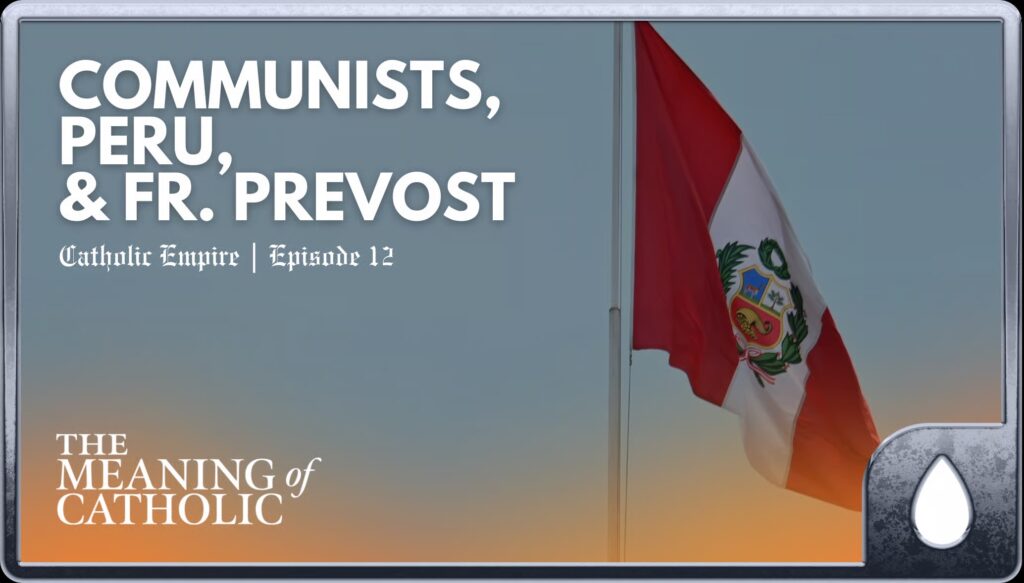
Thus when I read through Pope Leo’s first document on the poor – having lived myself in and experienced what “real poverty” is – I was struck by his framework for poverty which was intrinsically anti-Marxist, because it was focused on the lives of the saints and their person-to-person contact with the poor, against the Marxist bureaucracy which is anti-subsidiarity and only leads to famine (as seen in Marxist countries) (“Is Pope Leo Just a Stupid Democrat? No, He’s Not”).
I’ve been reading through the Wednesday general audiences on Vatican II, and I’ve been astonished at how much Papa Prevost is focused on the “one thing necessary” – perseverance in mental prayer (Is There Any Tradition More Important than the TLM? Yes. And it’s the “One Thing Necessary”).
At the same time, a picture surfaced of Fr. Prevost participating in his own Pachamama ritual, which was confirmed by witnesses. So now we have another crucial layer to this analysis that we need to take into consideration (provided by Fr. Romano Tommasi here at OnePeterFive).
Still, however damning is the evidence about the past deeds of Fr. Prevost, we must at the same time receive him and his words qua Bishop of Rome in a new way, assuming the best always (according to the law of charity[2]) and also considering the fact that the bishop of Rome receives an abundance of new graces with the whole of the faithful praying for him and every priest offering Masses for him.
Thus, I’m trying to bring this spirit to reading through the new document – his first “encyclical” – and so I ask for your prayers that I may do so with true Christian piety. My attempt to comment from that spirit will be published later today, God willing. Please invoke our patrons at OnePeterFive:
All Holy Theotokos of Fatima, pray for us!
Blessed Emperor Karl, model layman, pray for us!
St. Maximilian Kolbe, model priest, pray for us!
Sr. Wilhelmina, model for all laity, pray for us!
CHRIST IS RISEN!
T. S. Flanders
Editor
Whit-Tuesday
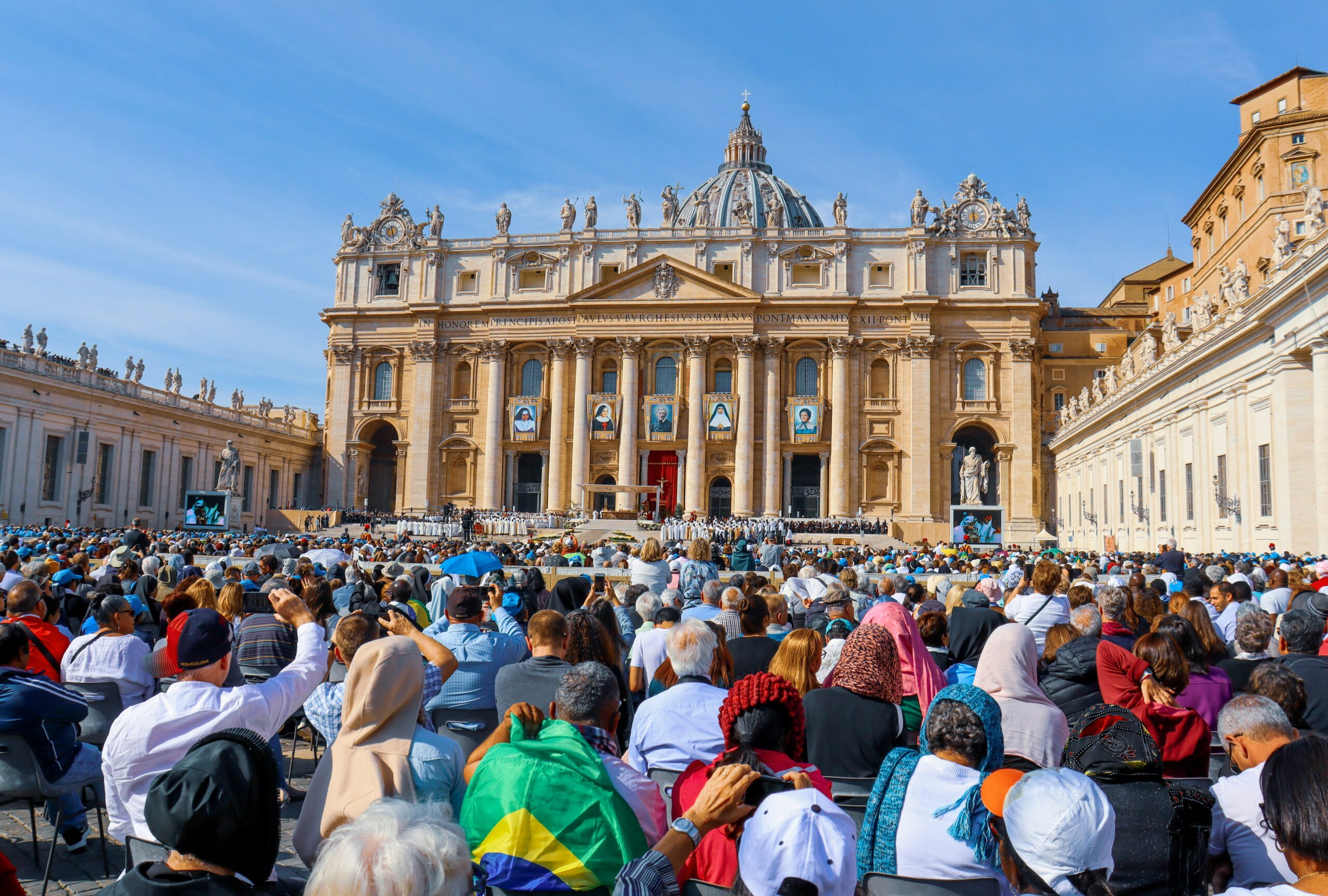
Photo by Ágatha Depiné on Unsplash
[1] 129-130
[2] “[U]nless we have evident indications of a person’s wickedness, we ought to deem him good, by interpreting for the best whatever is doubtful about him… He who interprets doubtful matters for the best, may happen to be deceived more often than not; yet it is better to err frequently through thinking well of a wicked man, than to err less frequently through having an evil opinion of a good man, because in the latter case an injury is inflicted, but not in the former” (II-II q60 a4 ad1).