
After years of study and prayer and penance, I came into communion with Rome in 2013 after five years in the Orthodox Churches – Coptic and Antiochian mostly (“I Left Eastern Orthodoxy for the Church Led by Pope Francis, and I Don’t Regret It”). One thing that I’ve been convinced of is this: the renewal of Christendom throughout history is always a result of true penance and a true ad fontes – specifically the Hebraic, Greco-Roman elements of Christian culture, ratified forever on the sign of the Holy Cross of the King of the Jews (“Joseph Ratzinger and the Fourth Greco-Roman Renewal”).
Because of this, I’ve always been concerned with the Latin rite traditionalist approach to Vatican II.
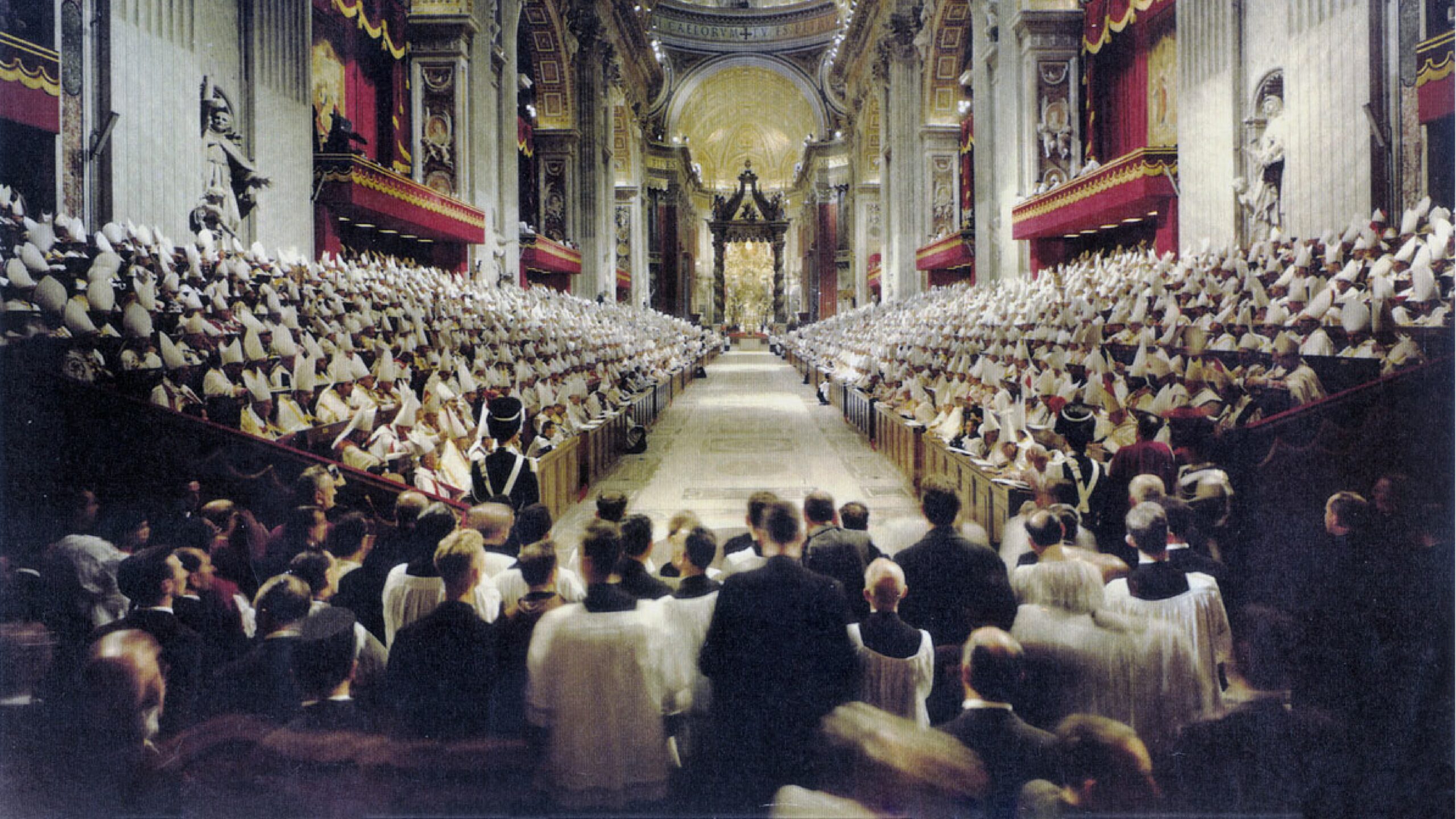
Every Trad critique of Vatican II that I’ve ever read correctly diagnosis the Neo-Modernist ills of the Council, and then fails to appreciate the traditional Eastern Catholic aspect of the Council. This is particularly true in the Biography of Archbishop Lefebvre, which falsely paints all the Neo-Modernists at the Council into one, generalised category, instead of understanding that Wiltgen’s “European Alliance” includes at least two, fundamentally opposed parties – those who would become the Concilium and the Communio journals of thought – as well as the other, totally different party – the Eastern Catholic bishops.[1]
To take just one of many examples, Lumen Gentium 27 helps to temper the False Spirit of Vatican One by speaking to the Eastern Catholic concerns about the hyperüberultramontanism, which amounts to being “vicars of the Pope”:
The pastoral office or the habitual and daily care of their sheep is entrusted to [bishops] completely; nor are they to be regarded as vicars of the Roman Pontiffs, for they exercise an authority that is proper to them, and are quite correctly called “prelates,” heads of the people whom they govern. Their power, therefore, is not destroyed by the supreme and universal power, but on the contrary it is affirmed, strengthened and vindicated by it, since the Holy Spirit unfailingly preserves the form of government established by Christ the Lord in His Church (emphasis mine).
Moreover, Orientalium Ecclesiarum – along with a critical text from the New Catechism – creates the moral framework which undercuts the pre-Vatican II Neo-Scholastic reductionism which – together with hyperüberultramontanism – formed the entire framework of the New Iconoclasm that we oppose as Trads – all of which existed before Vatican II was dreamed up by Pope St. John XXIII!
So these texts from Vatican II form a critical solution to our problems with New Iconoclasm. We as Trads are shooting our movement in the foot by “rejecting” Vatican II and the “post-conciliar religion.” The pre-Vatican II Church created the potency for the Novus Ordo Missae by establishing the presuppositions upon which the New Iconoclasm rests.
In other words, the exercise of Papal authority over the liturgy during the period of the False Spirit of Vatican One (1870-1962) was already the New Iconoclasm in potentia.
- Pius X’s overhaul of the Roman Breviary, which was absoultely unprecedented
- Pius X’s frequent communion revolution which overturned centuries of custom and careful practice of Confessors (see Holy Communion by Bishop Laise)
- Pius XII’s Holy Week overhaul, suppressing many pious customs of the faithful (such as Tenebrae) during the holiest week of the year
- (Not to mention Pope Urban VIII’s earlier attack on the Breviary hymns, universally condemned as Fortescue says, noted in Reid).
If these actions were merely the Bishop of Rome governing the liturgy of his own diocese, this would indeed be a violent iconoclasm, but it would be very minimal. But these actions caused liturgical revolutions over the entire planet earth.
When Paul VI did the same thing, this was just normal life for Catholics since Vatican One.
John Joy & Ryan Grant
When Traditionis Custodes was first released, a dubium was created – did the Pope actually have the authority to suppress the entire Roman Rite and replace it with the Novus Ordo Missae? Recently Mass of the Ages brought together two learned men: Ryan Grant and Dr. John Joy.
Mr. Grant is a publisher and man of letters fluent in the Latin source material of Baroque Scholasticism and following, which investigated some aspect of this question after the decrees of Trent.
Lamentably, most so-called “theologians” today don’t even know enough Latin to read the documents of Vatican II nor the Neo-Scholastic “norms of theological interpretation” that that Council defends and requires, yet they pontificate to us about what Vatican II means (see “The Post Vatican II Collapse of Theology”).
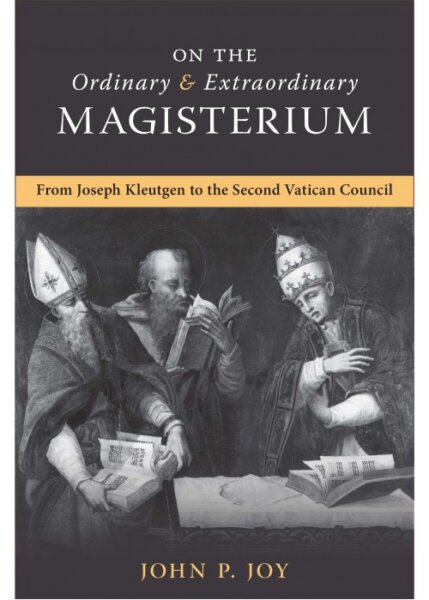
John Joy is a theologian of the Church who is on our editorial board. He is a Magisterial expert whose dissertation came out in its second edition published by Arouca:
His further texts on Papal authority from Nova et Vetera and OnePeterFive were published by Os Justi Press under the title Disputed Questions on Papal Infallibility.
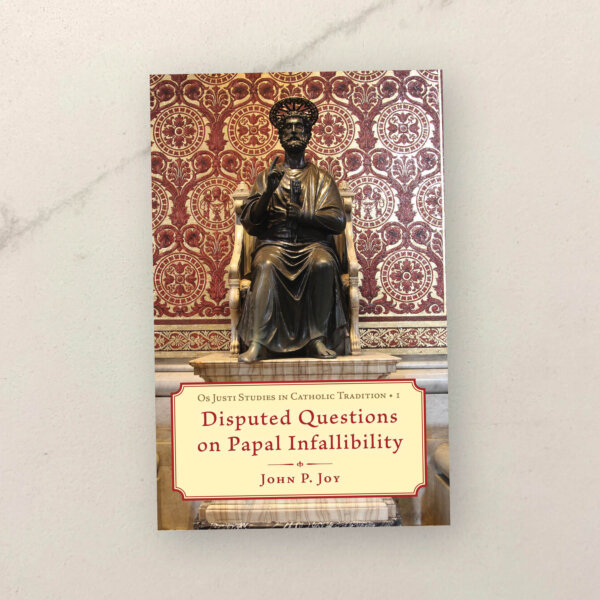
This book is certainly a must-read text for anyone concerned about the dogma of the Papacy.
(Now speaking of Mass of the Ages, you need to know about their new film project, Godbread, which is an important monument of true Eucharistic revival.
Please go to Godbread.com to donate to help this extremely important project for the Church and the Trad movement! Mass of the Ages is one of our founding partners in the Crusade of Eucharistic Reparation).
Now, continuing on our topic, as I said Mass of the Ages brought Mr. Grant and Dr. Joy together to discuss the following dubium:
1. Does the Pope have the authority to suppress the Latin Mass completely and replace it with the Novus Ordo Missae, or is this act ULTRA VIRES?
Notice the source material that Dr. John Joy calls upon to support his position that yes, this action is ultra vires: Vatican II and the New Catechism.
The specific action of suppressing the Roman Rite itself – this is the action which can be justified by the authoritative sources – those which are before Vatican II – but the idea that this action is dubious or even ultra vires comes primarily from Vatican II itself and the CCC.
(Some say that the Pope suppressed the entire Mozarabic rite in Spain, but the reality is more complicated than that.)
These central questions of auctoritas regarding the Papacy and the Tradition are at the very heart of the traditional cause and our movement. But there are critically important aspects of Vatican II which undergird this very heart.
The more our movement seeks to “reject” or “overthrow” Vatican II, the more we are removing the very authoritative sources which justify the essential aspects of what we stand for.
This is why our editorial standards at OnePeterFive are very high with regard to writings on Vatican II:
8. Vatican II at Sixty. 2022 marked sixty years since the opening of Vatican II. Once we delve deeper into the clericalism and ultramontanism that already existed, then we can properly understand what happened at Vatican II. Many Trad critiques of Vatican II fail to take into account this deeper analysis of this Council and fail to distinguish the many layers of meaning from the various players: from those who would founded the Concilium journal and their variance with the Communio school of thought, to the Eastern Catholic view and especially the Coetus Internationalis Patrum, our Trad godfathers. Therefore submissions in this category must first read and review the Pre- and Post-Vatican II decline and collapse of theology (here and here) and then understand better the historical context of the Council as a “post-war” event. We particularly wish to promote the high standard set by the studies of Kirwan (here and here), Sire, Wemhoff, Davies and Bishop Schneider and other such erudite voices. Articles tackling Vatican II must be well-versed in the content published in response to Trads, especially people like DeClue, Chapp, Nichols (here and here) and Wicks, after a careful study of all 16 documents.
I’m sorry to say, but most of the traditionalist literature I have read on Vatican II does not meet this standard. It has not interacted with the critics, and it has not considered the Eastern Catholic view.
Even worse, the “meme” critiques of Vatican II betray their ignorance that they haven’t even read the documents that they critique. This internet nonsense confirms the stereotype of Trads that we are just cranky teenagers who don’t know how to do real theology. Because that’s the sophomoric level of that kind of “meme traditionalism.”
This is not to say Vatican II is not part of the problem. But we can’t critique the ambiguities of Vatican II by a promoting our own ambiguities.
As Trads, we have to do better for the sake of our movement and the Church. Perhaps some readers can send me recommendations of traditionalist writing that is more theologically careful and historically precise. On the other hand, we will welcome all Trad writing that can meet this standard, and publish it under our series Vatican II at Sixty.
T. S. Flanders
Editor
Ss. Cyprian & Cornelius
[1] To their credit, the SSPX’s dialogos with the Holy See has helped to clarify very important aspects of Vatican II, namely the “norms of theological interpretation” upon which their authority rests, as Abp. Pozzo has authoritatively and officially confirmed to the SSPX (“Abp. Pozzo on SSPX: Disputed Vatican II Documents Are Non-Doctrinal”).