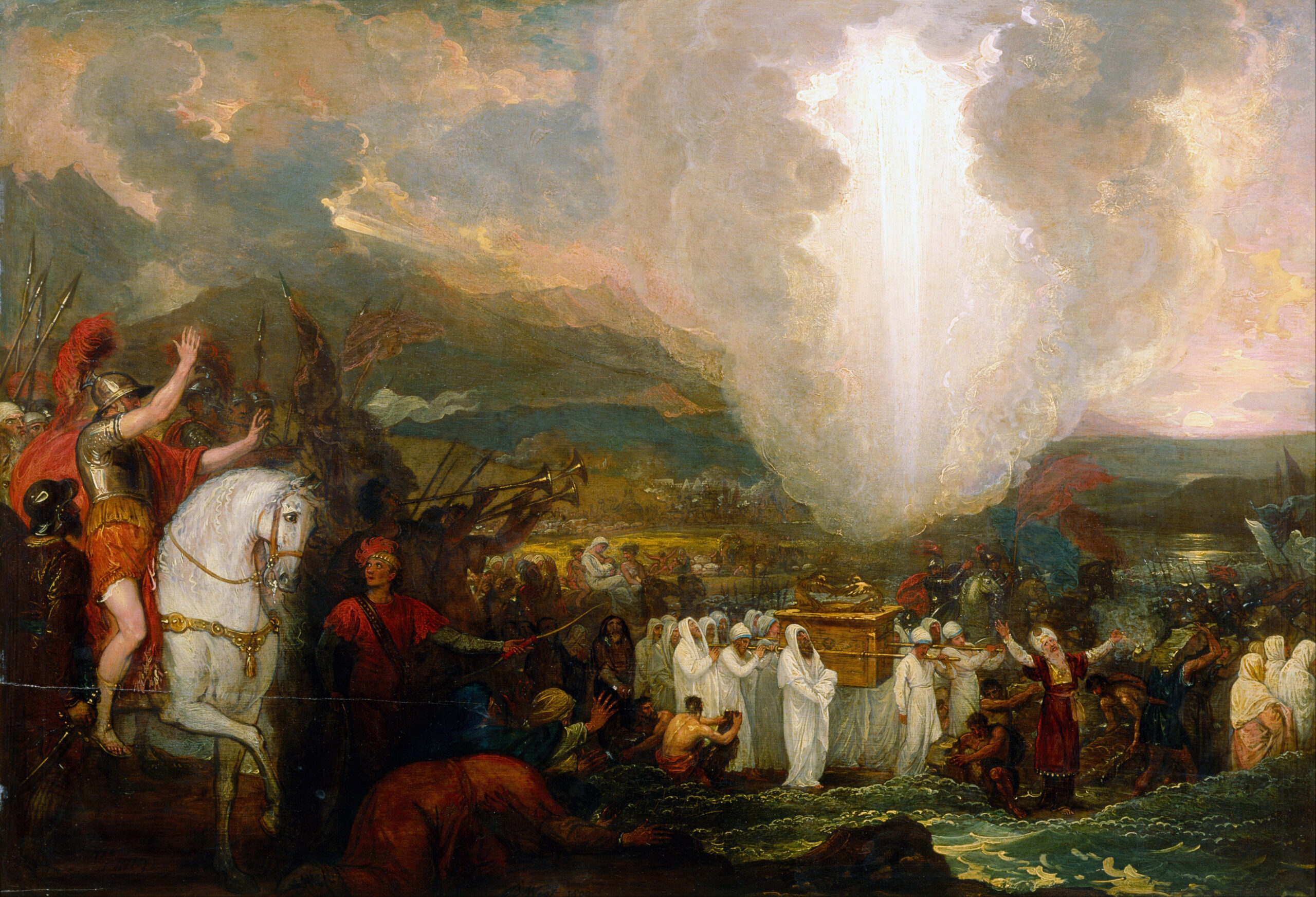

Above: Joshua passing the River Jordan with the Ark of the Covenant by Benjamin West, 1800.
For the greater honour and glory of Our Immaculate Lady the Theotokos, True Ark of the New Covenant.
Since before I was Catholic, I was a defender of the Latin Mass. When I was Eastern Orthodox, my spiritual father introduced me to Michael Davies, and I even got a copy of Fr. Cekada’s Work of Human Hands. In this latter text, for instance, I saw the changes to the old Latin Mass very conspicuously in the suppression of the “fires of hell” from the Collect for St. Nicholas. Back then I grew in my liturgical devotion to the ancient Roman Rite by my exposure to it at the “classic” TLM site, SanctaMissa.org.
But when I came into communion with Rome in 2013, I was not a traditionalist zealot. The parish I attended was a “Reverent Novus Ordo” which had both Latin and English chant, and, coming from the Eastern liturgical piety of vernacular liturgy (in the Orthodox diaspora), I found this celebration of the new rite to be edifying.
As I continued to study the issues, however, I found more and more difficulties with the text of the Novus Ordo Missae. The “straw that broke the camel’s back” (as we say in the States) was the Collect for the Holy Innocents, which removed the reference to mortifying sin.
After that I stopped trying to make the Novus Ordo Missae “work.” It was ultimately too distracting for my prayer life.
Nevertheless, because of my background in the east, I found much of the scholarship promoting the Latin rite traditionalist movement to be poor and superficial. But I was still attending the new and old rites back and forth, so eventually I surrendered to the traditional piety of praying the Rosary at Mass. That helped me just meditate on the Eucharistic Heart of Jesus, whatever was happening in the rite.
Discovering Fatima changed everything. That’s when I found out that Heaven asked for Eucharistic reparation generations before the Novus Ordo was promulgated, showing that the liturgical problem is much deeper than the Novus Ordo.
That’s when I began to look at the liturgical debates and iconoclasm of the 60s and 70s through the lens of Fatima: in short, God’s wrath was being poured out as He had done before, when He destroyed His own liturgy.
This points us to the real “one thing necessary,” which is a tradition more important than the Latin Mass (Is There Any Tradition More Important than the TLM? Yes. And it’s the “One Thing Necessary”).
Further, as I discovered the weakness of traditionalist scholarship, especially in regards to Vatican II, I discovered that the Tradition really cannot object to the Novus Ordo per se (the Pope has the traditional right to introduce new rites), but the Tradition can object only to the suppression of the Latin Mass as such (as long as you cite Vatican II and the new Catechism to prove this!) (“On the Trad Mishandling of Vatican II, pt. 1: the Pope and the Liturgy“).
So over the years I’ve kind of come “full circle” back to my original positions regarding this debate in the Latin rite: I will always defend the rights of the Latin Mass, even as Joseph Ratzinger did. But the question of the Novus Ordo Missae is a different question entirely.
Enter the Divine Scriptures
My first book was called Introduction to the Holy Bible for Traditional Catholics: a Beginner’s Guide to Reading the Scriptures for Spiritual Profit. This book was an indirect reparation for all my sins of heresy as a Protestant and then as an Orthodox Christian, and an attempt to offer something positive according to my area of study that would help one single soul take one single step closer to the Lord in their spiritual lives.
Since I published that, I’ve come realise certain errors or omissions that I will bring out in a 2nd edition (someday!).
But the main point of this text remains: there is only one way to read the Divine Word of God, and the Catholic way is to pray the Scriptures. It is traditional to memorize the whole of Scripture because it is traditional to spend hours each day praying the Holy Word of God, as our forefathers did.
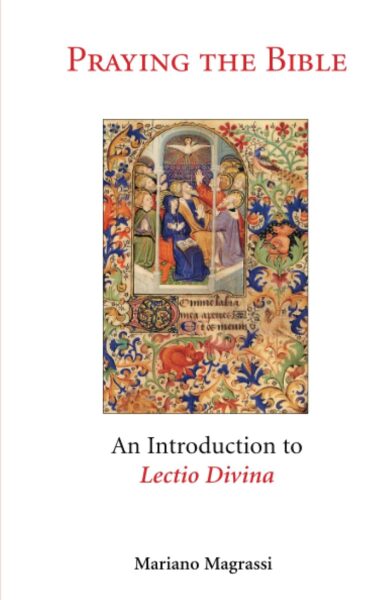
Archbishop Mariano Magrassi’s book Praying the Scripture: Introduction to Lectio Divina does a great job discussing this Catholic tradition of liturgical and private mental prayer using the Holy Scriptures. This book is required reading for anyone who wants to comment on the liturgical debates in regards to the Lectionary changes.
What I discovered is that the principle of Lectio continua – that is, reading whole books of the Bible all the way through, upon which the new lectionary is based – is very ancient, whether in the ancient Jewish lectionaries or else in the bare fact that books like the Gospels would have been read all the way through, in their original context.[1] So the new lectionary of the Novus Ordo Missae – to take an entire year reading through one Gospel on Sundays, and reading through all four Gospels through the daily Mass readings – adds a layer of Tradition that is not possible in the Latin Mass.[2]
Second, I’ve been absolutely knocked over by some of the exegetical wisdom of the Novus Ordo Missae. It started when I saw the Advent Lectionary use Zephaniah III. 15, 17 (ask yourself: when’s the last time you heard about this obscure book?) to provide the typology for the Ave Maria of St. Luke’s Gospel. Then I read Joseph Ratzinger’s volume III of Jesus of Nazareth which shows that this passage from the prophet says “Hail, daughter of Zion… the Lord is in your womb [O Israel].”
Here Zephaniah is alluding to a passage in the Book of Exodus which speaks of God dwelling in the ark of the Covenant as dwelling “in Israel’s womb.”[3]
The ark was the weapon of the Army of Israel and the Presence of the Lord of Angel Armies, but more on that shortly.
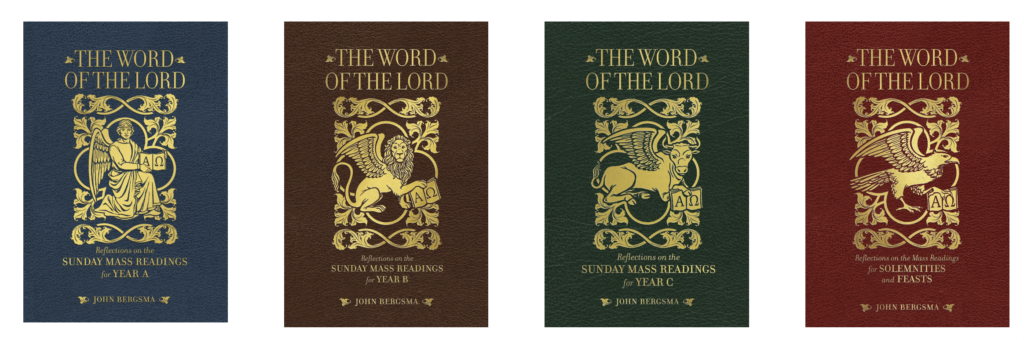
I began reading the new lectionary commentary from my friend Dr. John Bergsma, which began to open my eyes to the divine riches of the new lectionary and all its exegetical depth.
Then last Sunday the new lectionary juxtaposed the father of the Carmelite order – Prophet St. Elijah – in his most potent passage (the “still small voice” of III Kings XIX. 9-13), with the walking of St. Peter on the water (St. Matthew, XIV. 22-33).
This exegetical parallel struck me so deeply because it hit at the very foundations of mental prayer, pointing to that most important tradition – defended by Fr. Reginald Garrigou-Lagrange and vindicated by Vatican II – the universal call to holiness (“Vatican II and the Lasting Influence of Garrigou-Lagrange’s Mystical Theology“).
“The Woman” against the Dragon
Finally, at some point in this journey I discovered the lectionary for the new rite of the great feast of the Dormition of the Theotokos. The old lectionary for this feast is great – there’s nothing wrong with it.
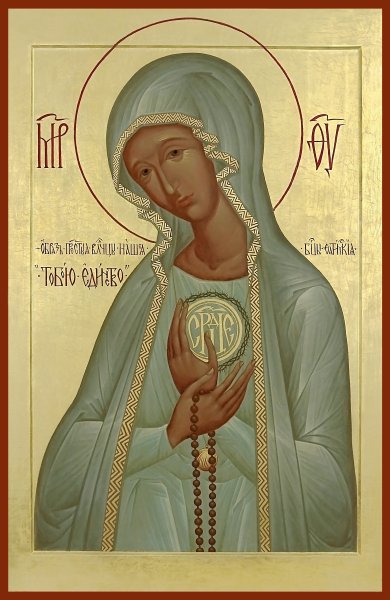
But the new lectionary brings out the Ark of the Covenant typology (II Chron. XV in the Vigil Mass and the Revelation of Jesus Christ XI. 19 – XII. 6 in the Mass of the Day). The Ark of the Covenant, as I mentioned before, is such an important typology of Our Lady and the Church that it really cannot be overstated – this is the typology where Our Lady is truly militant. It is such a powerful image of Our Lady for meditation that we can bring to every Rosary.
And when the ark was lifted up, Moses said: Arise, O Lord, and let thy enemies be scattered, and let them that hate thee, flee from before thy face (Num. x. 35).
What struck me most was that the new lectionary not only bolstered this powerful Marian spirituality out of the Old Testament, the Mass of the Day also connected the Revelation of Jesus Christ chapter XI verse 19, with “the sign of the woman” (as is obvious from the text but is lamentably chopped to pieces by the chapter divisions – chapter divisions and verses are not inspired by the Holy Ghost). This is all the more significant since this is the bookend of the entire Scripture from Genesis 3 (“the woman” and “the serpent”) to the Revelation of Jesus Christ chapter 12 (“the woman” and the “dragon/serpent”). The typology of Our Lady as the Ark of the Covenant brings out the Marian Militancy of St. Maximilian Kolbe in modern times: we see that the Conspiracy of Antichrist grows ever more and more, and hence Our Lady, “The Woman,” is exalted ever more and more against the Dragon.
So in this sense the Novus Ordo Missae is truly “more modern” – because, by bringing out the Ark typology, it is more militantly Marian against the Antichrist – than was the old lectionary for this feast.
The Divine Scriptures and the Interior Life
These are just some of the divine riches contained in the new lectionary. If we are faithful to the traditional spirituality of the Holy Scriptures – the liturgical and private devotional reading of the Word as mental prayer, as Magrassi describes in his book aforementioned – these riches in the new rite form endless objects of meditation and adoration for God’s self-revelation.
Finally, this points to the interior life which was fundamental in the Dogmatic Constitution Dei Verbum. This is one of the insights that I will have to bring into my 2nd edition of my book. As my friend Kennedy Hall points out, Fr. Joseph Ratzinger did indeed fall into the error of Limited Inerrancy that the Popes condemned and Vatican II’s text permitted (implicitly).[4] This issue was one of the main points of my book, and in my view, it is still one of the most important critiques of Vatican II.
But since I wrote that, I took a class at the Avila Institute on the Mysticism of the Bible taught by Fr. Ignatius Schweitzer, OP. He quoted from Ratzinger’s dissertation on Bonaventure, how the Seraphic Doctor never used to the term “revelation” in regards to the Scripture per se (the way that the pre-Vatican II manuals did, and the way the schema De Fontibus Revelationis did). Rather, the Seraphic Doctor used the term “revelation” to refer to the moment when the Spirit inspired the individual soul by means of Lectio Divina. The same Spirit which inspired the writers of Holy Scripture also inspires the soul in God’s own contemplative order, by means of the Divine Word.
This meant that, to the Seraphic Doctor (who is really summing up the Tradition of Lectio Divina here), the inspiration of Scripture is not primarily about whether or not it contains error (this is an important point, but not the main point). The inspiration of the Scripture is primarily concerned with God’s own self-revelation to the individual human heart. And hence, the orientation of the schema on Revelation was significantly altered to create Dei Verbum which provides a framework for the interior life. Again, yes it’s still true that Dei Verbum implicitly permitted to the error of Limited Inerrancy (and Ratzinger privately professed this error, though never publicly), but the authentic reading of the text (according to Neo-Scholastic norms confirmed by Lumen Gentium) excludes this erroneous reading the Neo-Modernist heretics pushed for.[5]
All of this is central to what Divine Providence seems to be doing by means of Vatican II and the Novus Ordo Missae – sifting out the seed that has no roots, that fall away – those “new pagans in the Church” who were abusing our Eucharistic Lord in the Latin Mass before the Council – and purifying with fire the faithful remnant of “little ones” who will please the Lord more perfectly with their childlike hearts of gold.
Most Holy Lady, obtain graces for me to be a little child before His Majesty in the Eucharistic Sacrifice! Save me from Pharisaic pride….
Conclusion: Better Traditionalist Arguments
So in short, I have to admit that the divine riches of the Scripture contained in the Novus Ordo Missae are there. This doesn’t require anyone to attend the new rite or prefer a devotional reading of Holy Scripture for mental prayer (I myself prefer a daily Passionist meditation more than Scripture!).
But it does require us traditionalists, in my view, to admit something the liturgical reform brings to souls that the old Mass did not. As I said, we need to defend the Latin Mass in a way that is more traditional – the pope has every right to introduce a new rite, and we can respect our fellow Catholics who are spiritually nourished by the new rite. It seems to me that it is not traditional to suppress the Latin Mass or the new rite. Traditional Romanitas is not all the Latin Catholics having the same rite – that’s a post-Trent phenomenon, not traditional. The traditional answer to the Roman Rite(s) is given by Vatican II in the decree on Eastern Churches, which can be applied to the various Latin rites as well as Eastern rites. This is true, traditional, Romanitas, which truly honours Our Lady as the Ark and Mater Ecclesiae, and gives us the traditional principles to resolve our liturgical woes:
The Holy Catholic Church, which is the Mystical Body of Christ, is made up of the faithful who are organically united in the Holy Spirit by the same faith, the same sacraments and the same government and who, combining together into various groups which are held together by a hierarchy, form separate Churches or Rites. Between these there exists an admirable bond of union, such that the variety within the Church in no way harms its unity; rather it manifests it, for it is the mind of the Catholic Church that each individual Church or Rite should retain its traditions whole and entire and likewise that it should adapt its way of life to the different needs of time and place.
These individual Churches, whether of the East or the West, although they differ somewhat among themselves in rite (to use the current phrase), that is, in liturgy, ecclesiastical discipline, and spiritual heritage, are, nevertheless, each as much as the others, entrusted to the pastoral government of the Roman Pontiff, the divinely appointed successor of St. Peter in primacy over the universal Church. They are consequently of equal dignity, so that none of them is superior to the others as regards rite and they enjoy the same rights and are under the same obligations, also in respect of preaching the Gospel to the whole world (cf. Mark 16, 15) under the guidance of the Roman Pontiff (Orientalium Ecclesiarum, 2-3).
[1] So for example, St. Luke’s writes his Gospel, sends it to Theophilos. What probably happened next is that Theophilos would have gathered all his family, friends, slaves, everybody he could, and everyone would sit down and someone would read the whole thing out (in three hours or so), and that was it. You should try this some time, using Audio Gospels, when you have the opportunity, like on a long car ride, it really brings out the riches of the Gospels in a new way.
[2] Yes, I’m familiar with all the arguments against the new lectionary. These are valid. However, these do not discount what I’m saying either. It seems to me that the traditional, Catholic approach, is to take all things that are good in all rites and customs and defend them all, not excluding anything but heresy, error, and abuse. Therefore if the liturgical abuse is corrected, the Novus Ordo Missae should not be suppressed.
[3] Joseph Ratzinger, Jesus of Nazareth, vol. III: the Infancy Narratives, trans. Philip J. Whitmore (New York: Image, 2012), 28.
[4] Joseph Ratzinger, “On the schema On the Sources of Revelation: address to the German-Speaking Bishops, October 10, 1962” in Jared Wicks, “Six Texts by Prof. Joseph Ratzinger as Peritus before and during Vatican Council II,” Gregorianum 89:2 (2008), 269-285. Quoted in this Pidel article cited by Kennedy Hall, What Happened to Catholicism (Manchester, NH: Sophia Institute Press, 2025), 152.
[5] In other words, it’s impossible to claim that Ratzinger professed this error obstinately (he seems to have backed away from this by the time he writes the Jesus of Nazareth trilogy, as he implies in his introduction) or that Vatican II actually teaches this error theologically. It is, however, reasonable to claim that the Council implicitly permitted this error due to the historical dynamics of the Council and the ambiguity of the text.