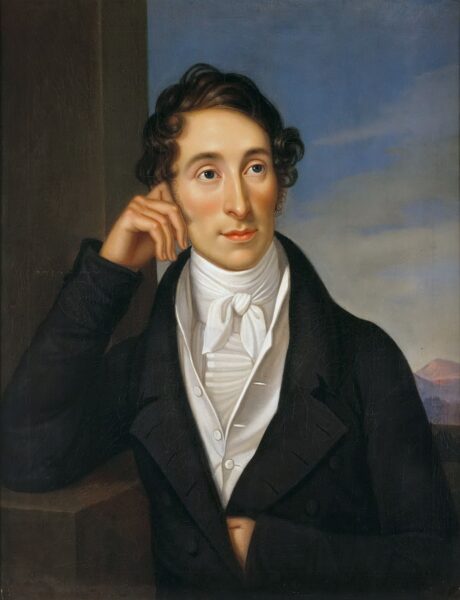
Two centuries ago, on June 5, 1826, Carl Maria von Weber died of tuberculosis in London. A central figure of musical Romanticism, he created the first true milestone of German Romantic opera.
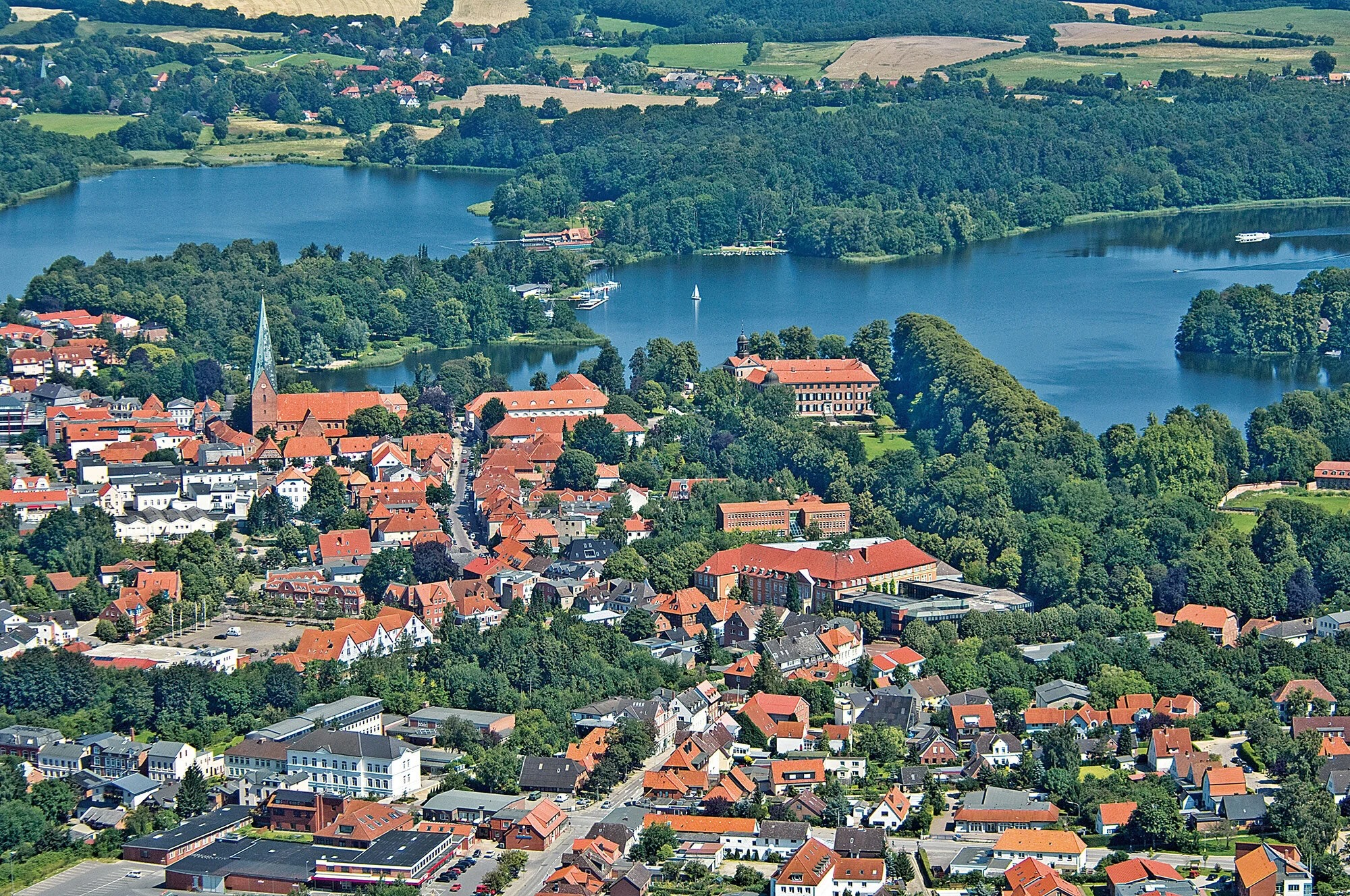
Born thirty-nine years earlier in Eutin, some nineteen miles north of Lübeck, Weber grew up in a family of musicians and artists. Immersed in the theatre from childhood and gifted with extraordinary musical talent, he developed a style marked by purity and formal balance. Among his teachers were Michael Haydn (†1806, the younger brother of Joseph) in Salzburg and Abbot Georg Josef Vogler (†1814), with whom he studied in Vienna and later in Darmstadt. From them he absorbed both technical mastery and a broad cultural foundation that would sustain his career.
Beyond his artistic stature, Weber impressed contemporaries as a man of rare integrity:
Weber, from the evidence, shaped himself into an exemplary man, generous to a fault, a faithful husband and a devoted father, a devout Catholic, a staunch friend as well as an uncompromising artist and idealistic German.[1]
Weber’s life was one of restless travel and relentless activity. As pianist, composer, and conductor in Breslau, Prague, and Dresden, he displayed precocious gifts: at twelve he composed his first opera, The Power of Love and Wine. His enduring fame, however, rests above all on the stage. With Der Freischütz (1821; The Freeshooter, or more colloquially, The Magic Marksman), he inaugurated German Romantic opera, soon followed by Euryanthe (1823) and Oberon (1826). Alongside his operas, he produced orchestral works—overtures, symphonies, concertos—as well as patriotic and martial songs. In these one hears the legacy of Mozart (†1791) and Beethoven (†1827), transformed into a personal language of rhythmic vitality, dramatic urgency, and unmistakably Romantic lyricism.
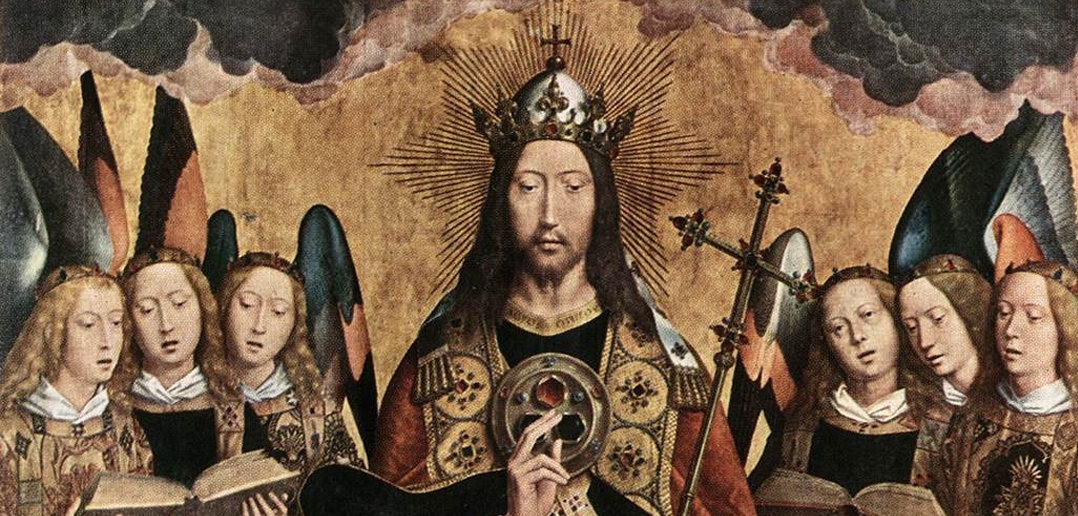
Less widely known, but no less remarkable, is Weber’s sacred music. Exploring the liturgical works of composers remembered primarily for theatre or instrumental writing often opens a hidden chamber of their imagination: sometimes shaped by commission, sometimes by intimate conviction.
Among Weber’s sacred works, the Missa Sancta II in G major, Jubelmesse, op. 76, J. 251, for soloists, choir, and orchestra, holds a special place. Written in Dresden between October 1818 and January 1819, it was first performed on January 17, 1819, in the Hofkirche, celebrating the golden wedding anniversary of Frederick Augustus I, King of Saxony (†1827), and Maria Amalia Augusta (†1828)—hence its nickname, the “Jubilee Mass.” The work was published posthumously in 1835 by Tobias Haslinger in Vienna.
Weber cherished this Mass above many of his compositions, confessing that it was written “from the depths of the heart”:
When you hear my Mass, remember me with love, for it came entirely from my heart and is the best I can give. One could say much about it, but I am too indolent to do so. Just listen to it![2]
The Jubelmesse reveals a wealth of melodic invention and colorful orchestration, with passages of striking virtuosity—particularly in the soprano part, conceived for a 19th-century bel canto prima donna. The whole structure is animated by sharp contrasts of timbre and dynamics, nowhere more so than in the Credo: the lyrical Et incarnatus darkens into the dramatic Crucifixus, before bursting forth in the triumphant Et resurrexit—a crescendo that unmistakably betrays Weber’s theatrical genius.
Though long listed as his second Mass (after the Mass in E-flat), the rediscovery of a youthful Jugendmesse of 1802 in Salzburg has shown that the Jubelmesse is in fact his third and final Mass.
Written for a public celebration rather than private devotion, it nevertheless reflects Weber’s sincere religiosity. Unlike classical Masses steeped in polyphonic counterpoint, it adopts a predominantly homophonic style, with choral harmonies supporting the main melodic line. Its expressive heart lies in the dialogue between soloists and choir, where the voice of the individual resonates within the community—a distinctly Romantic gesture, filtering the sacred through personal subjectivity.
The work’s progression underscores this narrative: the Kyrie opens in quiet supplication; the Gloria explodes with jubilant energy; the Credo shifts between lyrical and dramatic tones; the Sanctus and Benedictus unite grandeur with grace; and the Agnus Dei closes in intimate tenderness, culminating in a Dona nobis pacem that blends simplicity with a universal longing for peace.
The Jubelmesse emerges, then, as a jewel of authenticity. Its apparent simplicity masks a deliberate choice: spontaneity and direct expression take precedence over academic display. It radiates the same theatrical vitality that immortalized the composer of Der Freischütz, yet in a sacred idiom that loses nothing of its spiritual depth.
Alongside his operas, Carl Maria von Weber’s sacred music reveals a multifaceted genius, able to translate the Romantic idiom into a spiritual language—personal yet universal. Two hundred years after his death, revisiting works such as the Jubelmesse not only honors the father of German Romantic opera but also restores to view an artist who gave voice to faith and individuality in a uniquely Romantic key.
[1] D. G. Henderson & A. H. Henderson, Carl Maria von Weber: a guide to research, New York 1990, p. XIII.
[2] F. W. Jähns, Carl Maria von Weber in seinen Werken, Berlin 1871, p. 242; our translation.