Some people traveling around Italy have found themselves in front of churches and basilicas that require an entrance ticket for admission and visitation. Of course, this fee is not for participation in liturgical celebrations. However, if someone wished to enter for a devout visit (that is, not purely touristic, but inspired by a spiritual desire) in order to pray before the works of art preserved in those churches, they would still have to pay an entrance fee.
It is true that churches and basilicas sometimes face very high maintenance costs, so one can understand that some of them must find ways to raise the funds necessary for proper upkeep. That said, charging admission to enter a church is not without its problems. A note dated January 31, 2012, from the Permanent Episcopal Council of the Italian Episcopal Conference states:
Charging an entrance fee is admissible only for the touristic visit of parts of the complex (crypt, treasury, separate baptistery, bell tower, cloister, individual chapel, etc.), clearly distinct from the main body of the church, which must remain available for prayer.
I am sure the Bishops are aware that, in reality, in some churches one must pay precisely to access the main building itself. Yet, as we have said, one can understand this, given the current ecclesial situation in which we live.
However, if we accept the principle that our churches sometimes must resort to such pragmatic measures—also because they are increasingly empty due to the drastic decline in the number of faithful (and consequently in offerings)—why not accept with the same pragmatism that, when concerts take place in churches (with music appropriate to the sacred setting and performed by professional musicians), an entrance fee might be charged so that the musicians can make a living from their work? A work that, through the power of true sacred music (not the kind we are unfortunately forced to hear in many of our churches), lifts souls toward heavenly things.
There exists an Instruction issued by the Congregation for Divine Worship in 1987 stating that admission to concerts in churches must be free of charge. Yet this directive can be questioned, even in light of the Church’s own Social Doctrine, which teaches that the worker is worthy of his wages. In the same Instruction, it is said that the concert organizer must reimburse any damages caused to the church—something that may well be fair—but there is no mention whatsoever of the costs that a high-level musical organization must bear in order to hold a concert in a church: the fees of singers and instrumentalists, advertising materials, programs, and so forth. These already amount to several thousand dollars, which, because of an unfair provision, cannot be recovered—making the apostolate of those who dedicate themselves to evangelization through great sacred music extremely difficult.
Moreover, one must not forget that, to the expenses listed above, there is often added the so-called “offering” to the church itself—an “offering” that is not so spontaneous and sometimes even explicitly quantified. Thus, the message that comes across is this: “You musicians have no right to anything; you must work for free, while everything is owed to us!” Anyone can see the deep injustice of such a situation.
I believe it is important to maintain a healthy sense of realism that allows us to understand how the spiritual life is the most important dimension of our existence, while also recognizing that we need material things to live. Therefore, those who possess a particular talent—such as musical talent—should be enabled to carry out their role without the fear of financial hardship. It is difficult to understand why a principle like this, which lies at the heart of the Church’s Social Doctrine, still struggles to take root within the Church herself.
If we hold to the principle that one should not have to pay to enter a church, then we would need to apply this also to those churches that require an entrance ticket—these churches that would soon have to close without such fees. Consider also the celebration of the Sacrament of Marriage, for which a contribution is requested—an amount established by the Vicariate in Rome (though it can vary in certain parishes). The documents say that the celebration itself is free, but the faithful are obliged to contribute to the support of the Church and of the poor. In other words, a rather roundabout way of implying that a payment is expected from the couple.
It must be repeated that it is perfectly understandable that churches have maintenance costs and cannot cover them easily, especially given the collapse in attendance at liturgical celebrations. But if this principle applies to churches, it certainly applies to the faithful who are musicians as well. If they are required to pay a fee for the use of the church, why should they not also be entitled to receive a fee in support of their own work?
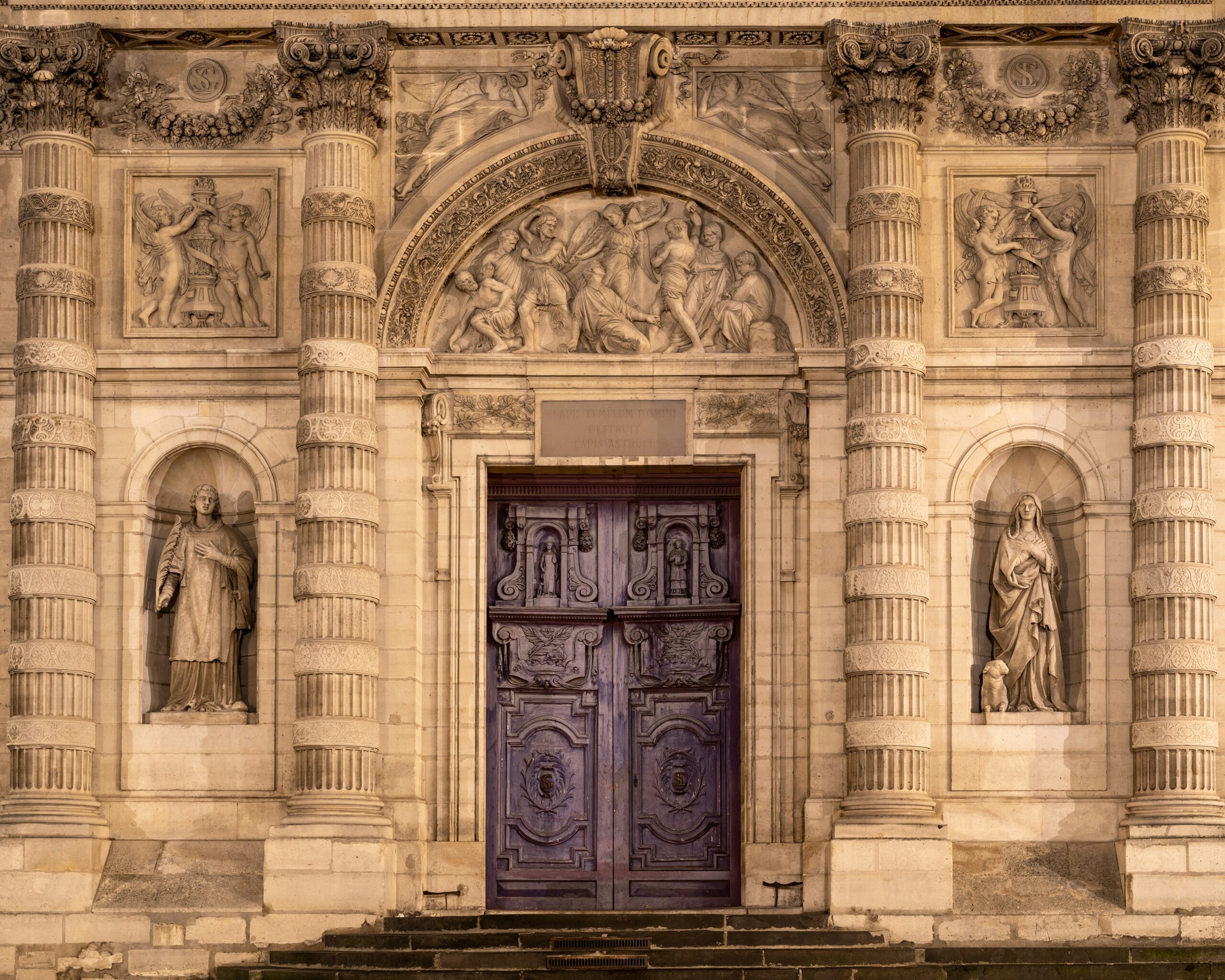
Photo by Dylan Freedom on Unsplash