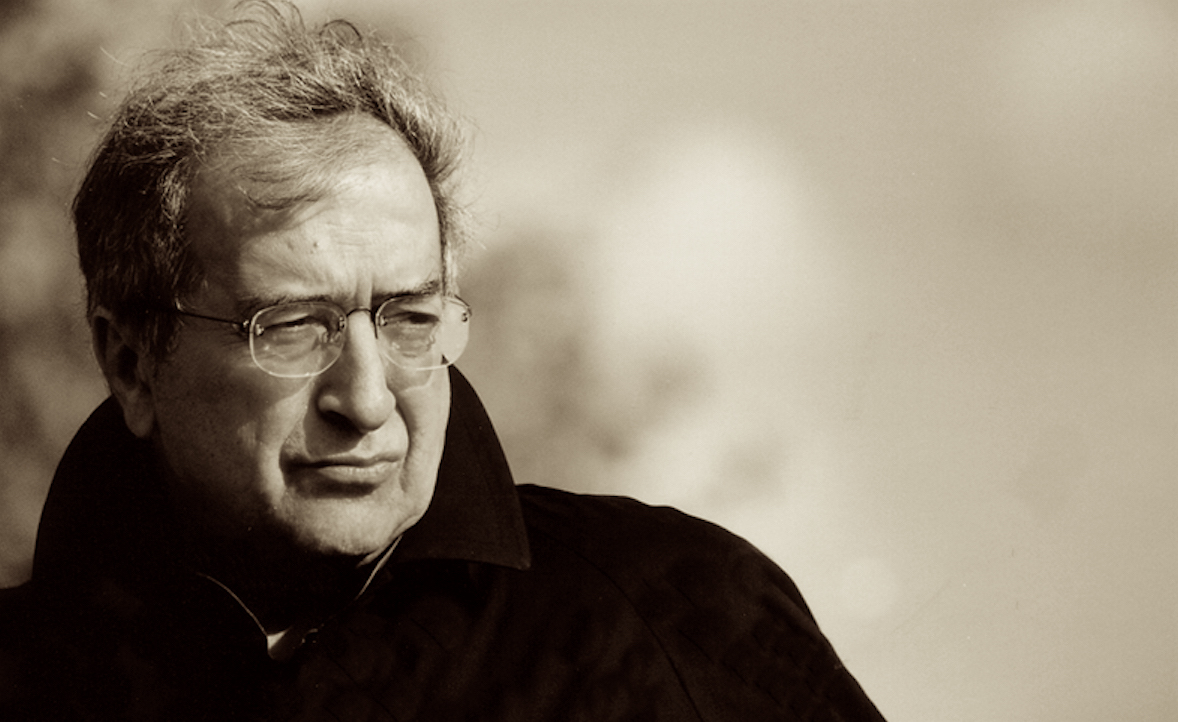
One hundred years ago, on October 24, 1925, Luciano Berio, one of the most significant figures in 20th-century Italian music, was born in Oneglia, in northwestern Italy.
As with reflections on other great artists, it is worth preemptively addressing an observation that a curious reader might make: with his three marriages and a worldview far removed from Catholic orthodoxy, Berio may not appear to be a natural candidate for sainthood. Yet, let it be clear: this reflection does not aim to evoke the Dicastery for the Causes of Saints but to celebrate those exceptional minds who, even while traversing unconventional paths, found profound artistic inspiration in the spirit of Catholicism.
Berio trained under Giorgio Federico Ghedini († 1965) in Milan and Luigi Dallapiccola († 1975) in Tanglewood, Massachusetts. As a composer, conductor, arranger, educator, and cultural pioneer, Berio emerged as a towering figure in the international avant-garde. Renowned for his groundbreaking exploration of sound and spatialization, his career was marked by critical debate yet consistently engaged and intrigued audiences. Berio’s work invites listeners to embrace sonic freedom, offering experiences that meld tradition with innovation.
Throughout his illustrious career, Berio received three honorary degrees: in 1980 from the University of London, in 1995 from the University of Siena, and in 1999 from the University of Turin. He was also the first Italian musician to be awarded the prestigious Imperial Prize, often referred to as the “Nobel of the Arts,” by the Japan Art Association. Berio passed away in Rome on May 27, 2003.
Among Berio’s notable works is his 1949 choral composition Magnificat. Scored for two soprano soloists, a mixed choir, eight wind instruments, two pianos, two double basses, and percussion, it gives musical voice to Mary’s canticle, an integral part of the Church’s daily prayer. Throughout history, the Magnificat has inspired composers of every era, its timeless message resonating in humble chapels and grand cathedrals alike, from Gregorian chant to the masterful polyphony of Giovanni Pierluigi da Palestrina († 1594), Orlando di Lasso († 1594), and Tomás Luis de Victoria († 1611), and later through works by Antonio Vivaldi († 1741) and Johann Sebastian Bach († 1750).
Berio’s Magnificat stands firmly in this venerable tradition, yet it reimagines it through the lens of modernity. While youthful in its eclecticism and clearly influenced by Dallapiccola’s Canti di prigionia (Songs of Imprisonment, 1938–1941) and Stravinsky’s Symphony of Psalms (1930), Berio’s distinctive voice is unmistakable. The composition unfolds with remarkable expressivity, beginning with an extended unison on a delicately ornamented C and evolving into a richly layered harmonic texture built on the juxtaposition of F major and A major triads. This work, simultaneously a homage to tradition and a harbinger of Berio’s innovative language, bridges the past and the future.
Berio described the Magnificat as follows:
I composed the Magnificat while I was still studying at the Conservatory in Milan with G. F. Ghedini. I remember the deep impression Ghedini’s Concerto Spirituale had on me in those years, and it is therefore inevitable, I suppose, that its impact has filtered into some sections of my Magnificat. But there is also something else behind this work. I was born in a small town in Italy, near the French border and far from the so-called cultural centers. There I lived until the age of eighteen, studying and learning everything I could about my ‘heritage.’ I never felt regretful of, nor underprivileged by, living in a provincial town, but I felt injured and angry when, in 1945, with the end of fascism, I realized the extent and the depth of the cultural deprivation that fascism had imposed on me. That same year (I was already twenty), I was for the first time in my life able to hear the music of Schoenberg, Milhaud, Hindemith, Bartok, Webern, etc.; that is, the real voices of my European heritage. These composers, as well as others, had previously been forbidden by fascist “cultural politics.” The impact was, to say the least, traumatic, and it took me at least six years to recover from it. I believed, and I still do, that the best way to deal with ‘traumatic experiences’ is to cope with them to the end and, if possible, to exorcise them on their own ground. These are the premises of Magnificat, written in 1949. It was one of my last exorcisms of the experiences and encounters of those years, and, I think, my last tribute to them. Magnificat, from 1949, constitutes my last exorcism of the experiences and encounters of those years, above all, of Hindemith, Bartok, and Stravinsky, and, I think, one of my last tributes to them.
Luciano Berio’s relentless dialogue between tradition and avant-garde demonstrated that art can bridge the temporal and the eternal, the earthly and the spiritual. In this light, the words of Pope Benedict XVI († 2022), spoken at a concert that featured “demanding compositions by Luciano Berio” and others, are particularly meaningful.
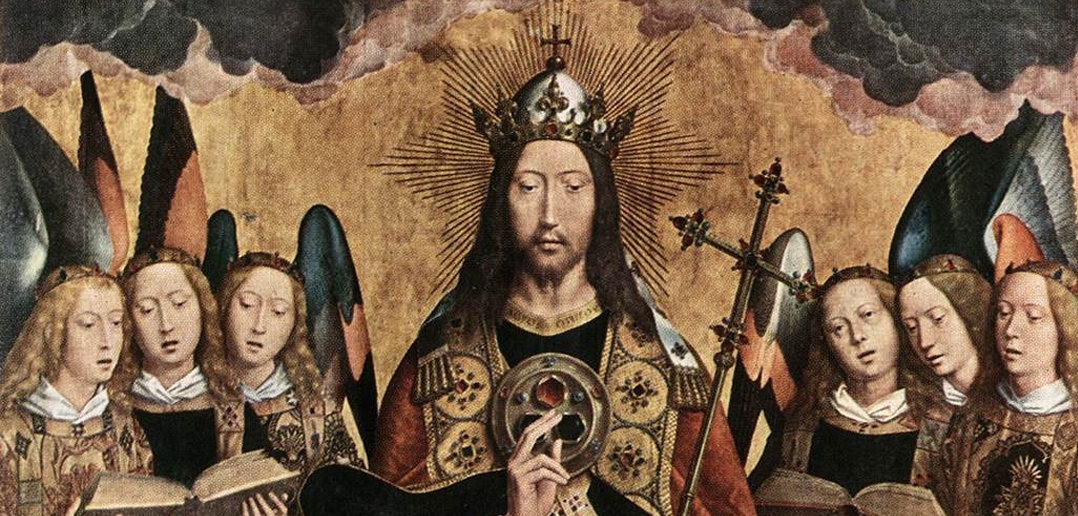
There is a mysterious and deep kinship between music and hope, between song and eternal life: not for nothing does the Christian tradition portray the Blessed in the act of singing in a choir, in ecstasy and enraptured by the beauty of God. But authentic art, like prayer, is not foreign to everyday reality, although it requires us to “water” it and make it germinate if it is to bring forth the fruit of goodness and peace.[1]
Luciano Berio embodied this profound connection between art and hope. His works remain a vital testament to the enduring power of innovation and beauty, inspiring new generations to explore, listen, and dream.