

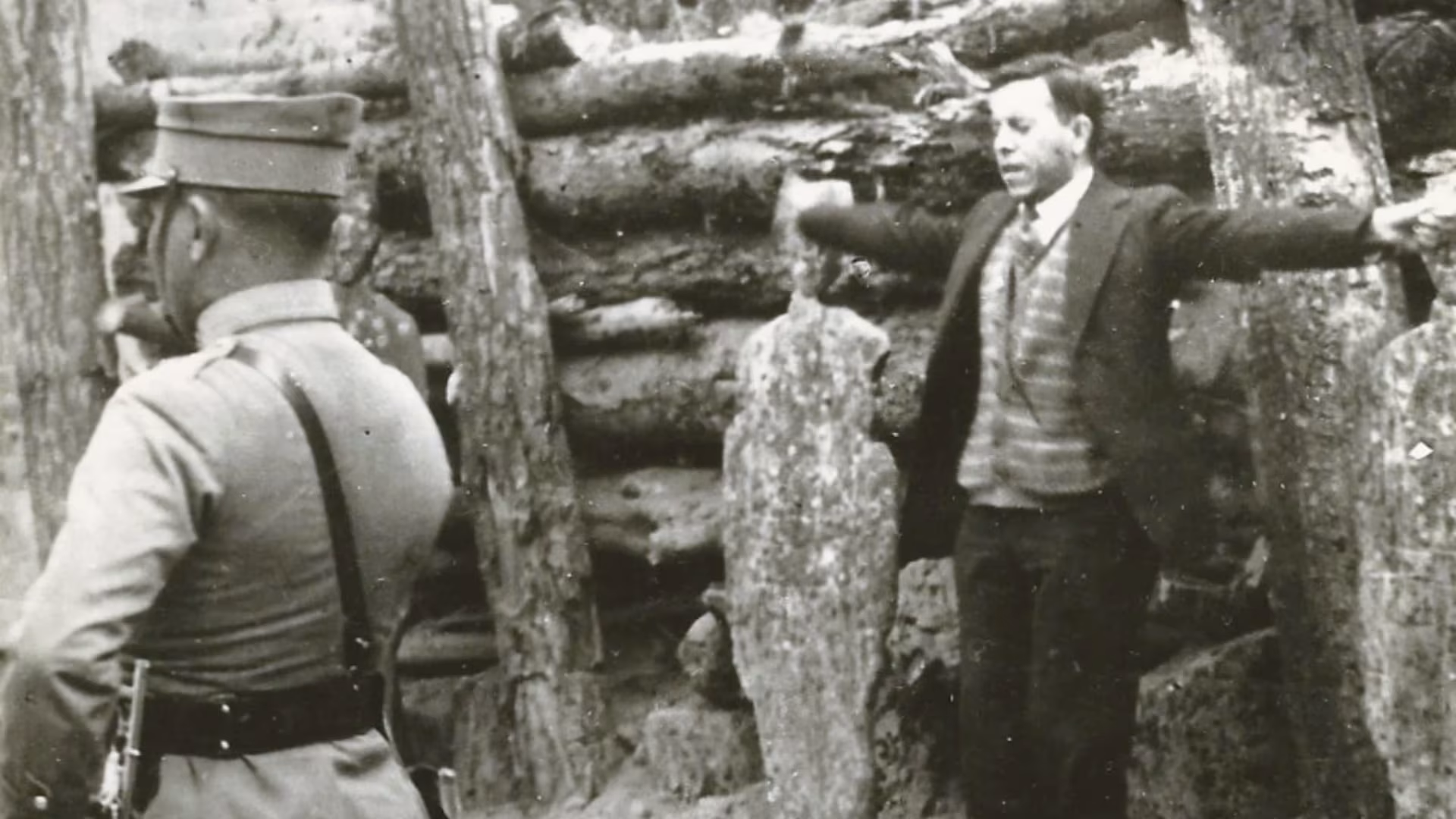
One hundred years ago this month, in November 1926, Pope Pius XI (†1939) issued the encyclical Iniqui afflictisque, on the persecution of the Church in Mexico.
He denounces what he calls “the heavy burden of these great evils” inflicted on the Catholic Church by the Mexican government of the 1920s. Addressed to the world’s bishops, the letter describes a “cruel persecution” that, though less physically barbarous than ancient persecutions, is “without the slightest regard for the past glories of their country” and cloaked “with the semblance of legality” (no. 2).
The Pope cites Mexico’s 1917 “Political Constitution,” which “after declaring the separation of Church and State […] refuses to recognize in the Church […] all her existing rights” (no. 8) and strips priests of civil standing, limits their number, forbids religious vows, seizes all church property, and bans religious education. Later decrees, he says, make the situation “much more severe, if not almost intolerable” (no. 12). As a result, the Church is “barely allowed to exist,” and those who obey God are treated “as guilty of a crime” (no. 11).
Pius XI praises the steadfast response of Mexico’s hierarchy and faithful. The bishops protested unjust laws, suspended public worship rather than submit, and exhorted Catholics to “obey God rather than men” (no. 18). Despite poverty, imprisonment, and even death, “only one or two priests, from among the four thousand, betrayed in a shameful manner their holy office” (no. 22). He extols lay groups such as the Knights of Columbus, the Federation for the Defense of Religious Liberty, the Catholic Society of Mexican Youth, and the Union of Catholic Women, whose members endured “prison sentences or fines,” public insults, and even martyrdom, “the rosary in their hands and the name of Christ King on their lips” (no. 27).
The encyclical situates this persecution within a broader theology of history: the Church, “the Spotless Bride of Christ,” may face storms, but “the gates of hell shall not prevail” (no. 28). Pope Ratti recalls how Christianity shaped Mexican civilization and urges persecutors to recognize that “whatever there is of progress, of civilization, of the good and the beautiful, in their country is due solely to the Catholic Church” (no. 30).
He concludes with a fervent prayer to “Our Lady of Guadalupe, heavenly patroness of the Mexican people” (no. 31), asking her to console the faithful and obtain the return of peace and freedom, and imparts his “Apostolic Blessing” to all suffering in Mexico (no. 32).
Iniqui afflictisque thus stands as both a forceful indictment of injustice and a proclamation of Christian hope.
In the same climate of repression arose the corridos of the Cristero Rebellion (1926–1929), the popular uprising against the fiercely anticlerical laws of President Plutarco Elías Calles (†1945). As during the Mexican Revolution (1910–1920), the corrido—a traditional narrative ballad—became a sung chronicle, a kind of musical reportage carrying news and memory through largely illiterate rural communities.
Usually devoted to tragedies or feats of blood, these songs now took on a distinctly religious character: defenders of the Catholic faith on one side, supporters of the secular state on the other. Ballads told of priests, saints, and battles with explicitly sacred names, such as the famous clash at San Julián (March 15, 1927). Some recounted real events; others sprang from the imagination of corrideros, itinerant storytellers who earned a few coins performing in plazas and markets.
Among the best known are El valiente Quintero and Valentín de la Sierra, which speak openly of rebels killed “for their religion.” In these coplas, faith is the very heartbeat of the movement.
Their power endures because they were preserved—on record, in photographs, and in writing—as a living testimony to a peasant epic in defense of religious liberty.
One of the most celebrated corridos is El martes me fusilan (“On Tuesday They Will Shoot Me”).
Anonymous, like most of this repertoire, it condenses the rebels’ pride of faith and their certainty of eternal life into a few stark stanzas. Here is our English translation:
On Tuesday they will shoot me,
at six in the morning,
because I believe in the eternal God
and in the Great Guadalupana.
They found a little holy card
of Jesus in my sombrero;
for that they condemned me
—because I am a Cristero.
That is why they will shoot me
on Tuesday morning:
they will kill this useless body of mine,
but never, never my soul.
I tell my executioners
I ask to be crucified,
and once I am crucified,
only then may they use their carbines.
Farewell, mountains of Jalisco,
Michoacán, and Guanajuato,
from where I fought the Government
that always fled in haste.
They seized me while I was on my knees,
adoring Jesus Christ;
they knew I had no defense
in that sacred place.
I am a farmhand by heritage,
a Jaliscan by birth;
I have no God but Christ,
for He gave me existence.
By killing me you will not extinguish
faith in the eternal God:
many remain to fight,
and others are being born.
That is why they will shoot me
on Tuesday morning.
Firing squad, get ready, aim!
Long live Christ the King and fire.
Together, Iniqui afflictisque and the corridos reveal how faith can become a wellspring of resistance. Despite persecution, violence, and repression, Catholic belief in Mexico endured—carried not only in churches and convents but also in popular song and collective memory. Pope Pius XI named the injustice with clarity; village singers spread the news in melody; ordinary men and women bore it in silence.
Persecution can confiscate property, outlaw worship, and threaten life itself, but it cannot erase the resolve of a people whose hope rests beyond earthly power. The courage of the Cristeros—at once theological and intensely human—reminds us that faith, like their melodies, outlives the roar of guns, a quiet flame no decree can extinguish.