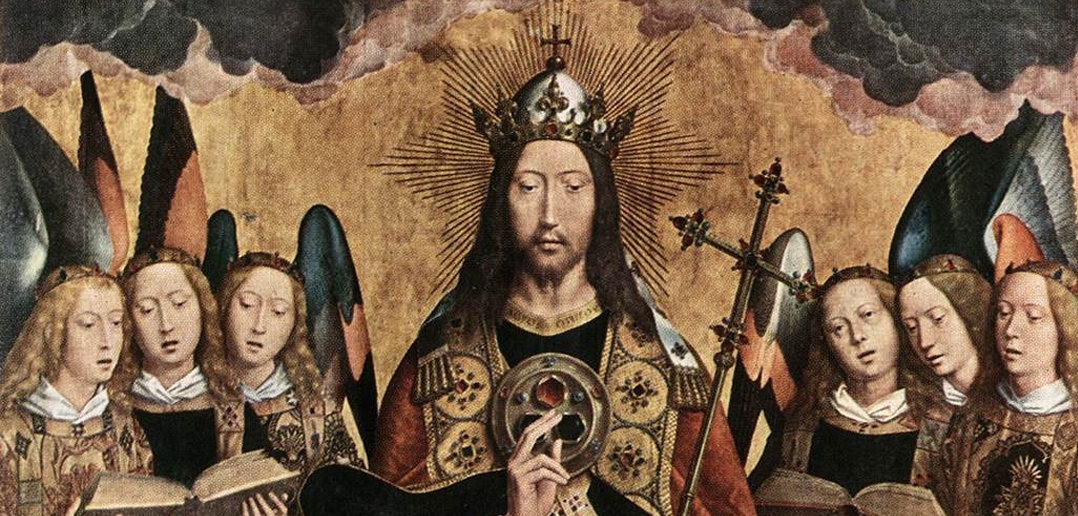

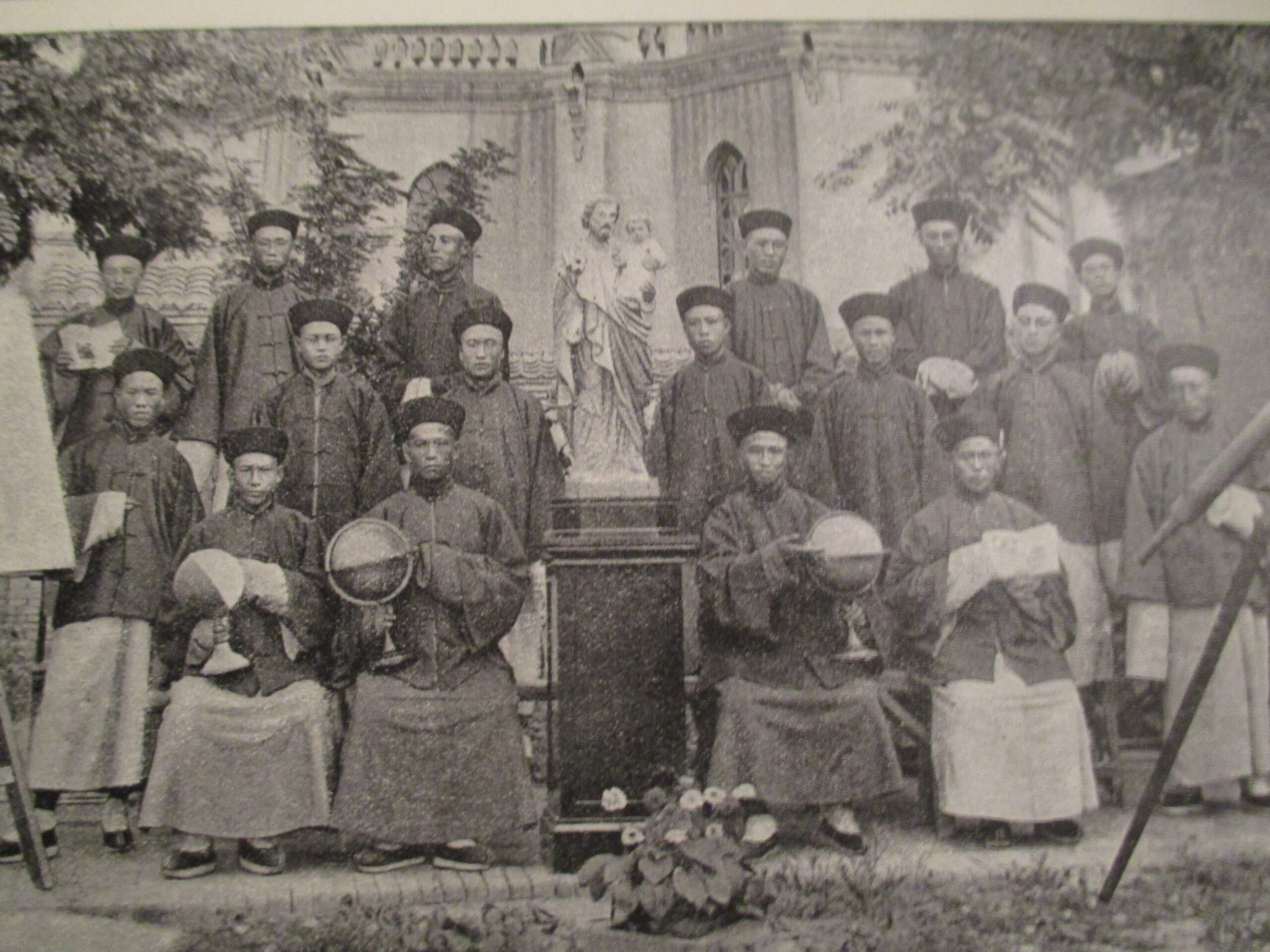
Above: Chinese seminarians in 1900.
On February 28, 1926—exactly one century ago—Pope Pius XI issued the encyclical Rerum Ecclesiæ, a landmark document that profoundly shaped the Catholic Church’s missionary activity. Its central theme was the vigorous promotion of evangelization among non-Christian peoples—a mission that remains vital to the Church’s identity today.
From the very opening lines, Pius XI reaffirms the Church’s universal vocation: to bring Christ to those who still dwell “in darkness and in the shadow of death,” and to fulfill the coming of God’s Kingdom on earth. He recalls how his predecessors tirelessly worked to spread the Gospel and Christian culture, even in distant and often hostile lands.
Building upon Pope Benedict XV’s apostolic letter Maximum Illud (1919), Pius XI strengthens the role of the Congregation for the Propagation of the Faith—established in the 17th century and declared pontifical in 1922—as the heart of missionary outreach. He urges all Catholics to share responsibility for this mission through prayer (especially including missionary intentions in the Rosary) and by supporting the Church’s three principal missionary societies: the Society for the Propagation of the Faith, the Association of the Holy Childhood, and the Society of St. Peter the Apostle.
A pivotal theme of the encyclical is the importance of inculturation—the planting of a Church that takes root in local cultures. Pius XI insists on cultivating native vocations and forming seminarians directly within mission territories. Indigenous clergy, he writes, must not be regarded as secondary but fully capable of leadership and pastoral care. This vision spurred the foundation of local religious congregations and the promotion of contemplative life even in newly evangelized regions.
The encyclical also advocates for a more rational and strategic missionary approach. Missionaries were to be methodically distributed across territories, establishing stable presences with the help of local catechists and periodic pastoral visits by European clergy. Christ’s example—healing the sick, showing compassion, and caring for the poor—is held up as the ultimate model: evangelization through visible, tangible acts of love and service.
Pius XI concludes by entrusting the Church’s missionary work to the protection of Mary, Queen of the Apostles, and imparting his apostolic blessing to bishops, clergy, and laity alike. While the mission is a task for all, he emphasizes, it carries a particular weight of responsibility for the Church’s leaders.
In sum, Rerum Ecclesiæ is more than a theological document; it is a call to action, a blueprint for missionary renewal built on three key pillars:
- the shared responsibility of the faithful through prayer and material support;
- the formation and empowerment of indigenous clergy;
- and a concrete witness to the Gospel through works of charity and cultural respect.
In line with this vision, Pius XI spearheaded the creation of a Missionary Museum in the Lateran Palace to foster awareness and appreciation of the Church’s global missionary work.
Officially inaugurated in 1927, the Missionary-Ethnological Museum—now part of the Vatican Museums—remains a remarkable testament to the Church’s presence in the world’s mission territories. Its collection includes religious and ethnographic objects, musical instruments, scores, and field recordings from Asia, Africa, Oceania, and the Americas. This diversity reflects the Church’s sincere interest in local musical traditions, seen as authentic expressions of spiritual and cultural identity.
One of the museum’s lesser-known but most valuable treasures is its ethnomusicological collection—nearly a thousand instruments from across the globe. Some of these are no longer found in their countries of origin, making them priceless witnesses to traditions that might otherwise have been lost.
Here is a selection of notable pieces from this extraordinary collection:
- A miniature lyre, violin, and harp, inlaid with vegetal motifs, diamond shapes, and bird figures in mother-of-pearl—gifted to Pope John Paul II during his 1990 apostolic visit to Mexico.
- The rebab, a bowed single-string instrument with a circular soundbox and slender neck, from Lebanon.
- The dhodro banam, a chordophone from Bangladesh with a double resonator and a pegbox carved with ritual figures.
- A miniature wooden tableau from Guangdong, China: two musicians, one blind, play the yangqin (table dulcimer) and sanxian (three-stringed lute) with a teapot between them.
- The kuitra, a short-necked lute from Morocco with a distinctive curve and four strings.
- A frame tambourine from Morocco, used in religious rites, originally with a skin membrane and double-sided decoration.
- The maracá (crepitaculum), a Brazilian gourd rattle adorned with colorful feathers.
- The ghaita, a conical-bore oboe with eight finger holes, from Morocco.
- The didjeridoo (yidaki), a wind instrument of the Yolngu people of Northern Australia.
- The Ipiedza headdress from Togo: a gourd helmet with cowrie shells and antelope horns, worn by Konkomba musicians during the Kinachu dance.
- A Lakota Sioux ritual rattle from South Dakota, decorated with eagle feathers and used by medicine men.
- The pahu, a vertical ceremonial drum from Tahiti, Polynesia.
- The qaraqab, large metal castanets used in Gnawa music from Morocco.
- The gimbri, a long-necked lute with a pear-shaped body covered in geometric motifs.
- The joze, or kemanche, a bowed lute with an engraved bronze soundbox from Baghdad.
- The tabla, a goblet-shaped drum from Palestine.
- The frog drum of the Karen people (Myanmar), used in ancestral rites, adorned with sun and animal symbols.
- The ruyi, a Chinese ceremonial scepter meaning “as you wish,” decorated with bats and other symbols of good fortune.
This remarkable musical collection—born from a renewed missionary spirit—stands as a powerful witness to the encounter between faith and culture. Today, it deserves to be better known, cherished, and shared as an integral part of the Church’s spiritual and historical heritage.