
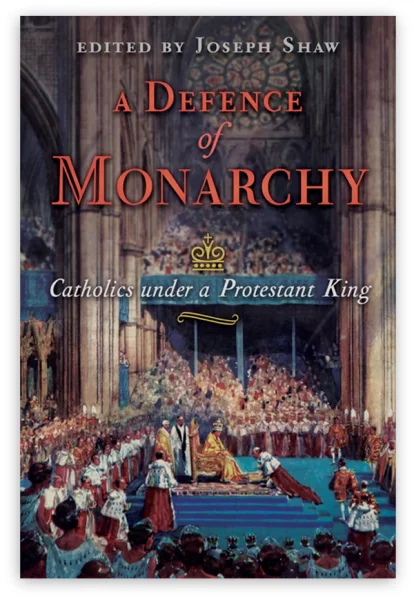
In 2023 Angelico Press published A Defence of Monarchy: Catholics under a Protestant King, in which I and my co-contributors defended the British monarchy and the principle of monarchy in general. We did this in reaction to the attacks on both occasioned by the death of Queen Elizabeth II, in which even some of our fellow Traditional Catholics took part. We didn’t imagine the book would settle the argument, but we hoped, and we still hope, that it would help to clarify the issues.
Today, the focus of attention has moved on. Great Britain, like many countries in western Europe, is experiencing an escalating crisis of identity. One cause of this is the twenty years of large-scale immigration we have experienced. The other is the attitude of the mainstream political class, who suffer from the characteristic self-hatred of Liberal Western elites. To the growing number of people who are concerned that British culture and identity are under threat, the current governing class seems to be saying: if it is, that would be a good thing. As I write, British social media is gripped by the question of whether there is such a thing as the English or British race: whether, in fact, only those members of our multi-ethnic community who can trace their origins outside the island of Great Britain are entitled to an ethnic identity of any kind.
Where this ends, I do not know. What I do know, is what we need to hold on to if we are to avoid descending into civil strife, and what we would need to escape from that strife, should it start. A political community can only function if its members feel they have important things in common with each other. In fact, it would be better to say that a collection of people can only constitute a political community if they have important things in common with each other. A functional state is one in which, when one set of people are asked to make a sacrifice to benefit another set of people within the state, they have enough fellow-feeling to consider the pros and cons seriously. Without this it is politically impossible to build a motorway or a reservoir or a power station over the houses of people in one place to benefit people in another place; to tax the rich to help the poor; or to recruit strong young men to protect the old and the weak, not just of their own sub-group, but of the other people living in the country.
A state needs a degree of identification of the individual with the community, so that if one member is attacked, people from different parts of the country have the feeling that they have been attacked themselves, and so defending this perhaps distant member of the community is not just a matter of charity, but is felt to be more like self-defence.
In the recent media commemorations of the 9/11 attacks on its 25th anniversary, it was moving to hear recordings of President George W. Bush’s ‘Bullhorn Address’ when he visited the site of the Twin Towers. He pledged to bring the terrorists to justice, and the crowd shouted in response ‘U.S.A.! U.S.A.!’ That is solidarity. That is the mark of political community with the will to defend itself.
As a non-American I don’t claim to know what brings Americans together, but I know that there are things that do, because every real community has them. They consist of beliefs, values, cultural practices, loyalties, and a shared history. These things evolve over time, but should not do so too quickly or radically to prevent the people of today from maintaining a sense of common identity with previous generations. We don’t always recognise the importance of these things, and indeed they may not be important, taken individually: a common culture – which is what this is – is a matter of a lot of small things – as well as big things – that add up to a powerful whole.
Allow me to tell a largely American audience: the British monarchy is far more important to the British political community than most British people realise. It is, in itself, a big thing, but it also encapsulates and crystalises an enormous number of small things.
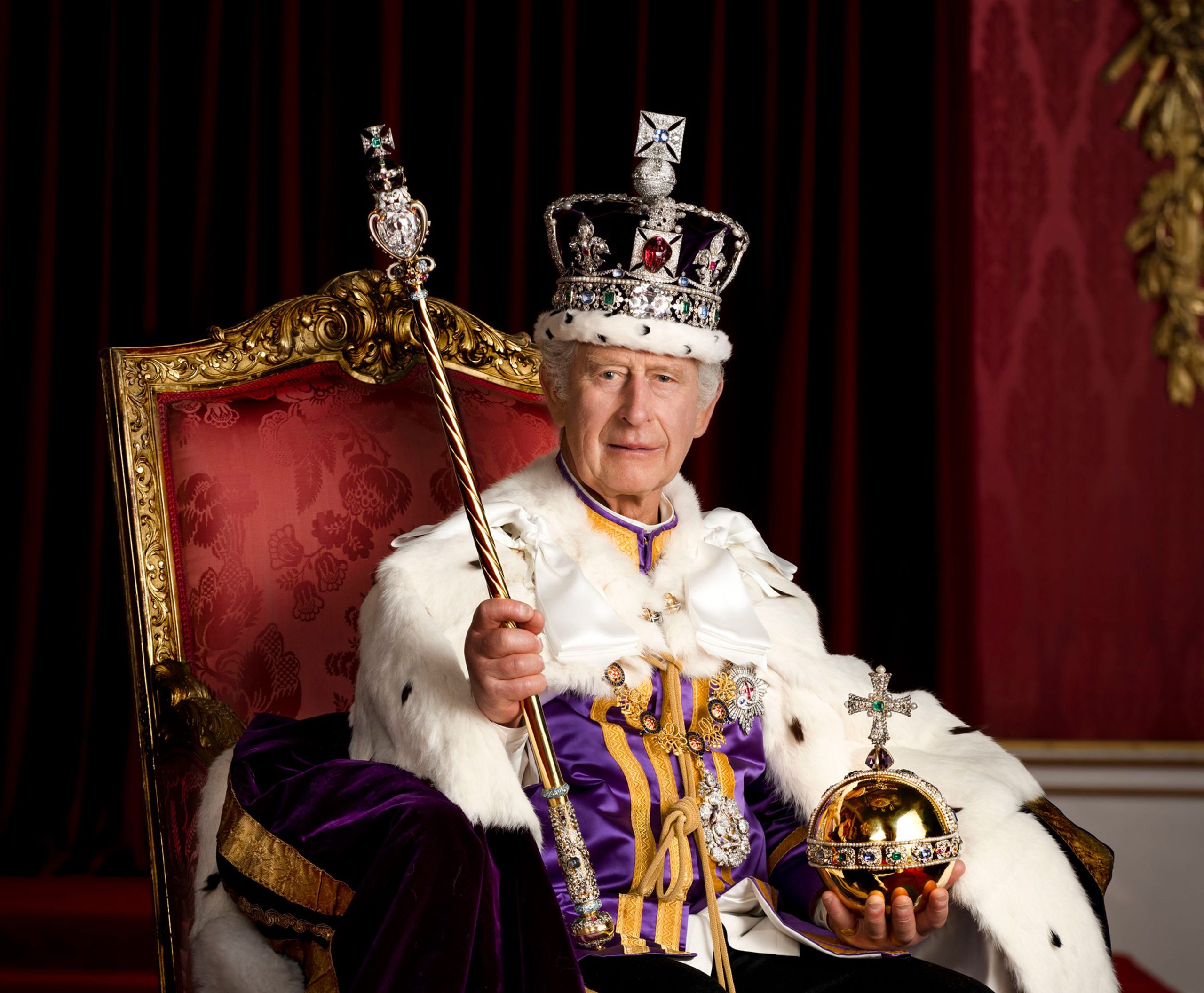
The monarchy encapsulates a great deal of traditional British culture and religion. British people are constantly reminded of the royal patronage of the arts, and the royal collection of art is on display in more than one location. The Coronation, and royal weddings, display the best of British embroidery, both old and new; they showcase fine British music and Britain’s military traditions; and they evoke its religious patrimony. These things are not museum pieces: in the workings of the monarchy, we see them not just on display, but in use.
The religious symbolism of the British coronation ceremony symbolises the way political authority comes from God. Some people object to this by saying that the leading figures of Britain’s political establishment are functionally Atheistic, but, insofar as this is true, it is regrettable but not the point. The symbolism is a message: a message that says to all that God is the King of Kings. If we are going to have an Atheist (or Hindu) Prime Minister, then it is better to oblige him to take part in a ritual that makes this point, than to allow him to make its denial the public message.
One very obvious thing about the monarchy is that it represents continuity with the past. It does this simply by existing, and would continue to do this if it became a stripped-down ‘modern’ monarchy as exists in some European countries. But British monarchy does it much better than these do, because the monarchy encapsulates continuity in a vast number of small things. The royal palaces, the ceremonies, the robes, the terminology, all remind us that Great Britain existed before yesterday: something many of our politicians would rather we forgot. Not only did it exist in the recent and in the distant past, but in important respects this Britain of the past was recognisable. It was the place we now call home, inhabited by people we share something with, whom we recognise and, up to a point, understand.
A related point is that in its political role, the monarchy emphasises the distinction between the government and the state. Public land is owned by ‘the Crown’: this is not the private property of the King, it is just what we call things owned by the state. Criminals are prosecuted by ‘the King’ – Rex vs. Smith – and that is not the same as someone being prosecuted by a government minister or even a government agency. When a single political party dominates the state for a long time, the distinction between the party of government and the government itself can wear a bit thin, but when a government becomes unpopular and falls, the King can appoint a new one. This is not a point about the King having freedom of action: it is a point about the nature of the institution. The King has no choice about it, generally speaking, but he represents what stays the same when an entire suite of ministers and advisors is replaced with another one.
Many of the critics of monarchy I found myself engaging with before and after the publication of the book seemed very reluctant to make a distinction between institutional authority and raw power. They couldn’t see the point of a king who did not have a great deal of political agency: who couldn’t exercise his personal preferences when asked to appoint people, and who was invoked in the passing of laws (‘the kings wills it!’ they say in Parliament) without him being personally involved. Those people must find it puzzling when a political party which had been in government has to leave office. Why don’t they just tell the police, the civil servants, the army and the judiciary to ignore the elections or the term limits or whatever?
The answer is that, unless they are revolutionary gangsters like the Bolsheviks, a political party which enjoys a spell in office owes its power, not simply to the voters, but to the institution of their country’s state and its constitution. The institution is bigger than they are, which is why they are able to run an entire country without armed opposition having won only 51% of the vote – or more like 40% in the multi-party British electoral system. By the same token, when the rules of the institution take power away from them, they have to go quietly. The judges and the army and the rest will now obey the new government, duly installed according to the rules.
In the British constitution, these rules are not embodied primarily in a codified constitution or a Supreme Court, but in the monarch. This means that the loyalty to the institution, which is so vital for the peaceful transfer of power from one political party to another, is not loyalty to a mere abstraction, or a historic document, or a set or rules, but to a person and a family: ‘the King and all his heirs and successors’, as the oath taken by British members of parliament has it. In this context, the fact that the king of the day has very limited political freedom of manoeuvre is not a disadvantage, but a huge advantage: he is not identified with a political party or a political programme, and the institution he represents can always repudiate one party or policy and try another, without losing its prestige and legitimacy.
The catastrophic loss of legitimacy which can be occasioned by the destruction of a country’s hereditary monarchy is illustrated again and again in history. The people of France, Russia, Austro-Hungary, China, and Brazil suffered through decades of instability, tyranny and bloodshed after losing their monarchs. Their subsequent sufferings make the imperfections and personal weaknesses of their past monarchs look like a golden age. In nearly every case, the revolutionaries imagined that the authority and prestige of the state would carry them through without an hereditary figure head, and were proved wrong when people even more cruel and ruthless than themselves put in place Mao’s maxim, that power grows out of the barrel of a gun.
The fact is that, in most places over history, power has not grown out of the barrel of a gun: the people with the guns have themselves been under the benevolent spell of loyalty to a person, a family, and an institution. Political stability, peace, and justice can be found when a person, family, and institution can be turned into a long-lasting, nation-defining monarchy, whose members see their role in serving their people, because it is this kind of institution that is best able to inspire loyalty.
We may have reason to remember these historical facts in the coming decades when, as seems increasingly likely, an entire political class, which has been in power for decades, is repudiated by voters across Europe. In what has turned out to be a relatively moderate form, this has already happened in Itay, and we are close to seeing it happen in France. The signs of it have appeared in Britain and in Germany. Something which understandably alarms the old elite is the prospect of new political movements restoring crumbling national solidarity by appeal to race. We must point out that they made this more likely by undermining the religious, cultural and institutional markers of their own societies which were not defined by race.
It we are to avoid civil disorder and a new, racist politics, we need to restore the importance and the prestige of those things which we have in common as nations, and which have the capacity to welcome all the people who live in it. In Britain at least, a key institution in this struggle is the monarchy.