
As readers are probably aware, in the spring of 1962 (before Vatican II opened that same fall), Pope St. John XXIII sent a letter to the Latin rite bishops throughout the world warning them to be
on their guard lest anyone under their jurisdiction, eager for revolutionary changes, writes against the use of Latin in the teaching of the higher sacred studies or in the Liturgy, or through prejudice makes light of the Holy See’s will in this regard or interprets it falsely.[1]
Good Pope John confirmed the traditional custom of Latin to be used not only in the liturgy and sacred music, but also in textbooks and classrooms:
Hence professors of these sciences in universities or seminaries are required to speak Latin and to make use of textbooks written in Latin. If ignorance of Latin makes it difficult for some to obey these instructions, they shall gradually be replaced by professors who are suited to this task.[2]
As we know, shortly after this, contrary to Pope John’s decree, many bishops allowed those who were “eager for revolutionary changes” to almost destroy the tradition of the Latin language inside and outside the liturgy.
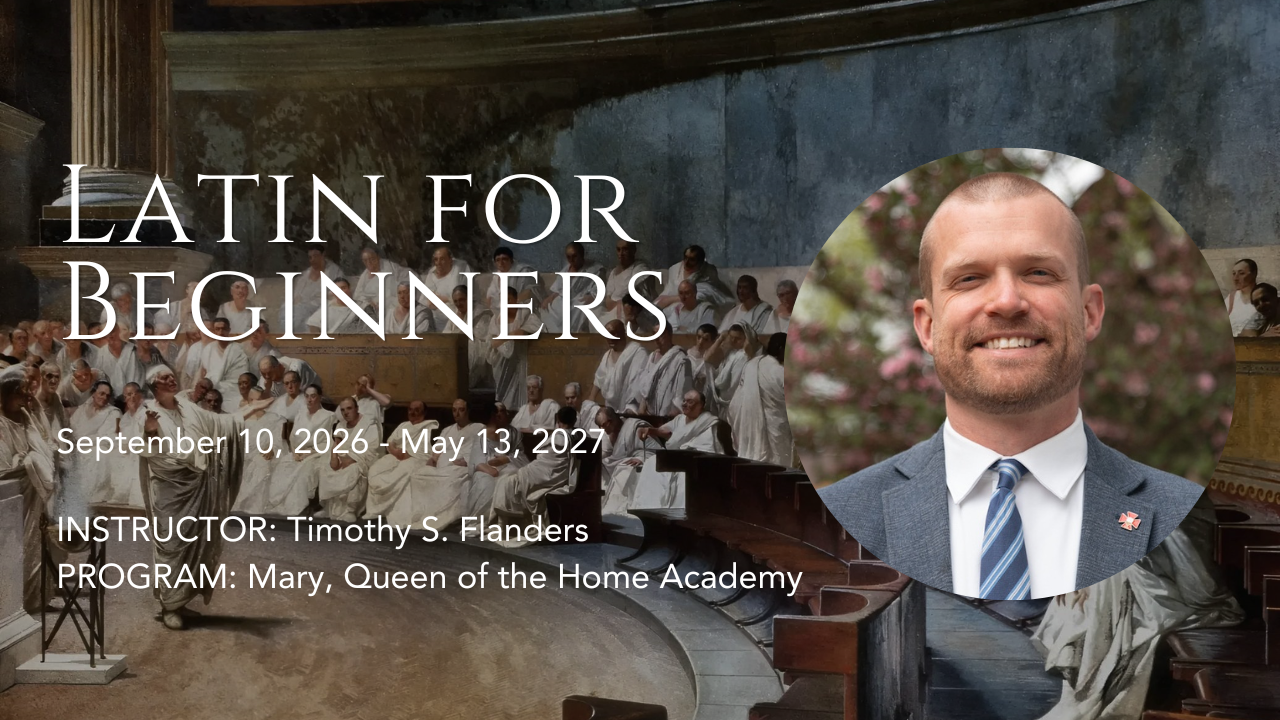
Thanks be to God, many Latin programs have contributed to the restoration of Latin and passing it down to our children. At the Avila Institute, I have the great honour of teaching our Latin courses for high schoolers and adults. Our High School program is called Mary, Queen of the Home Academy, and the deadline to sign up is less than two weeks away: August 21.
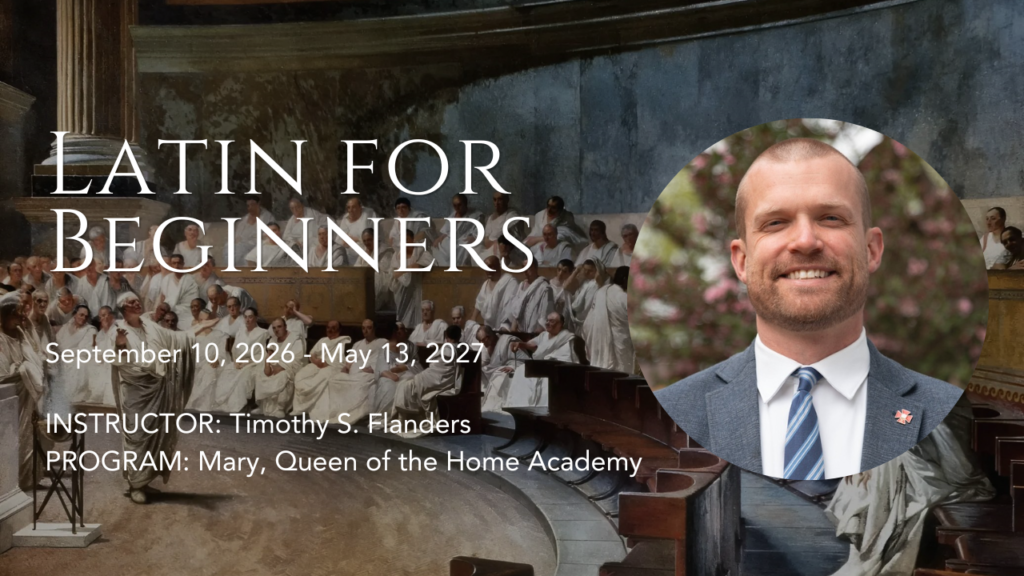
However, many Latin programs focus a lot on the use of Latin for Classical Latin and students learn words like gladius (sword) and Caesar (Caesar). Obviously these words are important, but we can easily spend a lot of energy with students on Latin words and grammar which are only indirectly related to one’s spiritual life, which of course is the heart of the Tradition.
For that reason, our Latin class at Avila focuses primarily on Latin in the spiritual life: prayer and Sacred Music. Our Latin classes focus first on learning the Latin for the Ordinary (Gloria, Credo, Sanctus, Angus Dei), and the Mass becomes the primary textbook for everything else that comes next.
I have found this approach to be very rewarding for me as the teacher, but also for the students. Here’s two testimonials from my past students:
This Latin course is a unique learning opportunity, a rare find, that covers not only the Latin itself, but also how it fits in with the Mass, the Gospels, and other Catholic prayers. This course taught me Latin, why its important, and how to appreciate it!
-High School Student
This course was amazing. Of the six Latin courses I’ve taken since 4th grade, only after this one can I say, “yeah, I can read Latin.” I think the strength of this course is in a) the teacher, b) that we read Latin from the Mass and the Bible (phrases we have heard in English countless times), and c) that the pace is adaptable and not breakneck.
-High School Student
Deadline to sign up is in less than two weeks: August 21
[1] John XXIII, Veterum Sapientia (1962).
[2] “Any difficulties that may be advanced by students or professors must be overcome by the patient insistence of the bishops or religious superiors, and the good will of the professors.” Ibid.