
Editor’s note: attend The Idea of a Village conference and get $20 off with promo code IOAV2026. See below for discounts for the author’s Substack.
Sweet Auburn, loveliest village of the plain,
Where health and plenty cheered the labouring swain,
Where smiling spring its earliest visit paid,
And parting summer’s lingering blooms delayed.
Among the most distinctive and destructive features of modernity is its structural hostility to traditional village life. By “structural hostility” I mean that modern society opposes the village as an inevitable result of its political and economic systems. The hostility, in other words, is not psychological. I have found no evidence to suggest that human beings in general ever lost their affection and desire for small, stable, integrated communities in which people are close (literally and figuratively) to one another and to nature. In fact, many personal experiences in the United States and abroad convince me that longing for the village is only intensifying, as is disillusionment with the alternatives—cities, suburbs, isolated farms—offered by postmodernity. The trend is no doubt influenced by the fact that these alternatives are gradually devolving into dystopic experiments in a technologized, dehumanized existence that is inimical to the health of body, mind, and soul. We want the village—and of course, what we want is also one of the few things you can’t buy on Amazon or anywhere else in the colossal, civilizational marketplace that was once called Christendom.
How often have I paused on every charm,
The sheltered cot, the cultivated farm,
The never-failing brook, the busy mill,
The decent church that topped the neighbouring hill.
A desire so foundational to human nature cannot be filtered out of our lives as though it is the flecks of dust and dirt that always—no matter how careful you are!—end up in the milk pail. Village life is the milk, and it’s the various modern simulacra that could be strained out and cast aside without fundamentally altering anything about the human condition as a quest for happiness and reunion with God. Men, women, and children lived and thrived for thousands of years without all the gadgets and machines and factories and highways that made traditional village life a superfluity, and then a rarity, and finally an impossibility. I am sorry to say that it took far less than thousands of years for the absence of villages to show how easily human societies will replace living and thriving with existing and buying.
How often have I blest the coming day,
When toil remitting lent its turn to play,
And all the village train, from labour free,
Led up their sports beneath the spreading tree.
I say again—a yearning for the village is woven thoroughly into human psychology, and rooted deeply in human history; nothing that modernity does can change that. We have a dilemma, then: on the one hand indelible desire, and on the other a pervasive structural hostility that leaves the desire chronically unfulfilled. That the desire is a wholesome and rational one, conducive to goods both temporal and eternal, makes the dilemma all the more acute. That the desire is almost a need makes the dilemma all the more ominous: just as we can in theory survive on bread and water, we can in theory endure the artificial, mechanized, isolating, culturally fragmented communities of the modern world; just as a diet of bread and water will likely cause us to waste away both emotionally and physically, the deserted village will wound us with a wound of the heart, which heals slowly, if at all.
These were thy charms, sweet village; sports like these,
With sweet succession, taught even toil to please;
These round thy bowers their cheerful influence shed,
These were thy charms—But all these charms are fled.

Sunk are thy bowers, in shapeless ruin all,
And the long grass o’ertops the mouldering wall;
And, trembling, shrinking from the spoiler’s hand,
Far, far away, thy children leave the land.
That’s the name of the poem: “The Deserted Village,” by Oliver Goldsmith, who died in 1774 and therefore reminds us that villages have been under siege for a very long time. Modernity is structurally incompatible with Europe’s traditional agrarian communities, and modernity begins not with Microsoft or Henry Ford or the electric light bulb. Modernity begins where the Middle Ages end.
Some of you are aware that I have been very serious about rediscovering premodern agrarian life. I graduated with my bachelor’s degree at age twenty, and only after long years of homesteading, farming, and in-the-trenches cultural research did I go back to academia for a Master’s and PhD. I love scholarship, love literature, love teaching. But it’s hard for me to think of university life as my “career.” Maybe I just don’t have time for a typical academic career, because what I’m really about is the village, and all that it represents: family, friendship, faith; tradition, folklore, local culture; labor, leisure, feasting, dancing; poetry, prayer, beauty, birdsong; the little stone church “that topped the neighbouring hill”; and on the other side of that hill, a Benedictine monastery, which is simply the village in its most pure and perfected state.
Very few Westerners of my generation have experienced the village as viscerally as I have, and that in part is why I can speak so strongly of the village, and how it affects you, changes you, remakes you. I’ve lived and homesteaded in radically non-technological ways; I’ve researched and pondered the practical realities of premodern or preindustrial life more than anyone else of my acquaintance; I’ve sought to learn and teach the poetic mode of knowing, which is the mode proper to cottage and garden and footpath, to meadow and field and forest.
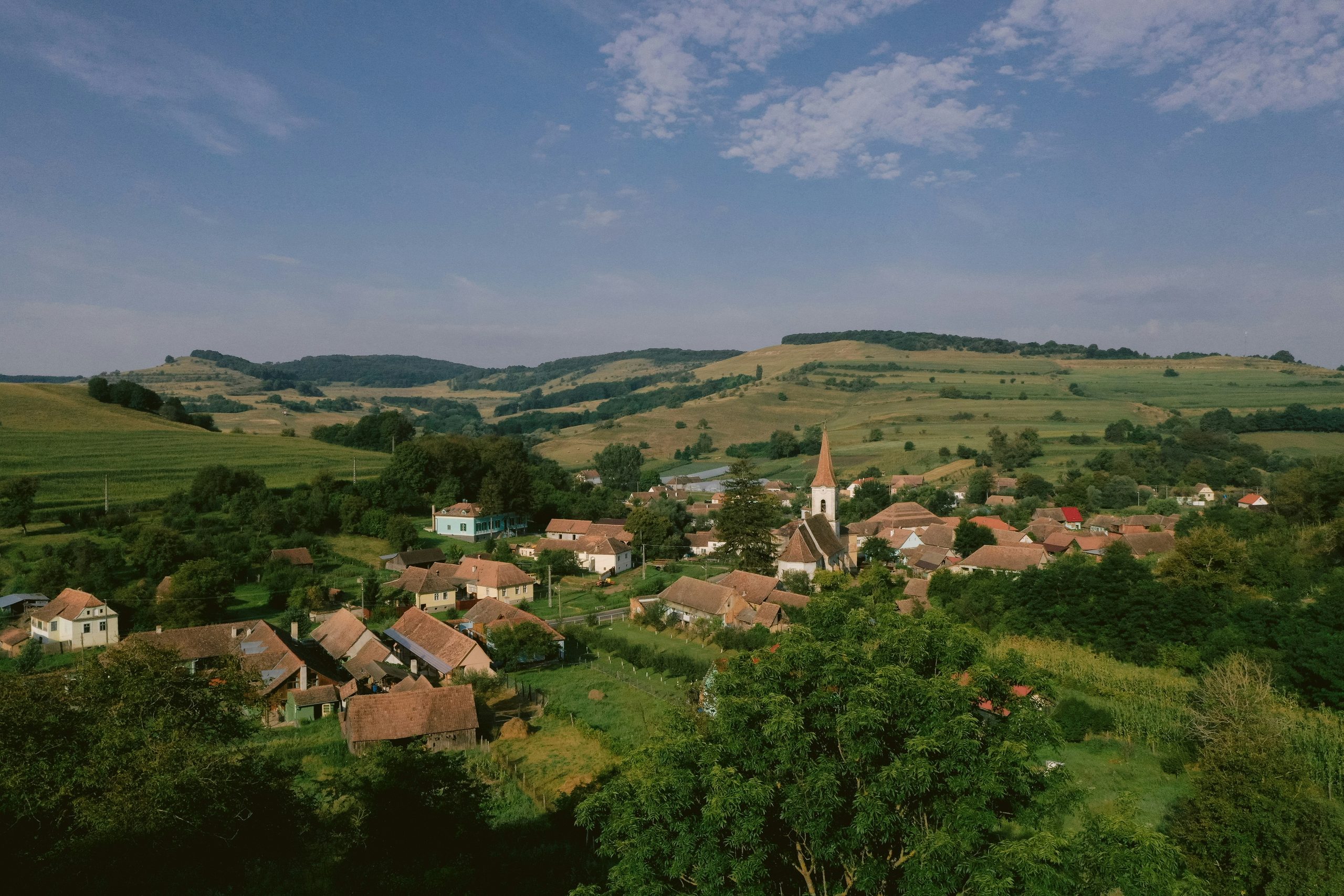
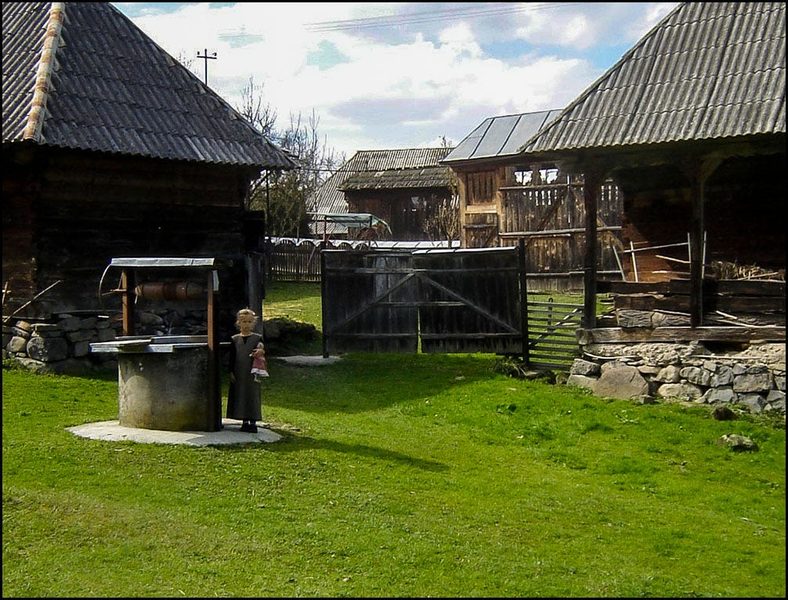
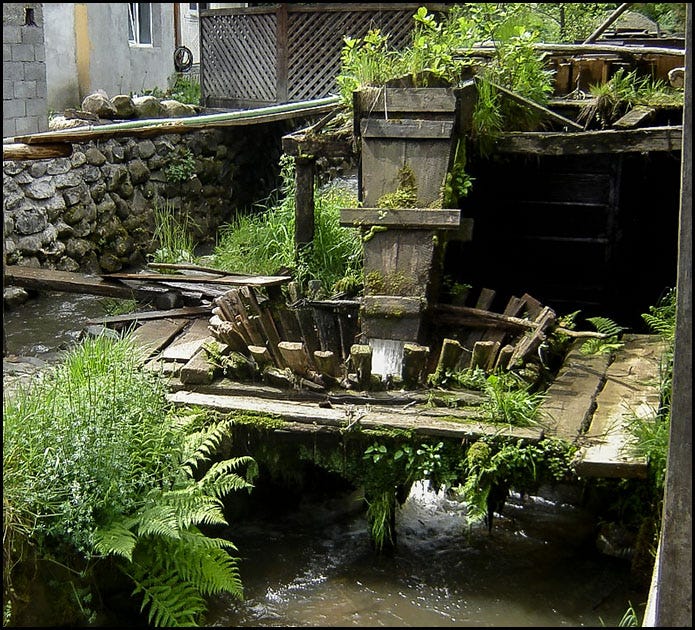
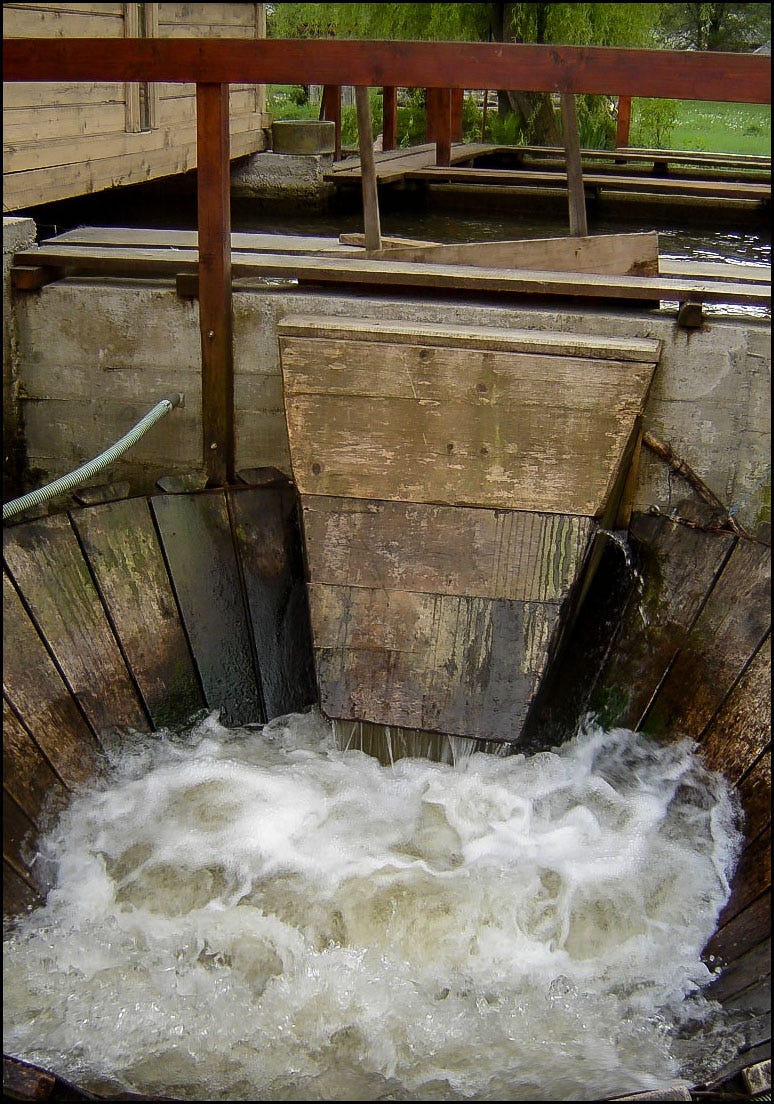
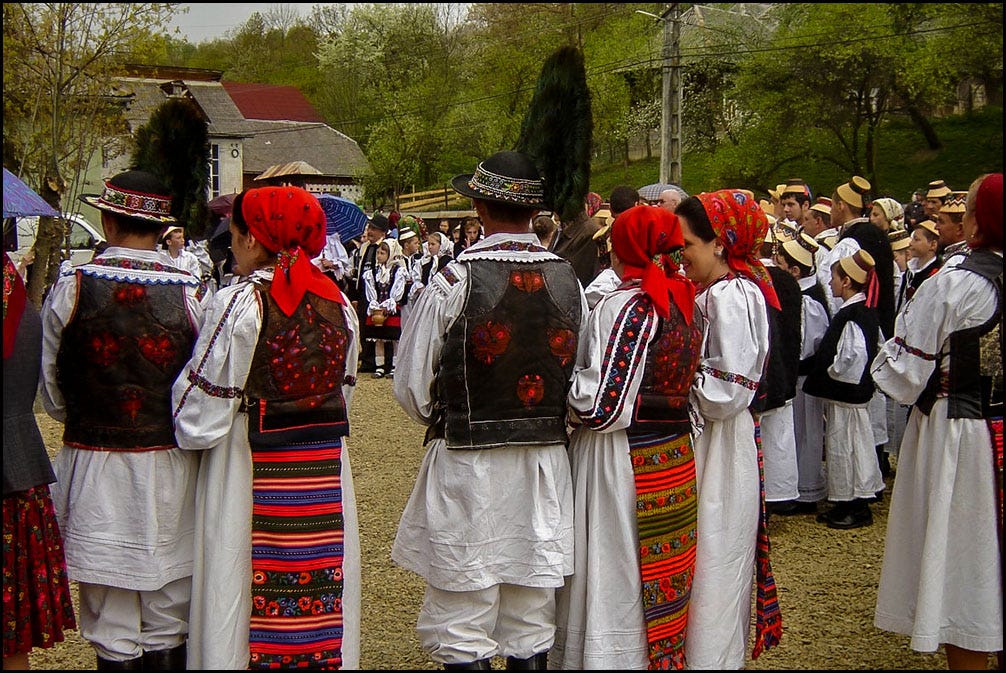
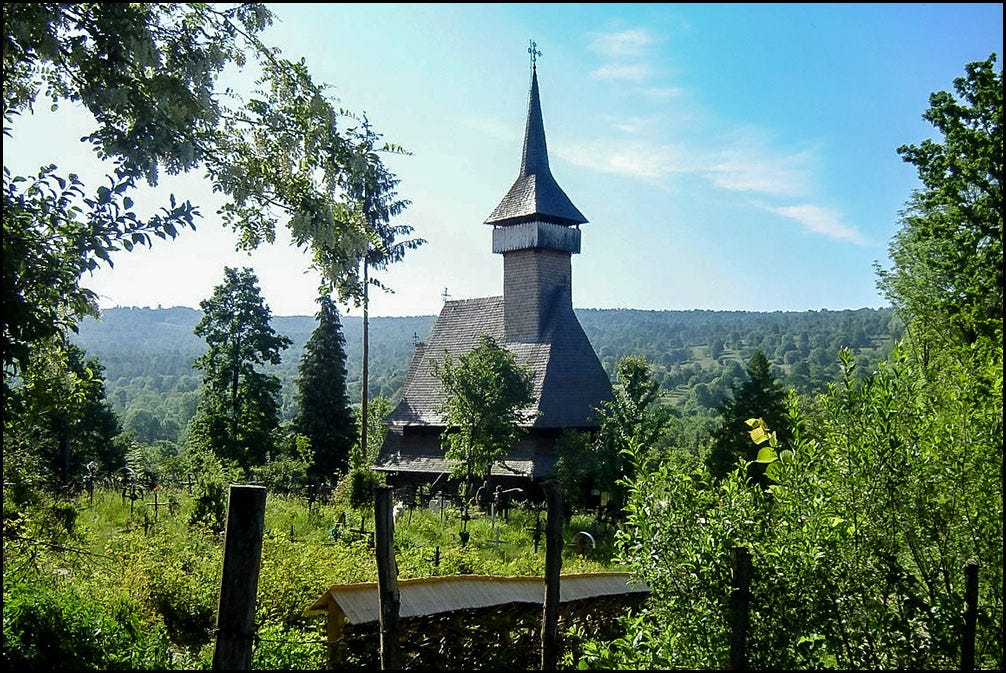
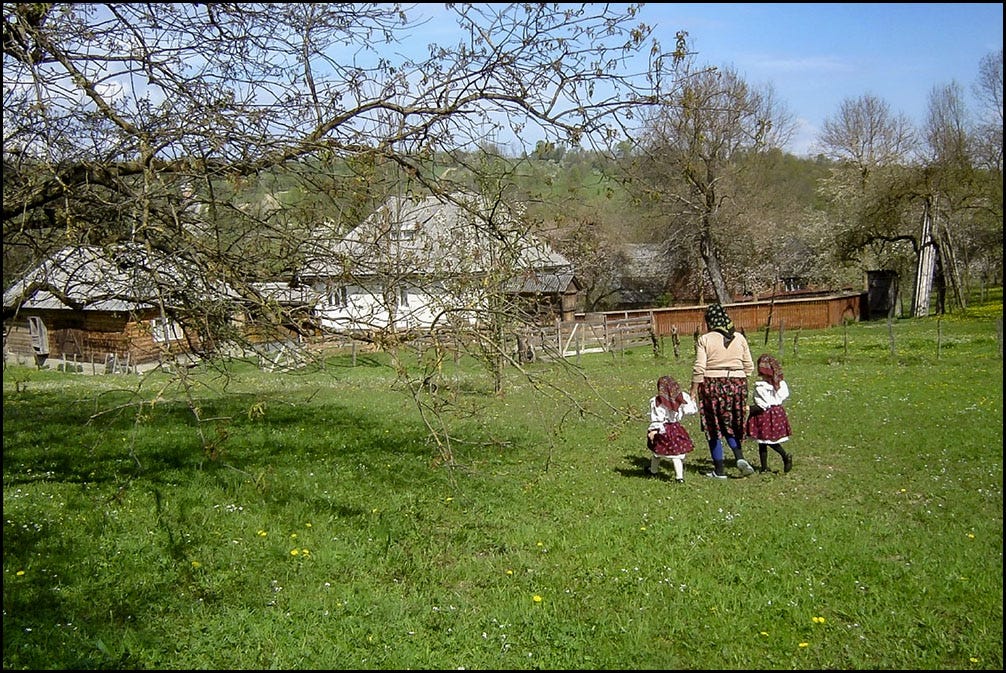
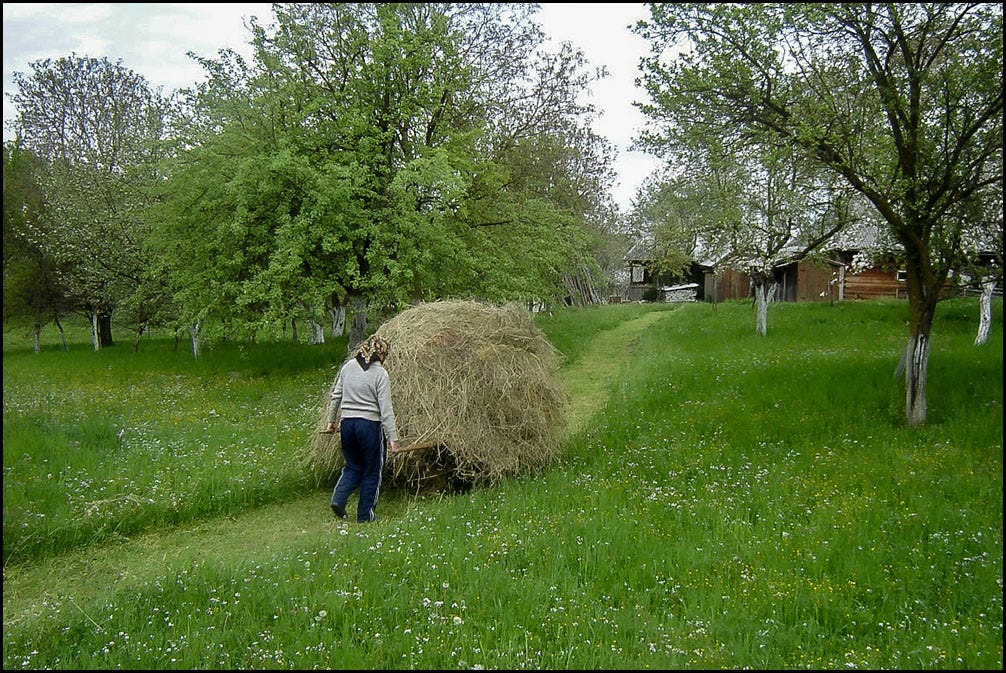
But all of this was prelude or postlude to “the Village,” as it is known in my family: the small town in northern Romania where for six months I was as close as I’ll ever be to the agrarian communities of medieval Europe. If you ever meet me in person (and I hope in October you will, see below), you might notice that I cherish a good conversation, and will talk for a long time about all sorts of things. But I still don’t talk much about my time in the Village. It might even be one of the very few topics that I actively avoid. The memories just go so deep, are so intimately and painfully stitched into my soul, that words are like a dull sickle, hacking awkwardly at stalks of wheat that cannot be harvested and shared in the usual way. The photographs in this post will have to serve as a glimpse into the place of which I speak little, and write less.

I chose this topic for today’s post because I want to encourage you all to register for the Idea of a Village conference, to be held in October near Clear Creek Abbey in Oklahoma. I will be one of the speakers at this conference, which I see as a communal attempt to fulfill our need for village life, in a world where village life in the strict sense is unattainable. The event itself promises to be a wonderful opportunity for old-fashioned fellowship and good cheer—in addition to talks the schedule includes “Bonfire and Singing,” “Dinner and Dance,” and breakout sessions involving ale, home-sawn lumber, and monastic architecture. (Sounds too good to be true, I know. And yes, I will bring my guitar, so be ready to sing…) Furthermore, I hope every attendee will leave with inspiring ideas and practical recommendations for enriching our homes, parishes, workshops, and classrooms with the spirit of traditional village life. You can register for the conference and find all necessary information here:
I’m so excited about this event, which has not been held for several years, that I’m offering a major discount for new subscribers who also register for the conference. After you register, forward an email confirmation or some such to poeticknowledge@substack.com (or contact me through the Substack chat interface), and I will send you a link where you can purchase an annual subscription at 50% of the normal price. This subscription gives you full access to my primary newsletter, Poetic Knowledge, and also to Via Mediaevalis (which has an extensive paywalled archive and occasional new posts).

Ill fares the land, to hastening ills a prey,
Where wealth accumulates, and men decay:
Princes and lords may flourish, or may fade;
A breath can make them, as a breath has made;
But a bold peasantry, their country’s pride,
When once destroyed, can never be supplied.
“The Deserted Village” is a somber and sobering poem. Likewise, I prefer to be realistic about the tragic loss of village culture in Western civilization. But make no mistake: I believe in joy, and I love my modern life, despite all that I know about the extraordinary beauty, order, and wholeness of premodern life. Come to the conference if you can, and whether you can or not, find ways to enrich every day of the year with the blessings of simplicity, tradition, and friendship. Let us all remember that though the village is gone, it still has much to teach us about the art of living well—an art that can be practiced by any person, in any place, until the end of time.
Photo by The Now Time on Unsplash