
“Penance, penance, penance!” A Possible Meaning of the Third Part of the Secret of Fatima
Honestly speaking, I have always felt that too much attention has been given to the alleged concealment of a part of the Secret of Fatima, compared with the significance of the images contemplated inwardly by the visionaries. Even if, for the sake of argument, we can accept such possibilities, nevertheless only someone with ecclesiastical authority—most likely, a future pope—could make relevant disclosures (if there is indeed anything to be disclosed in this regard). In any case, to assume that figures of the stature of Cardinals Angelo Sodano, Tarcisio Bertone, and Joseph Ratzinger (Pope Benedict XVI) would have lied is a (too) daring judgment that I do not want to make. Therefore, as far as I am concerned, I believe that the possibility of some hidden part of the secret being disclosed in the future is, practically speaking, nil. Everything concerning the revelation itself has already been unveiled.
That being said, in this article I wish to focus on a single aspect: the threefold cry—“Penitência, Penitência, Penitência!”(“Penance, Penance, Penance!”)—of the angel with the flaming sword.
Let us first recall the passage from the third part of the secret in which Heaven’s call to conversion is heard:
(…) at the left of Our Lady and a little above, we saw an Angel with a flaming sword in his left hand; flashing, it gave out flames that looked as though they would set the world on fire; but they died out in contact with the splendour that Our Lady radiated towards him from her right hand: pointing to the earth with his right hand, the Angel cried out in a loud voice: ‘Penance, Penance, Penance!’[1]
As Cardinal Tarcisio Bertone mentioned in his Introduction, “the third part of the secret is a symbolic revelation.” Yet in order to interpret the text correctly, we need “a symbolic key.” Cardinal Ratzinger also insists on this point, telling us that “the figurative language of the visions is symbolic.” I emphasize that the notion of “symbol,” used so insistently, does not in any way imply, as it does in certain modern(ist) interpretations, one form or another of unreality. On the contrary, what the children saw in their vision is the eternal reality of the invisible world, made accessible to us through the images that were revealed to them and that are now, indeed, public.
From the perspective of eternity, where God is and where the beings who dwell in His glory are found (in the case of Fatima’s secret, the Blessed Virgin Mary and the angel—probably Michael—with the flaming sword), all the events of history which, for us, unfold according to temporal succession are, in a certain sense, simultaneous. It is as though everything that has happened, is happening, and will happen has already been accomplished. This relationship between the level of eternity (the intelligible-spiritual) and that of chronology (the sensible-material), just like the connection between the invisible realm and visible world, is one of the aspects that deserves careful reflection, lest we fall into errors of those unaccustomed to the art of meditation. I shall return to this subject. Let us now examine the details of the passage quoted.
Holding in his left hand a sword whose flames could set the world ablaze, the angel appears to be an image of Divine Judgment. Without any doubt, just as, after the expulsion of our first parents, Adam and Eve, from Paradise, God entrusted angels with flaming swords to guard the way to the tree of life (Genesis 3:24), so too will He entrust angels with carrying out His judgment at the end of the world. As befits an imperial court, the Supreme King acts through His devoted servants. The same will happen at the end of the world: His angels will act to bring about the great cosmic fire (2 Peter 3:10), which will destroy the old world so that “a new Heaven and a new Earth” may finally be manifested (Apocalypse 21:1).
If the angel signifies Divine Justice, the Blessed Virgin Mary, Queen of the Universe, from whose right hand radiates a splendor that prevents the fire from breaking out, signifies the maternal manifestation of Divine Mercy. This image of the encounter between Divine Justice and Mercy is extraordinary. We are shown clearly that we live in an age in which, despite humanity’s immense sins, divine goodness and patience still prevail. Justice is undoubtedly being reserved for the final hour of history, when God will definitively conquer evil. And yet His actual mercy is not offered unconditionally: the condition for benefiting from its fruits is proclaimed in a loud voice by the angel. The key word is “penance.” Cardinal Ratzinger explicitly referred to the Gospel according to Mark (1:15), which contains, in a short and densely packed sentence, the essence of the Gospel:
Repent and believe the Good News.
As I have stated in other articles, based on an etymological analysis of the Greek word (μετανοεῖτε – metanoeîte) translated through “penance,” conversion entails, first and foremost, a change of mind through adherence to the supernatural truths of the Faith. Then, of course, it entails a change of life in accordance with the norms and precepts of Divine Moral Law contained in the Decalogue. For example, in the case of most married couples who have undergone a genuine conversion, the first fruits have been very concrete: children, all of them accepted in accordance with the divine requirement that excludes the immorality of contraception and abortion. Thus, the couple’s “philosophy” of life has changed, immediately producing effects that are as visible as they could possibly be.
Now we come to the question that has troubled me over the years. Why did the Angel repeat the word “penance” three times? Was it not enough to utter it once, as in the Gospel’s call? According to the tradition of interpreting the words of the Holy Fathers of the Church, which I follow as faithfully as I can, no detail in Sacred Scripture, nor any detail in the authentic mystical visions of the saints of our Church, is accidental. So, I thought to myself, neither can this threefold repetition of the word “penance” be the result of chance. What, then, is its meaning?
I found a clue (though not upon my first readings) in Cardinal Ratzinger’s interpretation. After first specifying that this call to conversion “is the correct response to this moment of history, characterized by the grave perils outlined in the images that follow,” he then recalls a conversation with Sister Lucia herself. He remembers that the visionary told him that, while meditating on what she had contemplated, she had come to the conclusion that “the purpose of all the apparitions was to help people to grow more and more in faith, hope and love – everything else was intended to lead to this.” The Cardinal did not comment on the nun’s statement. It seems to me, however, that here she gives us a crucial clue.
By mentioning the three supernatural gifts that stand at the foundation of Christian life—Faith, Hope, and Love—Sister Lucia gave us the key to understanding the threefold repetition of the word “penance.” For each of the three uses of the word addresses the sins against one of these three gifts: sins against Faith (doubt, agnosticism, atheism, and therefore any form of unbelief); sins against Hope (all forms of despair and grave impatience); and sins against love (all forms of hatred, envy, presumption, and calumny).
If this is indeed the case, we now arrive at the most important point: these sins cannot belong to those who are not Christians. For no one who is unbaptized can possess the supernatural Faith (although he may possess the generic, rational faith in the existence of God and the existence of the immortal soul); nor can he possess supernatural Hope and, above all, supernatural Love—that Love in which one does good to the person who does evil to him, blesses those who curse him, and loves those who hate him.
The consequence of what has been said above is remarkable. If the Gospel, with its single call to penance, is clearly addressed to all those in the Jewish and pagan world to whom Our Lord Jesus Christ and His apostles preached, then the conversion to which the Angel with the flaming sword calls us three times is addressed to us Christians. This evidently implies that the entire crisis of the world and of the Church today is not the product of the action of external forces but, first and foremost, of the way in which we Christians (no longer) believe, (no longer) hope, and (no longer) love.
If we remember that the Savior Himself prophesied that in the last days “the love of the many will grow cold” (Matthew 24:12), everything becomes crystal clear. For in this prophecy recorded in the New Testament, too, it is evidently the love of Christians that is being spoken of—for only in their case can we speak of a true, divine love, in which fidelity is sacredly observed.
And if we see how widespread among Christians (i.e., Catholics) today are sins against love—contraception, abortion, adultery, divorce, etc.—we realize how extremely dangerous the present situation is. Therefore, conversion must begin with us. Actually, it is not even possible for Christians to convert others without first truly converting themselves. For this reason, even among Catholics and communities that profess to love Holy Tradition, this love must be manifested not so much in criticizing others, however justified such criticism may be, but in criticizing themselves and in responding fully to the call of the angel with the flaming sword:
“Penance, penance, penance!”
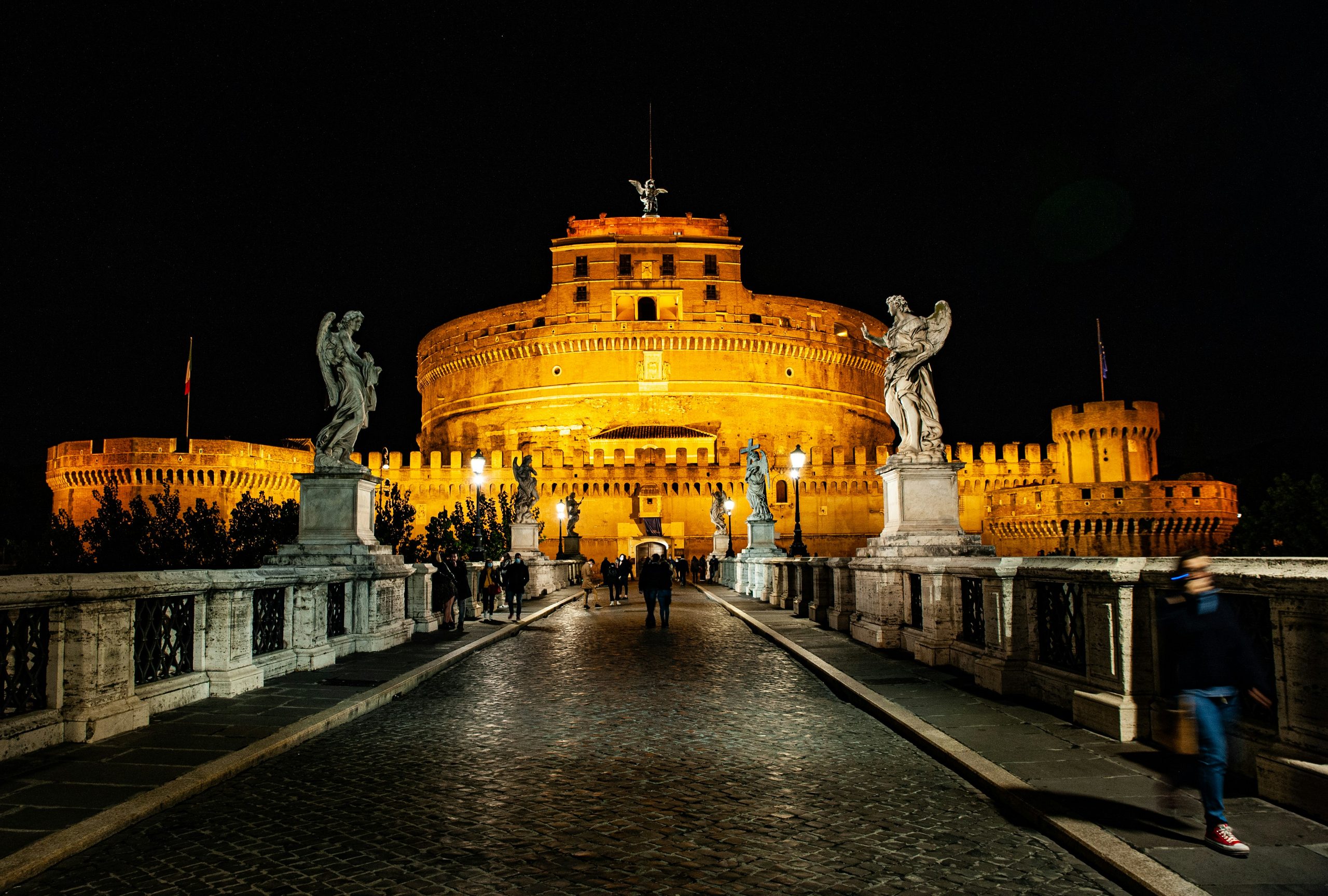
Photo by Marco Chilese on Unsplash
[1] Congregation for the Doctrine of Faith, The Message of Fatima:https://www.vatican.va/roman_curia/congregations/cfaith/documents/rc_con_cfaith_doc_20000626_message-fatima_en.html [Accessed: 13 September 2026].