
+IMI+
Editor’s Note: We are pleased to announce that Os Justi Press has recently published Miss Kalinowska’s first book titled Clothed with Beauty: A Catholic Philosophy of Dress. The following essay further explores the topic of dress.
When it comes to the story of Adam and Eve, most of us have heard something akin to the following: they were created naked, but they were unashamed before the fall; their appetites were in perfect subjection to their wills. After the fall, however, their appetites became the raging things we know them to be today, and our first parents suddenly noticed each other’s nakedness. To protect their dignity, and to remove their bodies from the immanent dangers of each other’s lust, Adam and Eve made clothing for themselves. Hence, we have all worn clothes ever since.
But this telling of the story only partially captures the truth of the matter. In his essay “A Theology of Dress,” the Catholic theologian Erik Peterson relates the tale of our first parents with crucial nuance:
Before the Fall man belonged to God in such a way that the body—albeit not dressed in any human clothes—was still not “naked.” This “non-nakedness” of the body, along with its unclothedness, is explained by the fact that supernatural grace covered the human person like a garment. Man did not simply stand in the light of the divine glory; he was actually clothed with it.[1]
This statement underscores an extremely important metaphysical truth: namely, that man originally possessed a state of clothedness; that is, even before the fall, it was in man’s very nature to be clothed. Our Creator’s design was for the full expression of Man’s dignity to be realized by the addition of something totally external to himself. Peterson describes this phenomenon as a distinct “outwardness,” and he emphasizes the profound significance of Adam and Eve’s first act after the fall as being one of outwardness:[2] “They sewed fig leaves together, and made themselves aprons” (Genesis 3:7). So keenly did Adam and Eve feel the loss of their garments of glory that they reached with horrified desperation to the material world even though it was now, like themselves, disintegrating. God would not see them leave paradise without Himself providing them with clothes, thus confirming their instinctive desire for restoration, albeit with clothing infinitely inferior to those original garments of glory (Genesis 3:21).
Is this the end of the story of the meaning of clothing? Do we dress today with that same horrified desperation as our first parents? Do we snatch at the material world’s fruits like so many bandages, perhaps able to hide our shame but never able to restore our glory?
To begin answering these questions, we look first to the Church’s sacramental use of a white garment at Baptism. Peterson writes as follows:
This clothing, once ours and now lost and the object of our search in any earthly clothing that we wear, has been given back to us in Baptism. It is “the garment of immortality, woven with the water of Baptism.”[3]
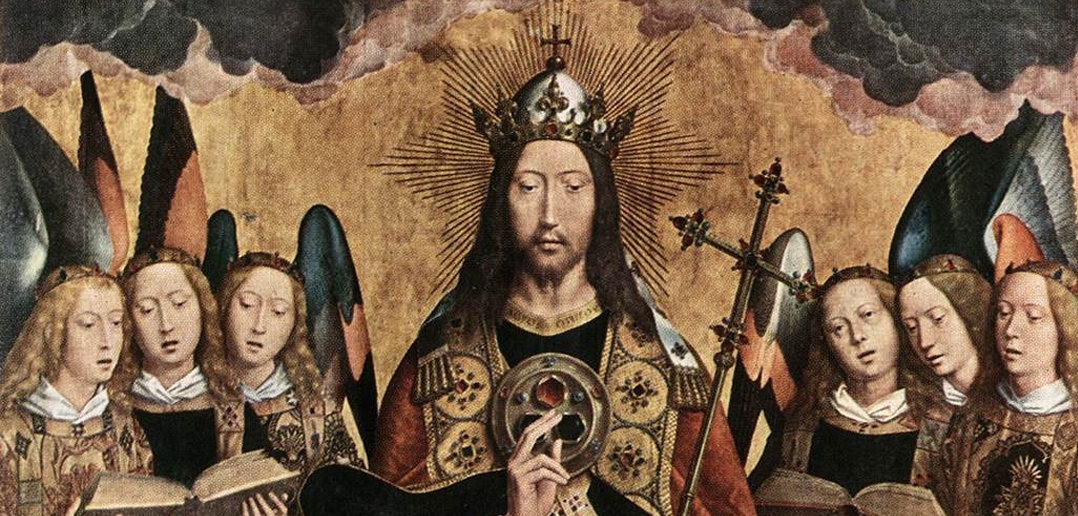
To better understand the significance of the baptismal garment, it is helpful to consider the baptismal liturgy. Although today we see infants dressed up in their white gowns at the very start of the liturgy, the bestowal of the white baptismal garment (now usually a small token cloth for children) happens only after the pouring of water and anointing.[4] In the Church’s early days, catechumens came to the waters of life naked. The white alb of Baptism was bestowed on them to crown the reality of their spiritual restoration. Like all sacramentals, the baptismal garment is far from a superficial illustration; it signifies the spiritual resurrection of Baptism and calls down graces suitable to that state. It not only shows that the soul has been restored to immortality, it actually plays a part in bringing that reality about. Finally, the baptismal garment, likened by Peterson to a royal bridal garment,[5] is one of joy and regal dignity, showing that, with Baptism, the Psalmist’s petition has been granted: “Restore to me the joy of Your salvation, and with a princely spirit confirm me” (Psalm 50:12).
Undeniably, the baptismal garment occupies the supreme place in the clothing of a Christian’s life. However, once this garment has spoken its profound word on the soul’s resurrection, it is lovingly set aside, never to be worn again. Thus, man must still consider the meaning of all his subsequent clothing. Has his baptism redeemed the clothes of his everyday life? Can these garments, too, be great signs of glory and hope?
To answer these questions, we should turn first to consider that the “matter” of Baptism—water—stands not as an isolated element tritely illustrating the soul’s cleansing, but, rather, as the prima materia, the basic element of all creation.[6] In his book, Sacraments and Orthodoxy, the theologian Alexander Schmemann writes that, in Baptism, water is “the sign and presence of the world itself.”[7] Now this world, present in the sacrament, has not gone unredeemed. Schmemann makes the following astonishing statement:
God created the world and blessed it and gave it to man as food and life, as the means of communion with him. The blessing of water signifies the return or redemption of matter to this initial and essential meaning. By accepting the baptism of John, Christ sanctified the water—made it the water of purification and reconciliation with God. It was then, as Christ was coming out of the water, that the Epiphany—the new and redemptive manifestation of God—took place, and the Spirit of God, who at the beginning of creation “moved upon the face of the waters,” made water—that is, the world—again into what he made them at the beginning.[8]
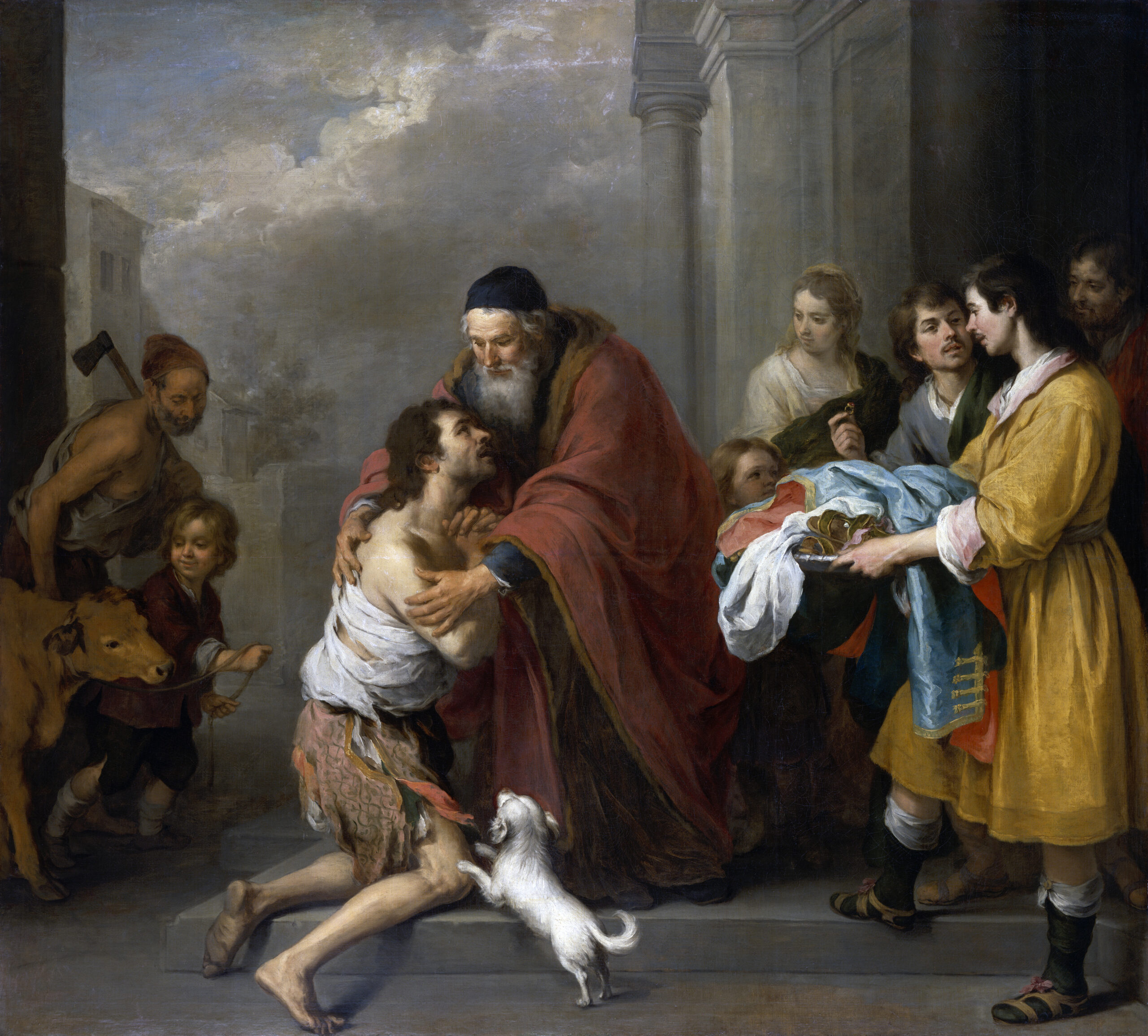
Thus, as a part of this restoration of all matter, the fabric we use for our clothing becomes something quite different from the mournful garb of Adam and Eve; for them, fallen from grace, cast from paradise to a chaos of decay, fabric could only ever become the weeds of sorrow; but for us, adopted sons and daughters of God, prodigals whom the Father desires to bedeck in the best robe and shoes and ring (Luke 15:22), fabric has been drawn up in that restoration that makes all matter once again means of communion with Him. Living in a world thus restored and charged again with meaning, we may run to our Creator every day like the bride to her beloved, for the gates of Heaven are open to us. Consequently, we dress not for our funerals but for our weddings.
The sacramental attitude toward our daily clothing is illuminated further in the preaching and practices of the Church’s early Christians. Neophytes wore their baptismal garments for the entire Paschal octave. The use of these holy garments for only one day was deemed not enough to impress on the minds of the new Christians and those in their community the reality of restoration that the garments signified. Only on the octave day of the Pasch, the so-called Dominica in Albis Depositis (Sunday of laying off of the albs), the neophytes finally put aside their garments, and returned them to the Cathedral treasury.[9] To wear fine linen of the purest white, the Church understood, is not practicable for man in the daily labors of life. However, a sermon of St. Augustine to the neophytes on Dominica in Albis shows the Church’s view of living out our Baptismal promises as one decidedly fixed upon continuing on in the “New Man”:
The Feast of this day is the end of the Paschal solemnity, and therefore it is today that the Newly-Baptized put off their white garments: but, though they lay aside the outward mark of washing in their raiment, the mark of that washing in their souls remaineth to eternity. … Cast off therefore the works of darkness, and put on the armour of light.[10]
Thus, we do not revert to the old man and the unredeemed view of his raiment. We do not, as before the wonderful events of the Incarnation, the Passion, and Pentecost, reach for clothing merely as bandages to cover our shame. Rather, we array ourselves in the armor of light (Romans 13:12-14). By referencing this passage of St. Paul, St. Augustine underscores the joyful militance with which we go forth into the world, like crusaders certain of a fight to come but hopeful of victory. In addition to the armor of light, the text from Romans tells us to “put on the Lord Jesus Christ” Himself, which is an astonishing injunction. Through it, we learn that Our Lord’s Incarnation not only brings Himself to us as food but also, in a sense, as raiment.[11] We are thus arrayed again in spiritual light, in kinship with our first parents before the fall, although we must expect to do battle to preserve our restoration, lest we fall like them into new misery. The collect of Monday after Dominica in Albis captures this vital mission: “Grant, we beseech You, all-powerful God, that we who have celebrated the Paschal festival may, by Your grace, preserve its spirit in our way of life.”[12] These words recall to the neophytes’ minds that, though they have put aside those white garments, they are not to forget them in whatever they do or say or, indeed, go on to wear.
A man who allows this spirit of the Paschal festival to take up residence in his soul will not spurn creation as the milieu of the “old man.” Rather, by the light of the Paschal spirit, he will suddenly notice that all of creation is rejoicing, and it is rejoicing because its purpose is the sacramental life. “Let the heavens be glad, and let the earth rejoice,” sings the Psalmist. “Let the sea roar, and all that fills it. Let the field exult, and everything in it! Then shall all the trees of the wood sing for joy” (Psalm 95:11-12). The sea roars in gladness to be the waters of Baptism; the field exults because its fruits bespeak the Eucharist; and the singing, rejoicing trees tell ever of the infinitely abundant Cross, the tree whose fruits are nothing less than the divine and life-giving rites of the Church.
The Paschal spirit properly orders man’s relationship with the natural world around him; he reverences creation without falling into the errors of pantheism. Alexander Schmemann writes, “All that exists is God’s gift to man, and it all exists to make God known to man, to make man’s life communion with God.”[13] Schmemann goes on to make the important distinction that man’s grievous fall was not that he made the world his god, but that “he made the world material, whereas he was to have transformed it into ‘life in God,’ [and] filled it with meaning and spirit.”[14] It is the Paschal spirit that reminds man that, by Baptism, a sacramental rather than merely material world has been restored to him, and it is his mission to live in that world accordingly. Man’s mission as steward of creation is not a brutal quest for technological advancement, economic gain, pragmatic convenience, or sensual comfort, but, rather, the work of a skillful gardener who reverently cultivates the earth and savors the rich meaning with which all creation is ripe.
The daily attire of a Christian, then, is less a continuation of Adam and Eve’s fig leaves of mourning and more a symbol of our restoration. It is a reminder of our baptismal garment in the same way that every meal is a reminder of the Eucharist.[15] In this spirit, we may view every act of dress as a quasi-sacramental one. Thus, it becomes abundantly clear that the way in which we clothe ourselves on a daily basis matters just as the way that we pray matters. We may even go so far as to add a variation to the oft-quoted maxim, lex orandi, lex credendi (the way we pray shows what we believe) by saying, lex vestiendi, lex credendi (the way we dress shows what we believe).
To guide our steps in the quasi-sacramental act of dress, we must embrace the intellectual virtue called art. Aquinas describes this virtue as “right reason about certain works to be made” (or, in his pithy Latin, recta ratio factibilium).[16] Art is that “right reason” that helps us to make things that are good, well-crafted, suited for their purpose. Whether one designs clothing or, as for the vast majority of us, one simply makes selections of clothing designed by another, one enters a domain properly governed by art. The practice of art shows man how to direct the very “outward” act of dressing to its restored sublime meaning. The more beautiful and dignifying our clothing is, the more it fulfills that meaning and draws us into a life of sacramentality, which is to say, the life of resurrection and the Paschal spirit. The uglier and more degrading our clothing is—whether it be tawdry, scanty, synthetic, sensational, formless, or in any other way defective—the more it obscures that meaning and enmeshes us in a merely material world that is, indeed, the milieu of the old man and, one might even say, an antechamber to the world of the damned, who have lost all opportunity to reveal their spiritual dignity in their outward appearance. Thus, art is no frivolous whim of the aesthetes, no superficial dabbling of the vain. Rather, art is a true gift from God ordered by His Providence to be our indispensable help in “putting on the Lord Jesus Christ” (Romans 13:14).
Certainly, history’s various devastating revolutions have left us now living in a world more marked for its lost arts than for its living ones. However, what is more tragic than the loss of art itself is the apathy of Catholics in the face of the loss. Even men who most vehemently defend the liturgical arts often fail to promote the importance of art in life outside the sanctuary. The heretical belief that the world is a bifurcation between the material and the spiritual, with the material being everything that is seductive, dubious, and harmful, and the spiritual being the safe and sanitized road to sanctity, prevails so strongly in the world today that even those who can see the importance of art in the worship of God, balk at the wholesale promotion of art in mundane activities such as daily dress. However, this reticence betrays the underlying erroneous assumption that there are, in fact, such things as mundane activities. For the Christian man, nothing is mundane; his baptism has not only redeemed his soul, but it has brought him, as it were, into a fourth dimension, which allows him to see what is really true of the world; all that was material is now sacramental; all that was mundane is now a part of the worship of God.[17] In Schmemann’s own words, “The whole man is now made the temple of God, and his whole life is from now on a liturgy.”[18] In the light of this splendid truth, man sees clearly the meaning of dress and, indeed, the meaning of the entire world. It is then his joyful commission to declare that meaning by his every act.
[1] Erik Peterson, “A Theology of Dress,” Communio 20.3 (Fall 1993): 561.
[2] Ibid., 563.
[3] Ibid., 565.
[4] See Latinmassbaptism.com. In particular, this Latin-English ordo provided on the website is helpful: https://latinmassbaptism.com/files/Ordo_Baptismi_Parvulorum_LatinEnglish.pdf
[5] Peterson, 565.
[6] Alexander Schmemann, Sacraments and Orthodoxy (Herder and Herder, New York, 1965), 88.
[7] Ibid.
[8] Ibid.
[9] Fr. John Zuhlsdorf, “Colligite Fragmenta: Low Sunday – ‘in albis’,” OnePeterFive, April 26th, 2025, https://onepeterfive.com/colligite-fragmenta-low-sunday-in-albis/
[10] Fourth Lesson of Matins for Dominica in Albis. See: https://www.divinumofficium.com/cgi-bin/horas/officium.pl
[11] See also: 1 Corinthians 15:42.
[12] The Roman Breviary (Baronius Press, 2013), 2:1220.
[13] Alexander Schmemann, Sacraments and Orthodoxy (Herder and Herder, New York, 1965), 14.
[14] Ibid., 20.
[15] Ibid., 40, 51.
[16] Summa theologiae, I-II, Q. 57, art. III.
[17] Schmemann, 30:
“Color transparencies “come alive” when viewed in three dimensions instead of two. The presence of the added dimension allows us to see much more the actual reality of what has been photographed. In very much the same way, though of course any analogy is condemned to fail, our entrance into the presence of Christ is an entrance into a fourth dimension which allows us to see the ultimate reality of life. It is not an escape from the world, rather it is the arrival at a vantage point from which we can see more deeply into the reality of the world.”
[18] Ibid., 92.