
Dear OnePeterFive Confraternity members, supporters and readers,
At OnePeterFive, our editorial stance is “Unite the Clans to rebuild Christendom.” Part of this is the fact that the SSPX debate about the consecrations is intrinsically a clerical issue – a dispute between clerics about a clerical question – and not for lay people to decide.
Clericalising the Laity
First, lay people lack the expertise about theology (because they don’t know Latin or the theological notes, which are Theology 101 and 102, respectively), and so lack the competence to understand these matters. Further, it is beyond the jurisdiction of the laity to decide matters of the spiritual order like the theological nuances of the Sacrament of Order or what is supplied jurisdiction or if a priest has such extraordinary faculties. Moreover, no lay person can join the SSPX or the FSSP – or any other such priestly society – these are, by definition, confraternities of priests.
Therefore every layman out there who is not “staying in their lane” (as we say in the States) and is instead, acting like a cleric (Latin: pontifex) and pontificating about a clerical issue – is already lost and should not be taken seriously.
This is not to say that lay people cannot have strong opinions about the matter – if and only if – they hold the theological expertise or, at the bare minimum have read the necessary sources to be have an informed opinion (how many out there have read the forty page treatise by the FSSP?).
But even if a lay person is the best possible expert on the matter, my opinion as a lay person on this clerical issue is worth as much as you paid for it – nothing.
I am writing all this as a warning against an excessive “clericalisation of the laity” where we think, as laity, we have the expertise to have an authoritative opinion about a clerical issue, or we identify so much with a priestly society in a way that is excessive. (See Dr. Alan Fimister’s important article, “Lay Clericalism and Clerical Laicism” at The Josias.)
The Laity’s Traditional Role in the Appointment of Bishops
Nevertheless, having said all that, lay noblemen have traditionally had a role in the appointment of bishops. As we’ve discussed elsewhere, the clericalism of our time began with Blessed Pius IX and Pope St. Pius X, who revoked the traditional rights of the laity in governing the bishops and even the papal election (this was an understandable overreaction to the sins of the laity against the clergy). This lamentable decision on the part of two saintly popes has come full circle in our time of the Third Pornocracy in which many dioceses around the world explicitly demand that criminal priests be handed over to the police – that is, the lay nobility – for governance.
Any support from the laity for the SSPX consecrations therefore should not be overstated – the laity cannot judge a clerical matter. At the same time, this opinion of the laity – viewed from the lens of our traditional role as lay nobility involved in the appointment of bishops – should also not be dismissed and minimised. We live in the time of Neo-Iconoclasm, where bishops have destroyed the monuments of our forefathers while the laity were conditioned by the pre-Vatican II popes to renounce their traditional rights as lay nobility and accept this iconoclasm without a fight.
Nevertheless Archbishop Lefebvre (despite the fact that he seems to have been imbued with the same 19th century clericalism that was the proximate cause of the Neo-Iconoclasm), stood against the Iconoclasm with the most fundamental, binding force of Tradition – this is the fundamental truth that all Catholics can agree on, in principle. And many laity felt in their gut that something was right about what the Archbishop did (first canonically in 1970, then explicitly against several popes). But many other laity felt in their gut that there was something wrong about about the Archbishop did.
Moreover, the recent confession of the faith by the SSPX includes many dogmas that parents have a duty to teach their children.
Supporting our Clergy on Every Side of the SSPX Debate
But the clerics themselves – and the laity – although we all agree on the fundamental principle of Tradition, disagree on the particular applications thereof, which brings us back to the planned consecrations of July 1.
I was opening my heart to my spiritual father and lamenting the impending division in the Church but he took a more positive view: if there is a break in Sacramental Communion, this is only a temporary setback. If it does happen, God will always bring good out of evil. This encouraged me in my sorrows, and reminded me that we need to prepare for the worst and hope for the best.
To seek His Face and His truth and charity in Sacred Heart Month, having published several lay opinions on the matter, we now wish to publish only the opinions of priests (or else something in solidarity with our priests).
- In Sacred Heart Month, we ask all laity to do something for the Apostles’ Fast (the Byzantine Fast from June 1 to June 28) and offer this up for our priests and their priestly hearts. Join our fasting sodality and offer it up for our priests, especially the Holy Father.
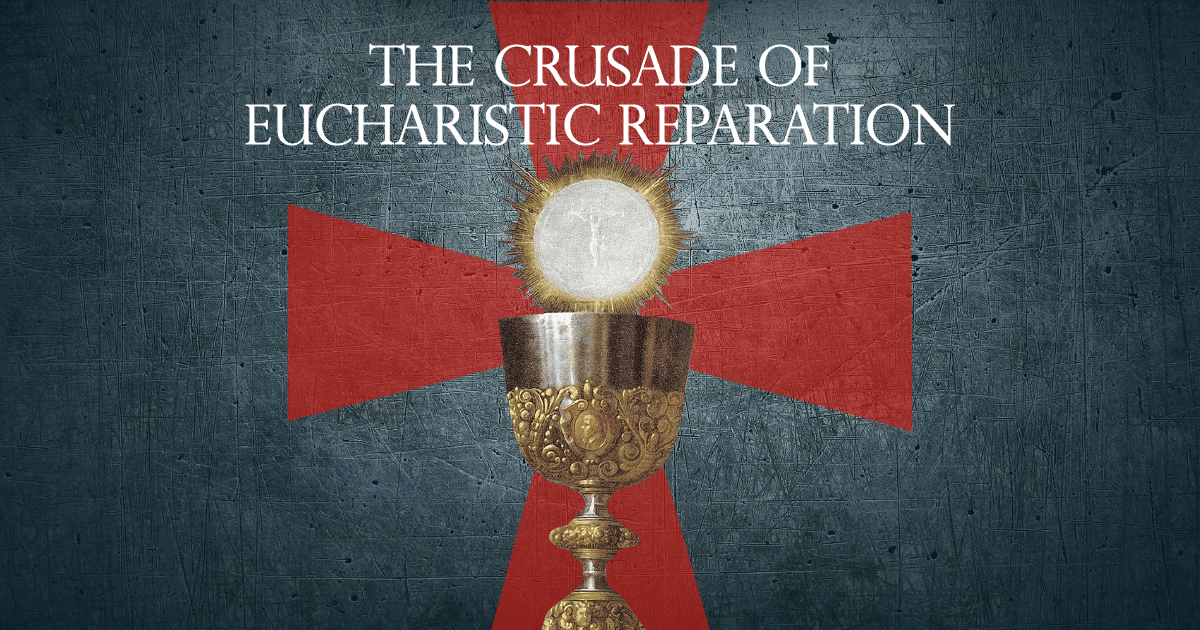
- We ask that lay people devote themselves to Eucharistic reparation in our crusade lay sodality.
- Send me an email with photos of your Sacred Heart month activities and I can post them on social (provide diocese and country): editor [at] onepeterfive.com.
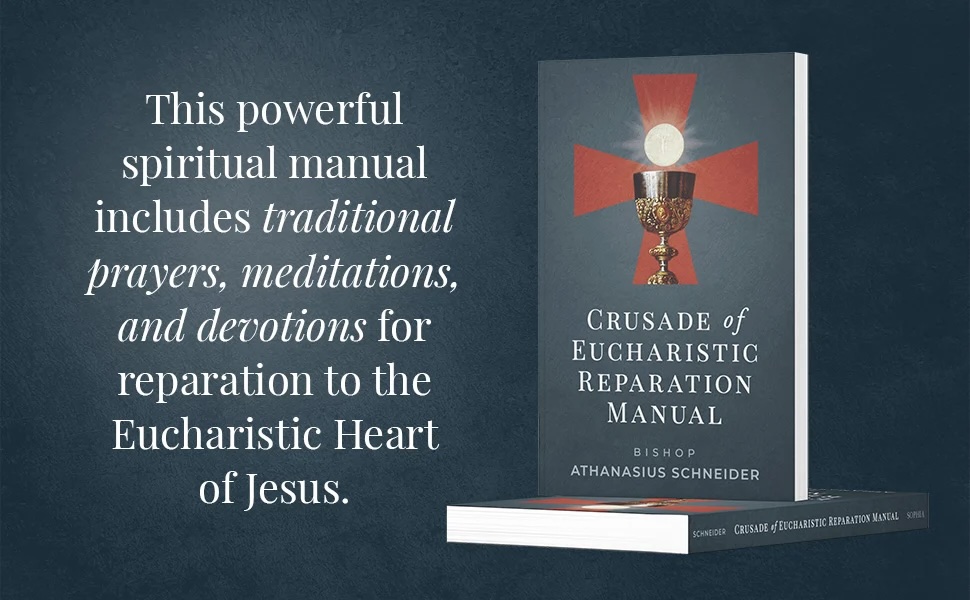
- If you can, chip in something to help our lay apostolate: if you can commit to $15 per month or a one-time gift of $180, we can send you the Crusade Manual by Bishop Schneider.
Until July 1, we will not publish any laity’s opinions on the SSPX debate, but only clerics, with the intention of supporting their priestly hearts from every side of this debate. We will only publish articles from lay people on the SSPX if they are 1.) supporting priests in some way and 2.) merely reporting the SSPX news.
Let’s offer reparation in Sacred Heart month and ask the Theotokos of Fatima to help us draw near to His Eucharistic Heart.
VIVA CRISTO REY!
T. S. Flanders
Editor
St. Elmo
+ Enrique Gorostieta Velarde