
Review of David Sonnier, Rites and Wrongs: One Man’s Struggle for the Latin Mass in the US Army. Os Justi Press, 2026.

Lectresses who translate the Word of God into fem-speak. Upper Room role-play by multiple laymen. Side-stepping bishops and warrior chaplains. LTC David Sonnier, author of Rites and Wrongs: One Man’s Struggle for the Latin Mass in the US Army, sizes up a scene that many decent people—traditional Catholics and others—might not believe ever existed. Then he produces his primary-source intelligence, and the honest reader arrives at the inevitable conclusion: it did exist.
What the author relates about his time in service is thoroughly credible. It is credible because he has no agenda upon arrival. Rather, LTC Sonnier began to appreciate what was sacred to previous generations (see accompanying letter to Summorum Pontificum, 2007) and grew a willingness to struggle for it while he was doing what he was expected to do as a modern-day Catholic—attend the new Mass!
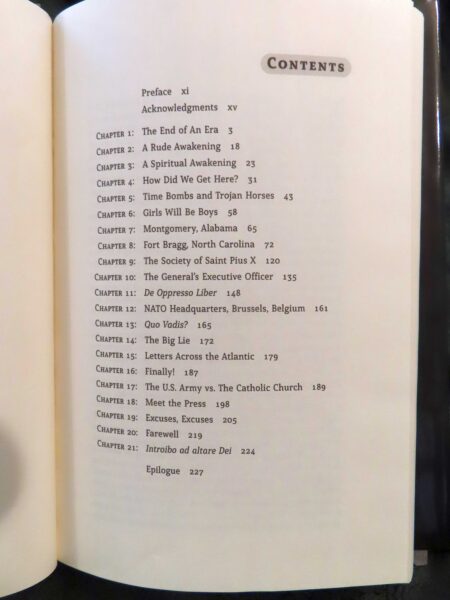
Graduating the United States Military Academy at West Point in 1981, David Sonnier never had in mind to be a career army officer. He would “do his time” and then go off to the private sector with his engineering credentials. That was the plan. He was introduced to his future wife, Lorri, while on leave at home in Mississippi, and then reported to his first assignment in California. The two were married upon Sonnier’s return from a deployment to the Republic of Korea, and everything was proceeding nicely.
Fort Benning, Georgia came next, and then Central America – in the 1980’s, the reader should note. Then came and Colombia’s version of Ranger School from which he saw a classmate quit the Army and leave for seminary! A computer science degree was the next thing that superiors had in mind for our author when he returned to the States, after which he was sent to Dayton, Ohio to teach what he had learned. “Algorithms, operating systems and artificial intelligence” were what filled the mind of this American and Colombian-trained Special Forces Officer while living in Dayton, a short walk from the local parish church.
What was convenient wasn’t good. It was at that parish that this real world combat officer was faced with the ideology of gender politics (the parent or grandparent to the one with whom we now contend in the Church and in the world). There, Sonnier woke up to the existence of a real spiritual and ecclesiastical crisis. Lorri suggested the charismatic Life in the Spirit Seminar as a possible solution and the couple gave it a try. Coming to an Air Force colleague with all of his honest concerns about the mayhem he encountered at both the parish Mass and with the charismatics, he was invited to a Traditional Mass at Holy Family Church in Dayton. The rest, as they say, is history.
This narrative relates several experiences that will immediately resonate with Catholics who attended the Traditional Mass in the Indult years. I myself have taken steps toward Tradition that I have not publicly shared, and discovering in the pages of this book that other men have taken those same or similar steps serves as inspiration for me to press forward. Of course, many have discovered Tradition since Summorum Pontificum and still others after Traditiones Custodes, and I hope they will, likewise, find insights in the book and come away with a deepened appreciation for the raison d’être of traditional Catholicism.
I have often wondered how any military member or first responder—whose public life and duties are so thoroughly saturated in ceremony and tradition—can fail to be unsettled when he is required to check this second nature of his at the door of the local parish church. While he doesn’t solve my dilemma for me, LTC Sonnier shows himself ready to accompany me in my search for an answer when he wonders in an intense moment of grief, “Had the public face of the Catholic Church become so feminized and weird that a young man who was willing to lay down his life for his country would have nothing to do with it?” (p. 74). I reiterate here that he is and was no partisan; the author has readily admitted to attending Mass with his wife, Lorri, years earlier and being sure to follow one rule in Catholic life: attendance at Sunday Mass and making a token financial contribution to the basket.
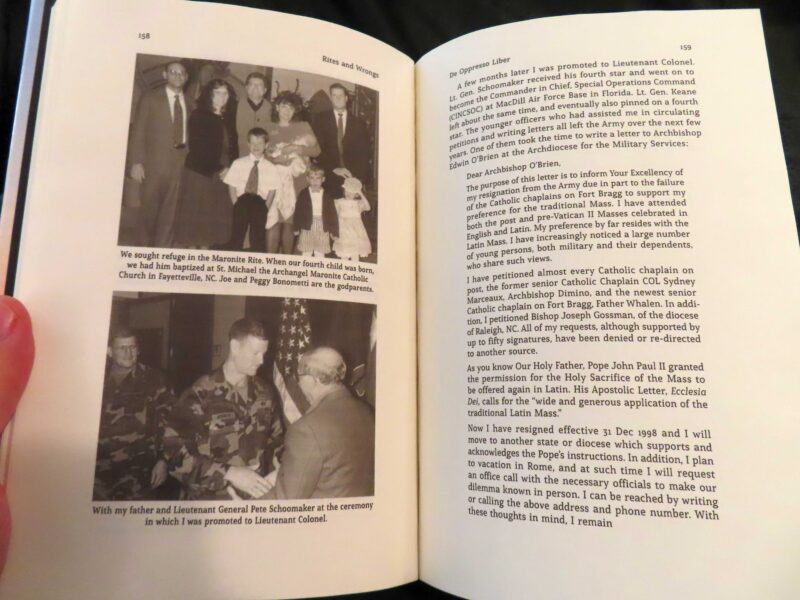
Those days were certainly behind him now. Just as I find in this author a battle buddy for the Faith, so he and his family were fortunate to find other Tradition-minded Catholics from whom to seek guidance, with whom to share fellowship, on whom to rely. That’s how Catholic fighting men are supposed to live, and LTC Sonnier encountered such people at his various military assignments and at places offering the Traditional Mass offbase. One such friend, an attorney with the Judge Advocate General’s Office, made a summation with words such as these: “If you want something from your bishop or your priests, don’t be like so many people; you have to ask nicely.”
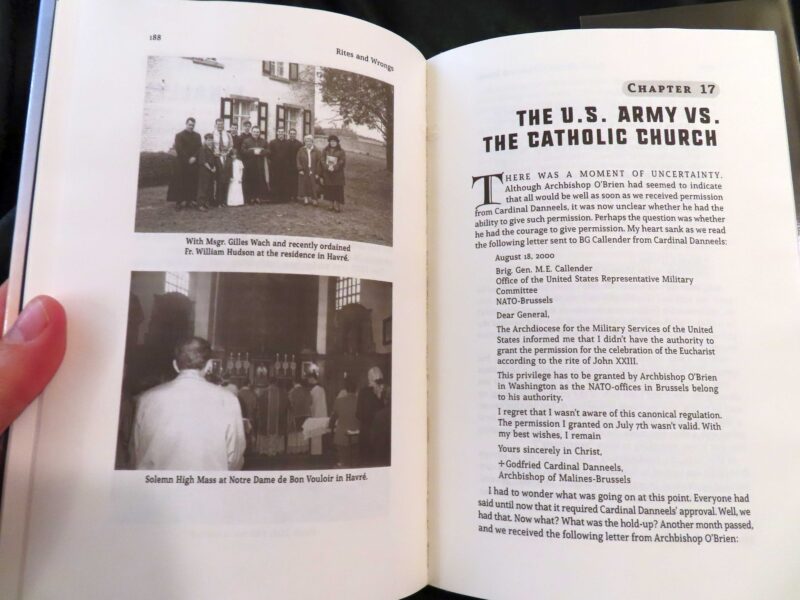
I recognized the “ask nicely” line of reasoning immediately. I heard it from Fr. Benedict Groeschel while helping him at one of his many speaking engagements in NY, roughly around the same time as the events described by LTC Sonnier in this book. To model the type of dialogue he was trying to describe, the JAG Officer wrote and sent a polite, diplomatically-worded letter on behalf of the group for whom the author was standing up—and was unpleasantly startled by the terse negative official response he received. Perhaps the reader of this review has gotten a similar answer to a similar letter asking for the Traditional Mass or even for basic reverence at the new Mass.
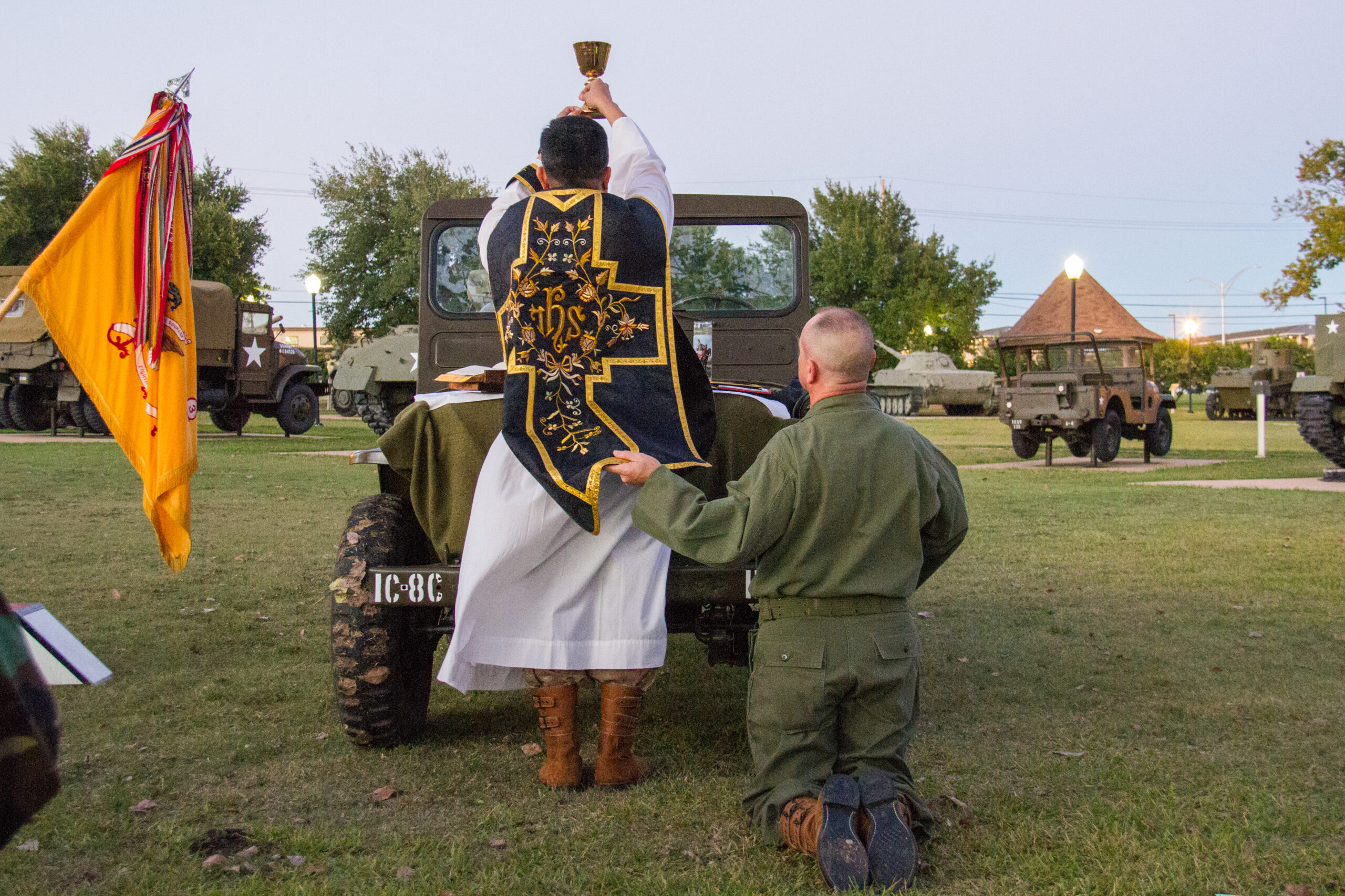
Divine Providence brought such merry warriors across each other’s paths, and that was a great blessing. The pages of this narrative detail a struggle, an ongoing mass casualty spiritual incident, and everyone has a role to play in these efforts in support of God’s greater glory, along with the stabilization and salvation of souls. One piece of correspondence, one direct encounter, one follow-up, one good example at a time. “You’re too young,” “I don’t work for Ratzinger,” “It’s too disruptive.” On and on this story goes, and the reader may find him or herself engaging the text; accompanying our Special Operations Officer from meeting to meeting as his second, or helping him read over draft after draft before a polished letter is sent. After all, Wiccans and even the Vulcans can have their spiritual needs met (!), so everyone must do his part to see that souls are saved. Are the MPs going to drag our author out of the Chaplain’s office? The reader must stand up; no one fights alone.
Risk a lot to save a lot. Risk a little to save a little. Risk nothing to save nothing.
Fighting men know this maxim to be true.
Returning to my earlier question: Why do fighting men, steeped in ceremony and tradition, accept sloppy liturgy? Well, David Sonnier did, until he didn’t and, in many respects, he paid a price for it. It is counterintuitive for someone who has made the military his career to make enemies of his superiors. Still, he may need to risk a lot to save a lot. Let the author, recounting the lead up to one of his earlier meetings, illustrate and bring the point home about what was and is to be saved—then and now:
Now, let’s put this in perspective. I was a Major in the US Army Special Forces, and a Commander of Company B, Second Battalion, Third Special Forces Group (Airborne)… For the sake of the Faith of my children, my wife, myself and the Catholic soldiers under my care, I sat here in hopes of bringing something beautiful to the Army I loved. An opportunity to give these folks a better alternative for attending Mass on Sundays and Holy Days. Something to help them find greater sanctity and strength of soul as they prepared for the dangerous tasks they might be called upon to undertake at a moment’s notice. (p. 81)
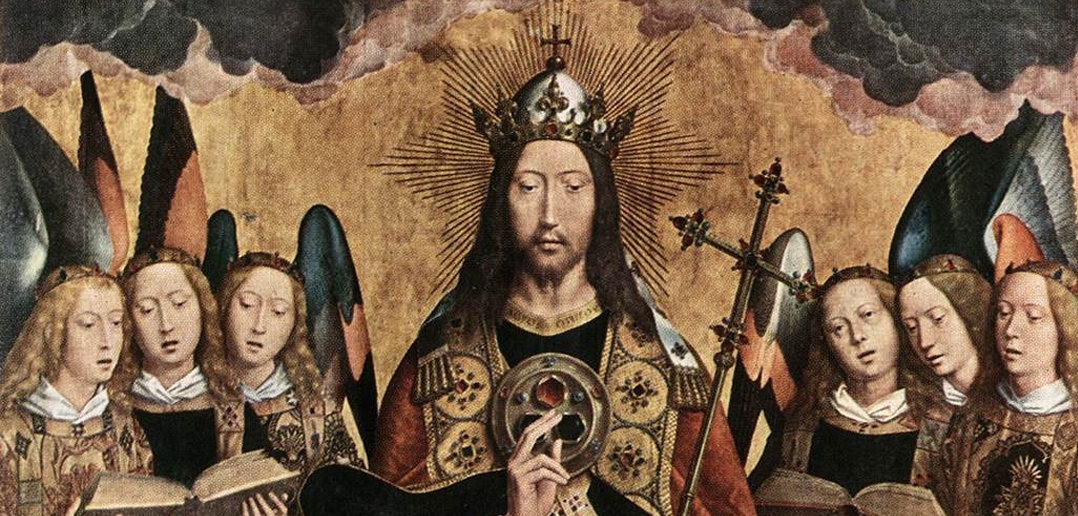
If this is true for the fighting men of the natural order in the author’s sphere of influence, how much more for all of us fighting in the supernatural order of grace throughout the Church Militant, under the standard of Christ the King?
Sonnier’s Rites and Wrongs is a book well worth a thoughtful read.