
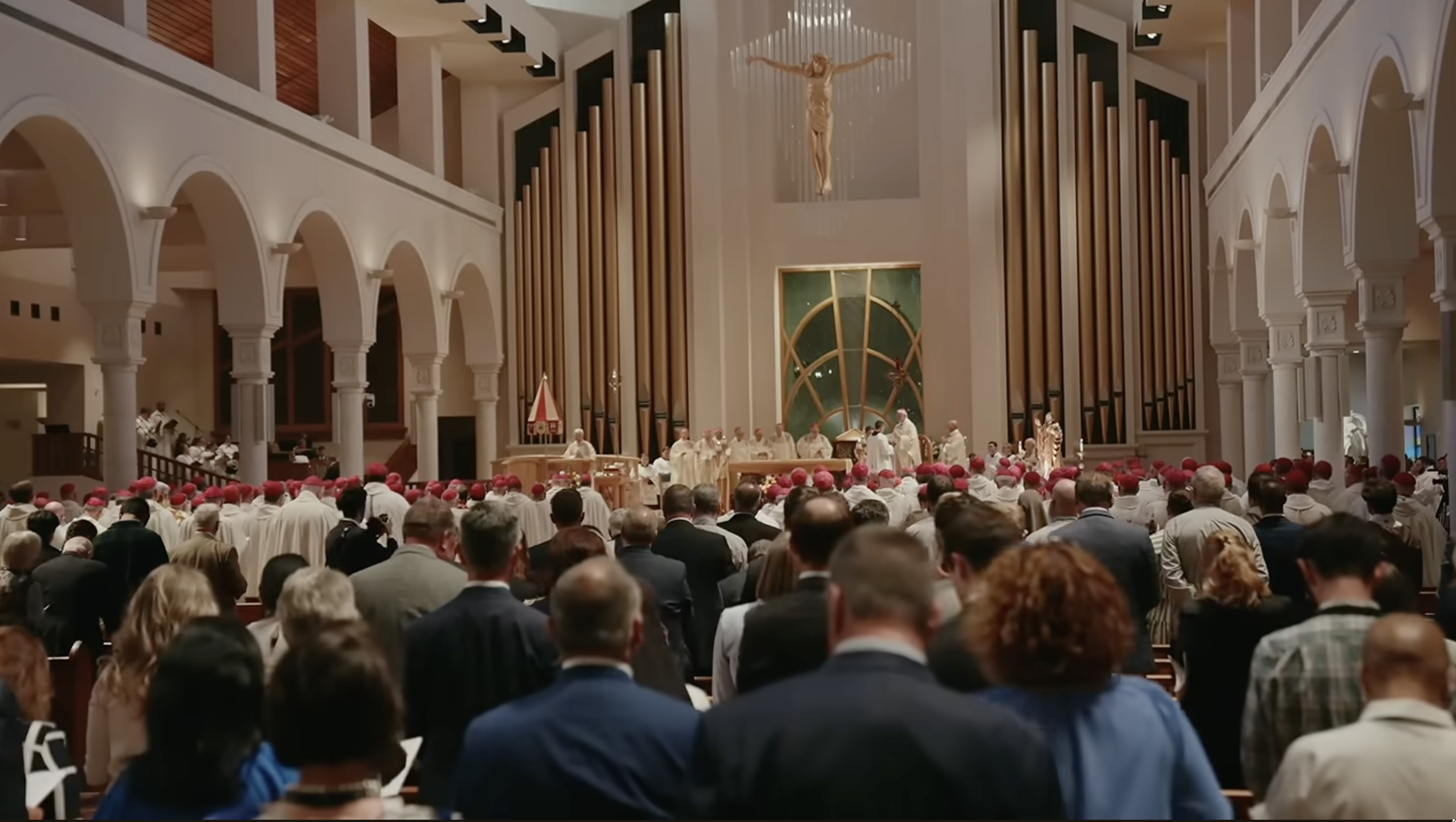
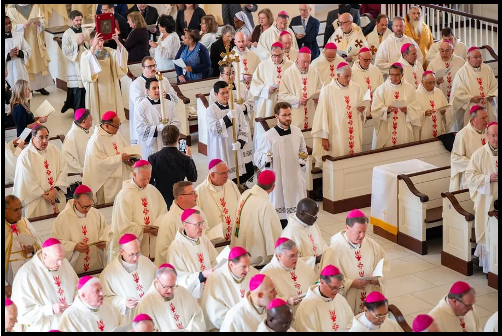
Hardly had the words spoken by the USCCB to “consecrate our nation” to the Sacred Heart of Jesus been spoken than social media exploded with challenges to the veracity of the event. I understand that. Words mean something, and while “actions speak louder than words,” there is always the challenge that the actions can be just “going through the motions.”
What it Means to Consecrate
As usual, it is helpful to begin such a study of the recent consecration to the Sacred Heart of Jesus by looking at what consecration means. In secular terms, a consecration may be understood as a dedication of your life or a commitment of your time to a specific purpose — such as dedicating time to charitable causes or groups, or even secular causes like working to end child hunger, fighting global warming, and the like.
In the spiritual realm, a consecration has been understood as a sanctification of something, setting it apart as dedicated to God. The clearest examples come from the Bible, as in the Israelites consecrating themselves by bathing in the Jordan River before entering the Promised Land, or Christ consecrating His life by His baptism in the Jordan River before beginning His mission of our Redemption.
Catholics should understand this in our times when, at the Offertory of the Mass, the priest blesses the host, the water, and the wine, thereby setting these apart (dedicating them to God) before the Consecration (the unbloody sacrifice of Calvary), thus making a living sacrifice to God and confecting the Sacrament of the Holy Eucharist.
Consecration to the Sacred Heart of Jesus is Long-Standing
Long before the USCCB decided to consecrate the United States to the Sacred Heart of Jesus, the Church in the 11th and 12th centuries recognized the power and value of venerating Our Lord’s Sacred Heart.
Taken from the Adoro Te by St. Thomas Aquinas, the stanza below beautifully reflects what the medieval world understood about the Precious Blood of Christ and the Sacred Heart of Jesus:
O Pelican, self-wounding on the Rood
Me unclean man yet cleanse with Your own BloodOf which a single drop, for sinner spilt
Can purge this wicked world of all its guilt.
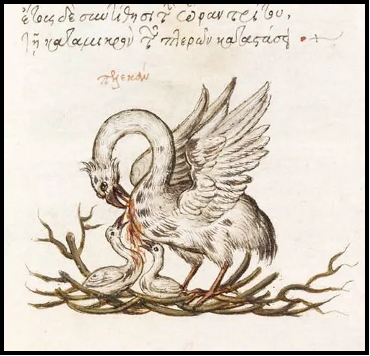
For those who don’t know the allegory behind it, the pelican has a reputation as a fearsome hunter, a protector of children, and the ultimate symbol of selflessness and sacrifice. These ideas symbolize our redemption through the Passion and Death of Christ.
The story goes that one such mother pelican gives birth to her brood who reject her care and sacrifice for them. They attempt to peck out her eyes, and in her anger she kills them. Think: the creation of man living under God’s care in the Garden of Eden, and then man’s fall from grace.
But she loves them and wants to give back their life as God wants to give us back our life of grace. After three days, she uses her beak to stab her heart in order to give her blood to revive her “dead” children. Her life to save theirs. Christ’s life to save ours.
Bestiaries, manuscripts depicting stories of real and imaginary animals, were popular from as early as the second century, and the Church made use of these to illustrate in art and in stained glass Christ’s infinite love and the depth to which He would go to redeem fallen mankind. The illustration below is one such depiction of the allegory.
Devotion to the Sacred Heart in Our Times
It wasn’t until the 17th century, however, that this devotion received higher prominence.
This was because of the revelations from Christ to St. Margaret Mary Alacoque, in which He gave specific works and prayers to honor His Sacred Heart. In these revelations, He pathetically complains of our tepid and even coldness toward Him who loved us all to the total expiation of His blood. His heart, He explained, is a symbol of His endless love for mankind, and all He requires from us is a return of that love through devotion and prayer.
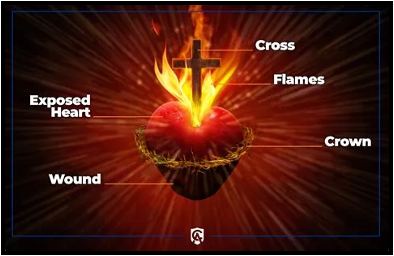
The Church took up the call, and through encyclical letters of Popes Leo XIII (Annum Sacrum) and Pius XII (Haurietis Aquas), and especially the work of Pope Pius IX (who universalized the Feast of the Sacred Heart of Jesus in 1856), eventually the entire month of June has been dedicated to Our Lord’s Sacred Heart. In our own time, Pope St. John Paul II spoke frequently on the Sacred Heart, urging the faithful to take up its devotion.
A Papal Solemn Consecration and a Need for Another?
On June 11, 1899, Pope Leo XIII solemnly consecrated the human race to the Sacred Heart of Jesus. This significant act from the highest place in the Church put humanity under the “love and kingship of Christ,” recognizing the importance of returning God’s love and seeking His mercy. This profession was intended as a communal act for “families, nations, and the entire human race, reflecting a desire for peace, order, and divine protection.”
This year there have been a great many “consecrations” of parishes, dioceses, and even (as we see from the USCCB) nations to the Sacred Heart of Jesus in various forms and ceremonies. Those who have read the Consecration prayer of Pope Leo XIII and the Consecration prayer of the USCCB have observed that the modern version in no way places mankind under the protection of and service to the Kingship of Christ.
Many questions arise as to the validity of the recent consecration. Does it, in fact, meet the definition of “spiritual consecration”? Has our nation been set apart and dedicated to the service of God? If so, then was there really a need to have another consecration, or would a renewal of the previous consecration been sufficient? Whether or not the new consecration matches in eloquence and sincerity, or even with a focus on our placing our wills under that of our Eternal God, is a topic for another discussion.
Our Church leaders would have been better served if they would simply comply with the Our Lord’s request for reparation and atonement as given to St. Margaret Mary Alacoque, especially the last of His 12 Promises:
I PROMISE THEE IN THE EXCESS OF THE MERCY OF MY HEART, THAT ITS ALL-POWERFUL LOVE WILL GRANT TO ALL THOSE WHO SHALL RECEIVE COMMUNION ON THE FIRST FRIDAY OF NINE CONSECUTIVE MONTHS
THE GRACE OF FINAL REPENTANCE;
THEY SHALL NOT DIE UNDER MY DISPLEASURE, NOR WITHOUT RECEIVING THE SACRAMENTS;
MY HEART SHALL BE THEIR ASSURED REFUGE AT THAT LAST HOUR.
As June has now closed and we have July, with its dedication to the Precious Blood of Jesus, we should truly hope and pray that these “consecrations” are a fitting renewal and effect a renewal of humanity’s love and devotion to a Heart that gave so much for us.