
Apart from the brain, which is usually and mistakenly regarded as the seat of thought, there is no other organ of the human body more frequently represented—and at the same time more frequently distorted—than the heart. Considered the ideal symbol of love, drawings, gestures, colors, and images associated with the heart are everywhere. Even in the fallen world, love is the most important principle that animates the lives of people everywhere. Yet, as Saint Augustine teaches us, just as there exists a holy and beneficial love directed toward Heaven, there also exist perverted forms of love, all subordinated to an unhealthy passion for the “world.” Indeed, Saint Augustine faithfully echoed a verse from the First Epistle of Saint John:
Love not the world, nor the things which are in the world. If any man love the world, the charity of the Father is not in him (1 John 2:15).
Thus, love for worldly things drives divine love out of the soul, while love for God and heavenly things extinguishes and replaces the destructive flames of love for “this world.” As Plato had already anticipated in the dialogue Phaedo, there is a pathology of love that reveals who governs each form of it: demons in the case of earthly love, God in the case of heavenly love. Like everything else in this world, love is not unconditionally good—it is good only when it is properly directed toward a fitting object. Unfortunately, this truth is almost always ignored, if not outright mocked, by those who walk the path of adultery and sexual sins.
Metaphorically speaking, we may say that when love is properly directed toward God and neighbor according to Christian requirements, the “heart” is healthy; when love is directed in a deviant and disordered way toward earthly things, the “heart” is sick. Most of us would probably agree that the most devastating disease of the heart is passionate, adulterous love, the kind of love glorified in the culture of the last two centuries through novels such as Madame Bovary, and Anna Karenina. The pathology of diseased love is dominant in our fallen world.
The perversion of love is necessarily connected to a mistaken conception of the good toward which human life ought to be directed. Confusing the good with pleasure, man pursues what is pleasant, convinced that in doing so he will attain happiness. This error is fatal. Happiness, the supreme goal of man, cannot be obtained from any earthly thing, nor from ways of life that violate God’s law. This explains why great passions are accompanied by great catastrophes that affect the lives of those who walk on deceptive paths.
The essence of what has been said is contained in the words of Saint John the Apostle quoted above: when man loves earthly things, divine love becomes foreign to him; when he loves heavenly things, carnal love diminishes until it disappears. With this in mind, we can better understand one of the most intriguing prophecies of Our Lord Jesus Christ:
“And because iniquity hath abounded, the charity of many shall grow cold” (Matthew 24:12).
This verse teaches us everything we need to know about the pathology of love. For in it, the Divine Teacher, like a skilled physician, not only prophesies but also tells us the cause of love growing cold—it is the disease of the heart. Before the prophecy, He reveals the cause: the multiplication of sins. Yet sins are, without exception, the direct result of the soul’s orientation toward “earthly” things. The attachments that result from this dis-orientation are disastrous.
Of course, there is no need to say that these are not legitimate earthly things—such as the love between spouses, the love of parents for their children, or the love of nature created by God—but rather illicit things that lead to the violation of the Ten Commandments, such as adulterous love or attachment to vices that bring fleeting pleasures (alcohol, drugs, and so forth). When “earthly” things of this sort are loved, the vessel of the heart is filled with poison while the nectar of grace is expelled.
Should we then be surprised that heart disease is so widespread? And that so many die from heart attacks? Not even cancer claims as many victims, although it ranks second among the causes of mortality. One-third of all deaths are caused by diseases of the heart. Confronted with such a grim reality, we must recognize an extraordinarily significant detail. More than that, we may infer that biological reality symbolically speaks, in fact, about the spiritual reality of the condition of people’s souls today.[1]
Indeed, the love of many for heavenly things has grown cold. The dominance of a materialistic and hedonistic culture, sustained by a civilization in which cold and impersonal technology occupies the principal place, has resulted in the enslavement of human beings within a prison of exclusive concern for pleasures obtained at any cost. And the cost is great. Convinced by the deceptive voices of false prophets that paradise must be earthly, governed by the imperatives of “here” and “now,” most people—including many baptized Christians—live as though God did not exist. Often we do not even conceive that God should be loved above everyone and everything else.
Certainly, we cannot ignore the difficulty of the most important question raised by Saint John the Apostle: how can we love God, whom we do not see? Saint Alphonsus, like many other saints, tells us that without a serious practice of meditation, this is extremely difficult, if not impossible. We must constantly meditate upon the blessings God has bestowed upon us. We must continually strive to identify the discreet traces left by Divine Providence in our lives. We must always pray that God will help us recognize them.
Otherwise, caught in the whirlwind of worldly cares and concerns, we tend to seek the good only in earthly things, losing our love for heavenly realities. This is why we must meditate upon Heaven and the Last Things, reading and rereading throughout our lives the extraordinary description of the Heavenly Jerusalem left to us by Saint John in the Book of Revelation.
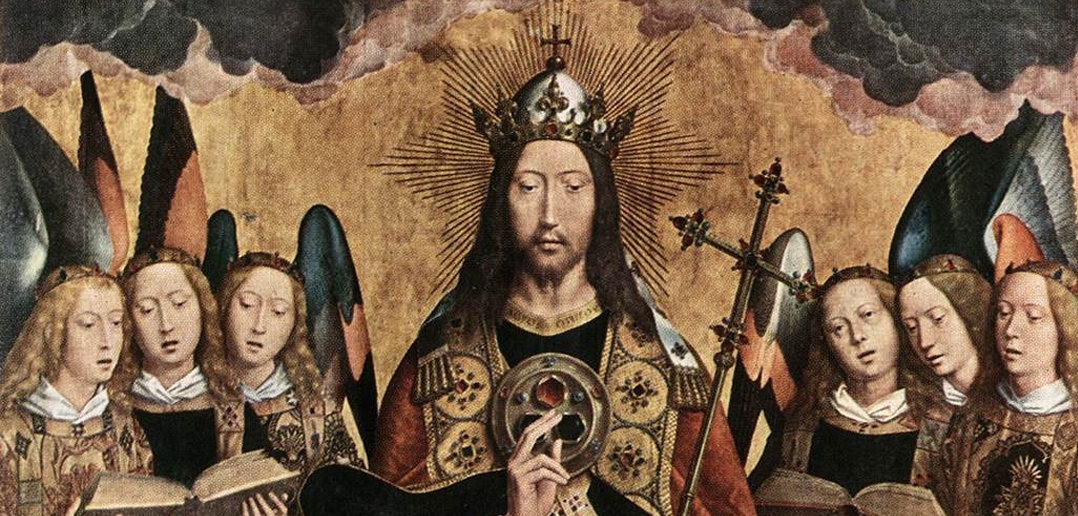
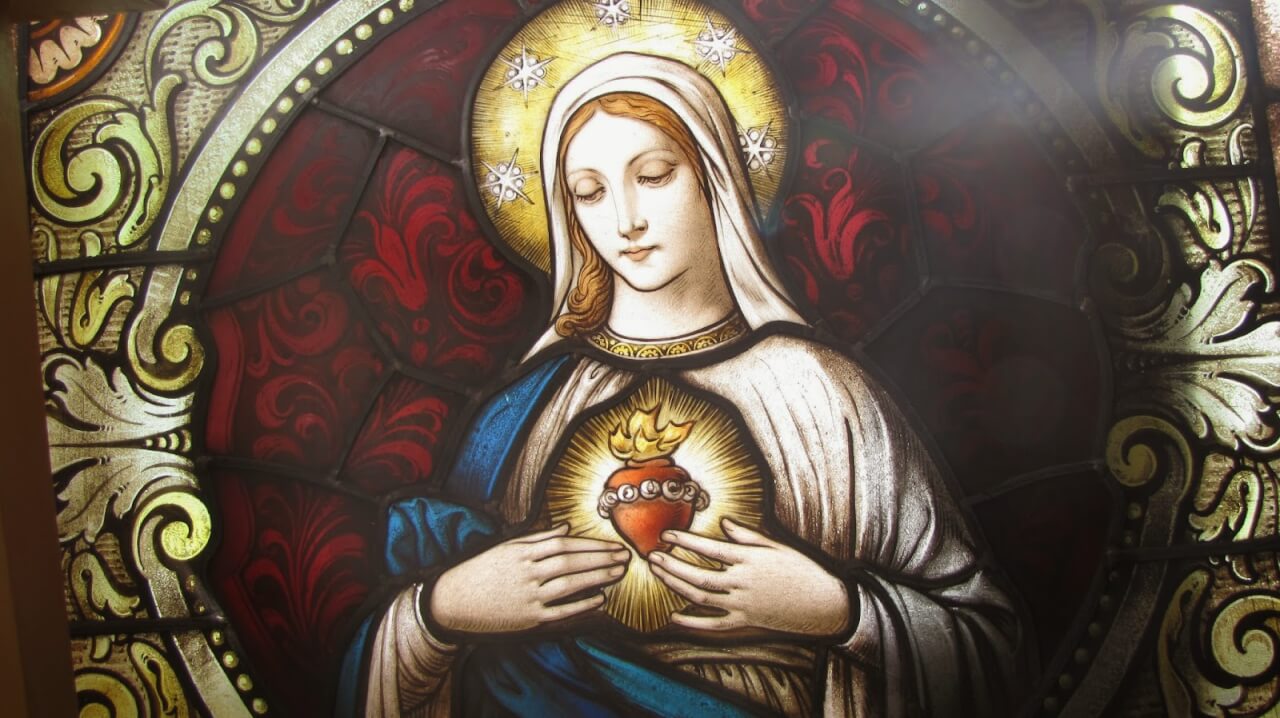
Besides the art of Christian meditation—almost completely forgotten in recent centuries—God has provided us with powerful means for healing our hearts. Perhaps nothing in the history of the Church can be compared to the two forms of devotion that Heaven has proposed to us: the Most Sacred Heart of Our Savior Jesus Christ and the Immaculate Heart of the Blessed Virgin Mary.
Revealed through the visions of Saint Margaret Mary Alacoque (1647–1690) and through those granted to the three shepherd children of Fatima—Saint Francisco Marto (1908–1919), Saint Jacinta Marto (1910–1920), and Lúcia dos Santos (1907–2005)—these two Hearts were made known to us in order to guide us through the darkness of the latter times.
The devotions themselves are well known throughout the Catholic world: celebrating the Eucharist and receiving the Sacrament of Reconciliation on nine consecutive First Fridays as reparation for sins committed against divine love; and performing acts of reparation on the first Saturday of five consecutive months, consisting of confession, Holy Communion, recitation of five decades of the Rosary, and a fifteen-minute meditation on its mysteries. If we reflect upon the details of these devotions, we begin to understand their profound significance.
First of all, their reparative character must be emphasized. All human sins are, ultimately, sins against the love of God and of the Blessed Virgin Mary. Therefore, all sins are manifestations of the diseases of the “heart.” In order to heal us, God first reminds us of the very essence of the Christian religion. It is, beyond all doubt, the manifestation of divine love.
This is the “heart” of the creation. The love of God is that fire at the center of the world and of man which sustains all things in existence. In a mysterious and paradoxical way, even the wicked are loved—at least in principle—by God. This is why no creature can return to nothingness or suicidally annihilate itself. Because God, out of love, conceived each creature within His eternity and created it for the purpose of happiness, of eternal beatitude.
The terrible mystery of freedom is the only thing capable of casting a shadow over this unique, magnificent origin of all creation. Yet wrong choices, sins, and, in a word, evil, are possible precisely because love itself is possible only when the choice of the beloved is free. But what is the most natural attribute of love? This is something even sinners understand: fidelity. And fidelity means perseverance, tenacity, and patience.
Personally, I have encountered no higher manifestation of love than that of a mother toward her children and of faithful spouses who have been betrayed. As a father of seven children, I have had countless opportunities to witness the patience, care, and incredible devotion shown by my wife in raising our children. How many sleepless nights has she spent beside sick children? How many troubling worries has she endured? Contemplating these things over the years, I came to understand the greatness of womanhood in its maternal vocation. I confess that I often felt inferior to my wife, even though I stood beside her through all these circumstances.
Likewise, during my adult life I have contemplated the tragedy of husbands abandoned by their wives. Unfortunately, in our time, the realities of divorce and adultery have become commonplace. Banalities. Yet those who impressed me most by their heroism were precisely those husbands who patiently waited, year after year, for the return of a wayward wife. (Of course, I know that there are also cases in which women are deceived and abandoned; I simply have not personally encountered such cases.) Patience bears fruit. Recently I had the joy of witnessing the miracle of such a return. Nothing can describe the happiness of a husband who sees his wife come home again. Likewise, nothing can adequately express the worth of the man who never ceased praying and waiting.
If fidelity is the defining characteristic of love, then we can understand why God asks us to persevere in the practice of reparative confessions and Communions for nine and five consecutive months respectively. For only through perseverance and steadfastness can love be proven. These are among the best medicines for the heart.
At the same time, we notice that devotion to the Immaculate Heart of the Blessed Virgin Mary includes the Rosary and meditation. Put simply, it includes prayer and contemplation—for meditation is nothing other than a form of contemplative prayer, or prayerful contemplation.
In practice, we are dealing with a genuine spiritual school—a school in which we are taught the things we have forgotten. The Holy Rosary, together with the recitation of the Psalms, is among the most powerful prayers in the entire Christian Tradition. Its persistent repetition is intended to break the crust that has hardened our hearts. Just as a sledgehammer or a jackhammer must strike cement or concrete again and again with all its force in order to break it apart, so too the words of prayer must strike the hardness we have acquired through countless sins. But healing is possible.
The attainment of a “clean heart”—for which we pray in Psalm 50 of King David—is the highest moral goal of a truly Christian life. Yet we must acknowledge that this is not possible without divine intervention. Not only can we do nothing that would bring us to Heaven on our own, but we cannot even desire such a thing without a special divine assistance, traditionally called prevenient grace. This is why nothing is more important than prayer.
First comes the prayer of the faithful for those who have forgotten, or who never learned, how to pray. Then comes prayer for those who have strayed from the path of salvation. Finally, there is the prayer of the faithful for one another. For, after all, both the devotion of the Nine First Fridays and that of the Five First Saturdays are, above all, vital schools of prayer. How could anyone claim to love persons to whom he never speaks? Therefore, pray! Pray with all your heart! And the day of healing will surely come.
[1] Of course, I know very well that there can be people with a sick heart who have true Christian love. In their case, the illness can be explained not only by the fact that they do not love, but also by the fact that they do not receive the love they deserve.