
Part I — The Roman Calendar in 1954: The Last Year of Wholeness
When Catholics of earlier generations opened their missals in 1954, they held in their hands not a mere schedule of ceremonies but the living memory of the Church. Each page testified to the slow, organic growth of the Roman Rite through the centuries—a harmony of theology, devotion, and asceticism that sanctified every day of the year. The liturgical calendar then in force was the fruit of an unbroken continuity stretching from the patristic age through the Middle Ages and the Counter-Reformation into the first half of the twentieth century. It had been gently pruned and occasionally adorned, yet its trunk was ancient and sound. Only a year later, with the drastic revisions of 1955, that tree would begin to be cut back to its roots. The Missal of 1954 thus stands as the last full flowering of the Roman Rite before modern reform sought to “simplify” what centuries of saints had lovingly tended.
From Trent to St. Pius X: Four Centuries of Organic Growth
The Missal promulgated by St. Pius V in 1570 after the Council of Trent gave canonical form to what already existed in practice. The pope did not create a new liturgy; he codified a tradition that had matured through at least twelve centuries. He famously decreed that any rite more than two hundred years old could remain in use, a measure proving that his purpose was preservation, not innovation. For the next three centuries, additions came slowly: new feasts honoring the Rosary after Lepanto, the Holy Name of Jesus, St. Joseph as universal patron, and later the Sacred Heart. These insertions did not disturb the underlying rhythm of fast and feast. They grew like new blossoms on an old vine.
By the dawn of the twentieth century, minor duplications and the proliferation of saints’ feasts had crowded the weekly ferial cycle. Pope St. Pius X addressed this in his apostolic constitution Divino Afflatu of 1911. He restored the ferial psalter and reordered the ranking of feasts so that the daily recitation of the Psalms might again follow its ancient course. St. Pius X himself insisted that his work was a “return to the sources of the Roman liturgy,” not a reconstruction. Liturgical scholars such as Adrian Fortescue, writing in The Mass: A Study of the Roman Liturgy (1912), hailed it as a genuine renewal within continuity. The ferial days regained dignity without losing their connection to the feasts that crowned them. Yet it was not without controversy by some.[1] However, despite this, many hailed his decision to attach feasts formerly observed on Sundays to fixed dates – feasts including St. Joseph, the Most Precious Blood of Our Lord, St. Joachim, the Seven Sorrows of the Blessed Virgin Mary, and Our Lady of the Rosary. Such changes to the Missal would pale in comparison to those instituted just a few decades later before Vatican II even began.
Pius XI and Pius XII: Measured Harmony before the Storm
The pontificates of Pius XI and the early years of Pius XII continued with steady and respectful organic development. Pope Pius XI instituted the feast of Christ the King in 1925, a doctrinally luminous addition reaffirming the social kingship of Christ against secularism. He also canonized new saints such as St. Thérèse of Lisieux, integrating them seamlessly into the existing cycle. Under Pius XII the Missal received the Marian feast of the Immaculate Heart of Mary in 1944, the Assumption was defined as dogma in 1950, and the universal calendar absorbed these triumphs without displacing older observances (although some may prefer the texts of the Assumption Mass prior to the new propers instituted after it was dogmatically defined). The Church was still living her liturgy as a continuum.
In 1947 Pius XII issued Mediator Dei, the first papal encyclical dedicated entirely to the sacred liturgy. There he stated that
The Church is without question a living organism, and as an organism, in respect of the sacred liturgy also, she grows, matures, develops, adapts and accommodates herself to temporal needs and circumstances, provided only that the integrity of her doctrine be safeguarded (59).
This principle of organic growth became the official standard against which later changes would have to be measured. At mid-century the Roman Rite remained a living organism indeed—its arteries pulsing with the same sacramental blood that had flowed through the centuries.
The Liturgical Year of 1954: A Sanctified Cosmos
By 1954 the liturgical year offered a robust vision of Christian time. Sixteen octaves extended the joy of the Church’s greatest mysteries: Christmas, Epiphany, Easter, Ascension, Pentecost, Corpus Christi, the Sacred Heart, and All Saints among them. Ten vigils prepared the faithful in fasting and prayer for the feasts of the Lord, the Blessed Virgin, and the Apostles. Four Ember Weeks hallowed the changing seasons of the natural year, reminding Catholics that grace does not abolish nature but sanctifies it. The Rogation Days at planting time, the processions of Corpus Christi through the streets, the commemorations that linked one saint’s feast to another—all composed a rhythm of gratitude and penance, petition and praise. While dozens of Holy Days had been eliminated along with various fasting and abstinence days – the pre-1955 Missal nevertheless represented a robust and living expression of Christian liturgical life, albeit less lustrous than its heights centuries before when Catholicism was rightfully seen as the core of all societal life.
Dom Prosper Guéranger, whose Liturgical Year inspired generations to love this sacred rhythm, described the calendar as “the catechism of time.” Each octave symbolized eternity; each vigil embodied expectation; each fast formed the soul for feastday grace. The Church’s calendar was not a convenient list but a theological drama in which every Christian played a part. In 1954 one could still live that drama fully.
The year’s cycle still began with Advent as a true penitential season of penance. Christmas extended for a unique octave, culminating in the Circumcision of the Lord, followed by three additional octave days: St. Stephen, St. John and the Holy Innocents. The Vigil of the Epiphany called the faithful to penance in the midst of feasting before celebrating the manifestation of Christ to the Gentiles, creating the Twelve Days of Christmas. Later, Septuagesima prepared the soul for Lent, and Lent itself retained the ancient character of forty days of strict fast.[2] Holy Week unfolded in the time-honored order known to the saints: Palm Sunday morning with its folded chasubles and lengthy Passion; the Mass of the Presanctified on Good Friday morning; and the Easter Vigil celebrated in the early hours of Holy Saturday, still linked liturgically to the Lenten fast. Pentecost possessed an entire octave of red-clad joy amid Ember Days, and the feasts of Corpus Christi and the Sacred Heart octaves extended that joy into summer. Each season carried its theological lesson.
Why the Pre-1955 Missal Was a Bulwark of Truth
The 1954 Missal was not only beautiful; it was doctrinally secure. The principle lex orandi, lex credendi—the law of prayer is the law of belief—was nowhere clearer. Its collects and secrets spoke the language of Catholic dogma without dilution. Prayers for the liberty of the Church, the conversion of her enemies, and deliverance from error appeared constantly. The offertory prayers—Suscipe, sancte Pater and Deus, qui humanae substantiae—confessed the propitiatory character of the Mass with a clarity that later generations would need to defend explicitly. The repetition of these texts through countless feasts formed a stable bulwark against doctrinal erosion.
Scholars such as Joseph Jungmann in Missarum Solemnia (1948 ed.) recognized that the Roman liturgy, even after minor modern adjustments, remained essentially the same as that described in the Gregorian Sacramentary of the eighth century. Cardinal Ildefonso Schuster’s Liber Sacramentorum (1943) likewise observed that the Roman Rite’s genius lay in its sober continuity. The 1954 Missal thus represented a coherent expression of the Faith—an unbroken thread from antiquity to the modern world.
A Turning Point in 1955: When Simplification Became Subtraction
In 1955 Pope Pius XII promulgated the decrees Maxima redemptionis nostrae mysteria and Cum nostra hac aetate. The first drastically restructured Holy Week: the Easter Vigil was moved from the morning of Holy Saturday to Saturday night, an experiment begun in 1951 now made universal; the ancient Mass of the Presanctified was replaced by a simplified service; folded chasubles and the triple candle of Holy Saturday disappeared. The second decree suppressed most vigils and octaves throughout the year, retaining only those of Christmas, Easter, and Pentecost. The centuries-old Vigil of the Epiphany vanished, as did the octaves of the Ascension, Corpus Christi, and All Saints. The Ember Days were redefined, and the liturgical hierarchy of doubles and semi-doubles was reduced.
At first glance these measures appeared pastoral as hierarchs promised brevity and convenience. Yet they broke the principle articulated in Mediator Dei only eight years earlier—that true reform must be organic. The liturgy had always grown by addition, not excision; now it was being pruned by administrative fiat. Monsignor Annibale Bugnini, later architect of the post-conciliar Novus Ordo, admitted that the 1955 Holy Week marked “a decisive stage in the liturgical reform” (La Riforma Liturgica 1948–1975, p. 44). Cardinal Antonelli, one of the reform’s own collaborators, later lamented that the process had “abandoned the principle of continuity.”[3]
The Further Simplifications of 1960–1962
Under John XXIII the movement continued. The 1960 Code of Rubrics, introduced by the motu proprio Rubricarum instructum, aimed to “simplify” the calendar still further. Feasts duplicated on different days—such as the Finding of the Holy Cross and the Exaltation of the Holy Cross, or the Apparition of St. Agnes following her principal feast—were eliminated. St. John before the Latin Gate, St. Leo II, and other ancient observances vanished from the general calendar. Commemorations, once a daily reminder of the communion of saints, were restricted almost to extinction. By the time the 1962 Missal appeared, the Church’s liturgical year had been visibly thinned. Notably, major feasts which celebrated miracles were removed. Though the outward forms of the Tridentine Mass remained, its calendar had lost much of the theological density that once instructed the faithful day by day.
Why Earlier Development Had Been Truly Organic
To grasp the tragedy of these losses one must understand what “organic development” meant in the Roman Rite. It was not the introduction of novelty for novelty’s sake but the gradual unfolding of what was already implicit in revelation. When the feast of Corpus Christi was instituted in the thirteenth century, it expressed the Eucharistic doctrine already believed, just as when St. Pius V codified the Missal, he fixed usages long established. In each case, change grew from the existing root. By contrast, the mid-twentieth-century reforms sought to rationalize and streamline the rite according to pastoral theory rather than inherited practice. The distinction is the difference between tending a living garden and rearranging a museum exhibit.
The Theological Worldview of the 1954 Missal
The pre-1955 Missal expressed a sacramental understanding of time itself. The Church did not merely remember Christ’s mysteries; she made them present. The octave prolonged the grace of a feast because eternity cannot be confined to a day. The vigil imposed fasting because joy is best received after preparation. The Ember Days united man’s work with God’s creation, consecrating the year’s four seasons. Even the ranking of feasts—double, semi-double, simple—taught the hierarchy of truths. The faithful who lived by this calendar were constantly reminded that the supernatural order penetrates the natural one. As Dom Guéranger wrote, “The Church, by her cycle, completes in time what our Lord accomplished in His person.”
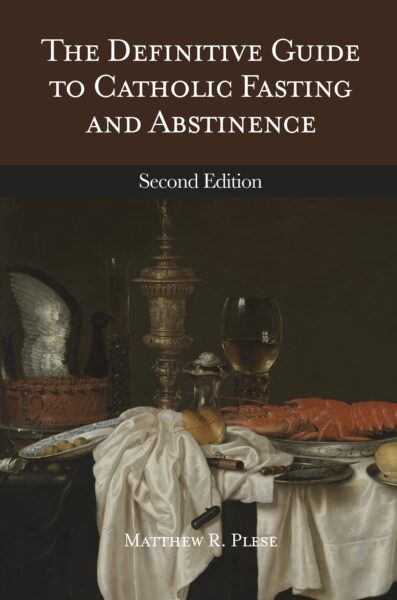
Such a worldview was deeply ascetical. The faithful fasted on vigils, abstained throughout the entire year on every Friday, and observed numerous fasts and abstinences that prepared them for the ensuing feast. Fasting and feasting were inseparable poles of a single discipline. The gradual erosion of these observances between 1955 and 1962—followed by their near disappearance in subsequent decades—was not only a liturgical loss but a spiritual one. Without the external scaffolding of sacred time, interior life tends to flatten into routine. As detailed in my book The Definitive Guide to Catholic Fasting and Abstinence, this trend finished what had begun centuries earlier due to rampant secularization.
A Bulwark against Modern Error
Because the 1954 Missal preserved prayers invoking divine aid against heresy, schism, and moral corruption, it served as a defense against the encroaching errors of Modernity. Collects such as Ecclesiam tuam, Domine, benignus illustra, ut et in officio nostro devotio non desit et in petitione succurret affectus —“Graciously enlighten Thy Church, O Lord, that devotion may not fail in our service nor affection in our prayer”—expressed a spirituality of humble dependence that countered the self-reliant optimism of the age. The rhythm of vigils and octaves reminded Catholics that sanctity requires both penance and celebration, both contrition and confidence. In this sense the old calendar was not a museum piece but a moral compass. It trained generations to see divine Providence at work in history and to measure progress by fidelity rather than novelty.
The Erosion of Memory and the Need for Recovery
When the calendar was simplified, what vanished was not mere redundancy but a living network of connections. The Church’s memory became selective. Feasts once paired—such as the Finding and the Exaltation of the Cross, or the Apparition and the Martyrdom of St. Agnes—had taught theological balance: discovery and triumph, purity and glory. Once those pairings disappeared, the liturgical pedagogy grew thinner. As Pius XII himself warned in Mediator Dei,
It is neither wise nor laudable to reduce everything to antiquity by every possible device… Clearly no sincere Catholic can refuse to accept the formulation of Christian doctrine more recently elaborated and proclaimed as dogmas by the Church, under the inspiration and guidance of the Holy Spirit with abundant fruit for souls, because it pleases him to hark back to the old formulas… discarding the new patterns introduced by disposition of divine Providence to meet the changes of circumstances and situation (62-63).
Ironically, within a decade of that encyclical the Holy See would authorize precisely what it forbade, albeit in the name of reform.
Today, studying the 1954 Missal allows us to glimpse a civilization still ordered around sacred time. The year itself catechized the faithful; Sunday and feast days framed domestic life; Ember Days and rogations linked man to the soil; vigils and octaves united the Church militant with the Church triumphant. It was the rhythm by which saints were made.
Conclusion: Remembering to Rebuild
This series, Lost Feasts and Principles from the Pre-1955 Roman Missal, will journey through that vanished landscape—not to mourn sentimentally but to recover principles for renewal. We will study the forgotten Vigils of the Apostles, the Apparition of St. Michael, the lost Octave of Epiphany, the changing Ember Days, and the vanished Eastertide feast of St. Joseph and more. Each will reveal a facet of the Church’s ancient wisdom. The calendar of 1954 was the last year when the Roman Rite still embodied the full Catholic sense of time, hierarchy, and sacrifice. It stood as a bulwark of truth because it expressed doctrine in motion. To rediscover it is to rediscover the soul of the liturgy itself—a living tradition that once ordered not only the Church’s worship but the very heartbeat of Christian civilization.
To be continued.
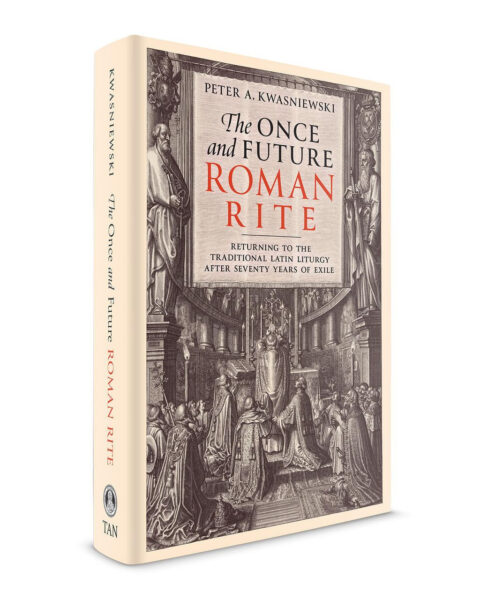
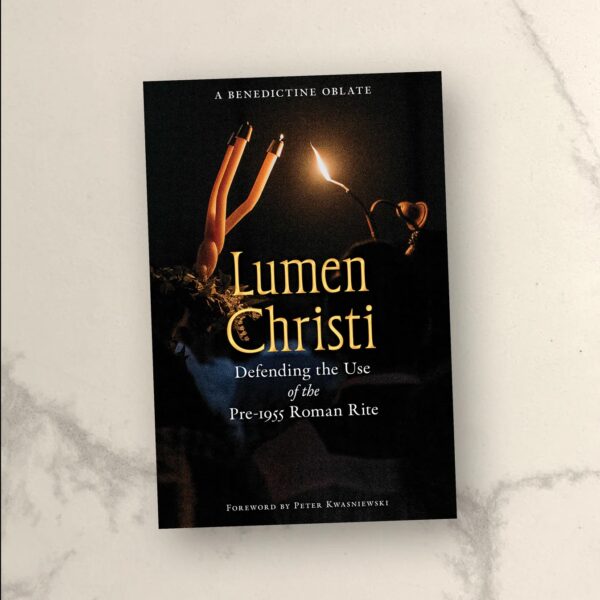
Editor’s note, for more on the pre-55 Missal, particularly on the ancient Roman rite Holy Week, see these texts written or edited by our contributing editor, Dr. Peter Kwasniewski:
[1] The Breviary of Pius X restored the custom of reciting all 150 Psalms every week (outside major feast days) but by means of creating a new schemata of the Psalter, which was itself an innovation. Therefore some scholars, such as Alcuin Reid (Organic Development of the Liturgy), note that the Breviary itself was a significant departure from organic growth of the liturgy. Nevertheless, this was not the case with the liturgy as contained in Pius X’s Missal. Moreover, these Breviary changes had very little effect on the lay faithful who were rarely exposed to the office outside the custom of Sunday Vespers (an office which in fact changed very little in Pius X’s reform).
[2] Nevertheless the Lenten fast at this time was greatly diminished from original rigor before 1917 and before Benedict XIV (1675-1758). See my book for more details on this: The Definitive Guide to Catholic Fasting & Abstinence, 2nd ed. (Our Lady of Victory Press, 2024).
[3] Nicola Giampietro, The Development of the Liturgical Reform: As Seen by Cardinal Ferdinando Antonelli from 1948 to 1970, trans. Rev. Patrick Gabriele (Fort Collins, CO: Roman Catholic Books, 2009), 140.