
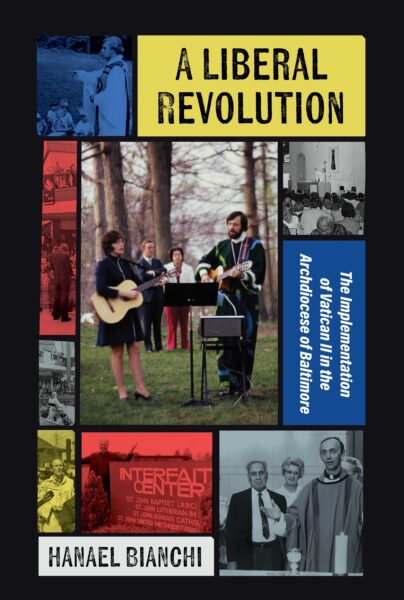
Carefully written histories can serve as antidotes to grand narratives pushing particular agendas. As the old saying goes, “the devil is in the details,” suggesting that pesky facts can undermine self-congratulatory stories of progress. Hanael Bianchi’s A Liberal Revolution: The Implementation of Vatican II in the Archdiocese of Baltimore (Os Justi Press, 2026) raises numerous points to challenge the heroic narrative of Vatican II and in the process, poses timely questions for American Catholics still living in a Church that often seems teetering on the brink of collapse.
Advocates of Vatican II envisioned a “new springtime” that would emerge from the Council. A renewed Church, they hoped, would better connect people to the secular environment around them, cementing links between faith and the world that could facilitate evangelization. But if sociological factors are considered, such a revival failed to occur. Instead, Catholic institutions have declined precipitously and the Church’s credibility, particularly after revelations of the clergy abuse crisis, has been shattered. Sober-minded individuals can easily see that, but people disagree as to the causes of the crisis.
Historian Hanael Bianchi argues that liberalism, which came to dominate Catholic life after Vatican II, was to blame. Vatican II, he writes, was implemented by those who “embraced a liberal culture grounded in the primacy of personal choice” (14). This served as an acid to Catholic life and belief. Here, Bianchi amplifies insights of scholars Andrew Greeley and James Hitchcock, but he uses one place, the Archdiocese of Baltimore, as his case study (8, 10).
Interested in how the implementation of the Council developed over time, Bianchi sees the process as a revolution, an overturning of previously accepted institutions and ideas that had grounded Catholicism in Maryland (6–7). The case-study approach and his archival research are the book’s chief strengths and demonstrate the unfolding of this liberal revolution within the Church in Baltimore.
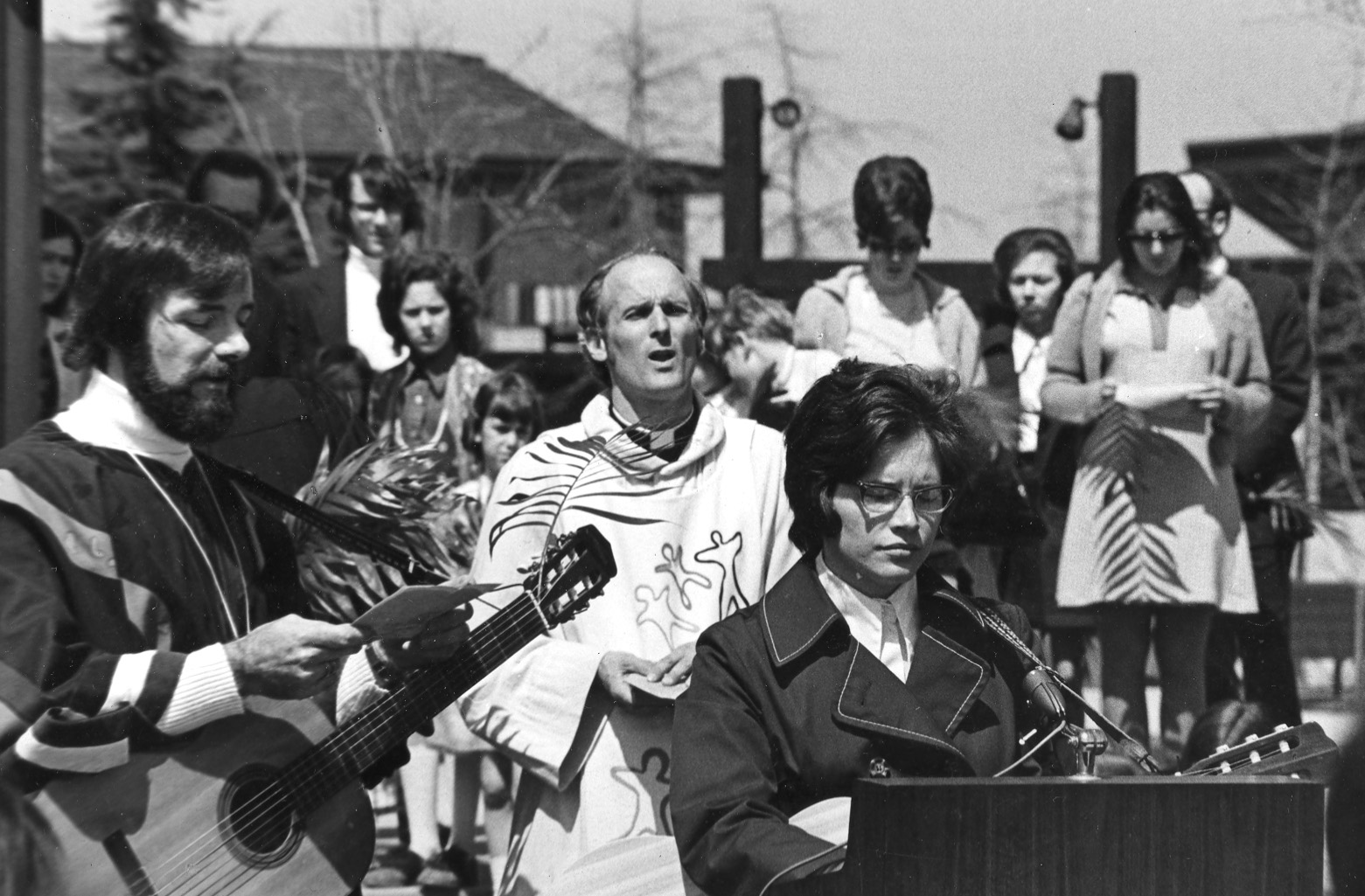
For Bianchi, the liberal revolution proceeded in phases. First, a period of wild experimentation and destruction occurred (chapters 1–3). Immediately after the Council, Cardinal Shehan of Baltimore indicated his support for a thorough reform and oversaw a chaotic implementation of the Council. Younger priests pushed radical changes in the Mass during the mid-1960s. Experimentation was rampant even though Shehan wished to tone it down. But instead of disciplining the progressives, Shehan often sacked older priests who complained (30–32, 78).
Ironically, the radical phase, which extended until the mid-1970s, pushed some progressives, seeking further changes, outside of the Church. Many of the most radical young priests left the priesthood after “making a mess,” to use the phrase of a recent pontiff (39). Catholics who stayed in the pews were divided. Many wished for stability to return but did not agree on the desirability of the many changes that had been made.
During the second phase, liberal autonomy came to eat away at what were perceived to be rock-solid institutions (chapters 4–6). Bianchi sees Shehan as a tragic figure during this period. Shehan, a native of Baltimore, was not a radical himself. In fact, the one issue he seemed most adamant about was civil rights for black Americans. He excoriated Maryland Catholics for their racism and failures to extend justice to their black neighbors (101–5). But his theological opinions and support for reforms were rather moderate.
Still, once individual autonomy became the leading message of reform, the Catholic infrastructure of Baltimore—retreat houses, neighborhoods, and schools—fell apart, destroying the communal identity Catholics had built in the Archdiocese of Baltimore. Catholics melted away, ultimately leaving the institutional structure in financial jeopardy.
During this third phase, the new ecclesiastical bureaucracy emerged, representing the final revolutionary phase (chapters 7–9). Seeking to consolidate their gains, the reformers entrenched themselves in bureaucracies to administer all aspects of the Church. Bureaucracies are tremendously difficult to dismantle and become intransigent in the face of change. This gave rise to one of the notable dynamics of the post-conciliar Church: the progressive Catholics, ensconced in church administration, are the least liberal and least tolerant of all, particularly of those who desire a traditional Catholic life and liturgy. The bureaucracies stalled further reform and ossified the revolution’s gains. Ironically, then, Baltimore ended up with a Church that neither progressives nor traditionalists really wanted. The implementation of Vatican II in Baltimore left shattered Catholic communities and a divided Church in its wake.
Bianchi offers numerous challenges to commonly accepted myths. One, for example, concerns the timing of liturgical changes. Whereas many assume that the Mass simply changed from the old to the new on the first Sunday of Advent 1969, Bianchi found that liturgical experimentation ruled Baltimore for almost a decade (69–71). During the Council, priests tinkered with liturgy, promising that putting the Mass in the vernacular would provide tremendous benefits to all aspects of Catholic life. Even after the implementation of the Novus Ordo Missae, translations changed and various official directives demanded new postures, prayers, and actions.
It was in this atmosphere of chaos that many lay people longed for stability. Bianchi cites archdiocesan surveys that indicated a minority desired the Old Mass while a majority preferred vernacular liturgies (128–29). One can understand how people during the 1970s, still hopeful that the reforms could deliver what had been promised, would welcome the Novus Ordo as an end to experimentation and a return to order in liturgy.
Bianchi uses a similar argument for the changes in church architecture. Suburbanization grew in Baltimore after World War II and produced a need for new churches. Thus, many suburban parishes had Masses in gyms and social halls for years while raising money for new buildings. When new-fangled churches were built in these suburbs, many were relieved simply to have a larger and more comfortable place to worship. They were not necessarily advocates of the new modernist style but accepted it as better than the alternative of worshipping in temporary spaces (57–58).
Finally, Bianchi shows that traditional Catholics, though a minority, opposed the raft of changes from the beginning. Of course, the laity, especially the traditionalist minority, had little power to shape the reforms. Traditionalists suffered for several reasons. First, they opposed the revolution in its heady days when the majority believed it could provide the new springtime everyone desired. Second, once the reforms began and individual opinions were said to be the rule, some traditional laity argued that if the young people were allowed “folk Masses” or “home Masses,” why could the parishes not have an Old Latin Mass option? (50) In other words, they were now appealing to the liberal standard of individual preference to beg the revolutionaries for a “traditional” space. They seldom got it.
Bianchi does note, however, that after the widespread dissent over Humanae Vitae in 1968, a chastened Shehan warmed more to traditional-minded Catholics because of their loyalty to the Church (224). Still, petitions for Latin Masses were blocked by bureaucrats, and traditionalists faced the revolutionaries’ familiar strategy of starving them out and hoping that they would go away (85, 204–6, 221–28).
Hanael Bianchi should be applauded for his efforts. He used his considerable historical skills to weave together a coherent story from many fragments of information. He tells the story well and keeps the reader’s attention. The empirical data he uncovered offers readers a way to re-interpret the time after the Council in a more accurate way, in the immediate contexts they know from their own experience in dioceses. We need more of these stories told about the many dioceses in the United States. Remember, the devil is in the details. Detailed, well-researched local histories are the key to providing an accurate narrative of the Church’s past sixty-five years.
Hanael Bianchi’s A Liberal Revolution: The Implementation of Vatican II in the Archdiocese of Baltimore is available from Os Justi Press or any Amazon site around the world.