
My profound interest in film adaptations of literary masterpieces has never been rewarded. Quite the contrary. When it comes to this branch of contemporary cinema—adaptations—most directors and screenwriters seem determined to convince me of the infallibility of their mediocrity. And those few, very few, who have managed to do otherwise have invariably been distinguished by their fidelity to the works they adapted.
Among the classical authors, Homer has received the worst treatment. Then again, perhaps it could not have been otherwise. It is only natural that the greatest author in the history of world literature—the man who composed two masterpieces, the Iliad and the Odyssey, without any previous model to follow—should have inspired the largest number of adaptations. Although I cannot claim to have seen them all, over the course of fifty years I have watched a significant number of them.
To understand the substance of my criticism, I must first reveal a significant detail: I was raised on the myths and legends of ancient Greece. From my earliest childhood, my mother, a great lover of wandering heroes, began telling me the adventures of Ulysses. Alongside Heracles, he has always been my favorite hero. And not mine alone, since countless authors of the most diverse kinds—from Virgil and Dante to James Joyce and Henryk Sienkiewicz—have sought to extend his legendary shadow within their own works. It is only natural, then, that filmmakers should aspire to the same. The only consistent result they have achieved, however, has been to confirm, time and again, one bitter conclusion: the more ambitious the attempt, the more resounding the failure.
The aesthetic qualities of a supreme poetic or literary work are impossible to reproduce. Every competent translator knows this elementary truth. The finest translations are those produced by other great poets and writers. It is enough to mention Charles Baudelaire’s translations of Edgar Allan Poe’s tales and poems to make the point clear: it cannot be otherwise. To translate a genius, you need another genius. Simple enough and completely non-democratic, isn’t it?
Film directors, however, seem unwilling to acknowledge this simple axiom. Convinced—whether rightly or wrongly—that they are geniuses as directors, they also assume they are geniuses as writers. A fatal mistake, concealed beneath the stammering excuses they offer. These excuses almost always come in two parts. The first concerns the change of artistic medium: the art of words, which poets and writers use as their “raw material,” is one thing; the art of moving pictures (derived from dramatic art) is something entirely different. Who would dare deny it? Cinema has its own means of expression—which is precisely why suitable adaptations are necessary. In this respect, no special effort is needed to persuade us that this is true. But when it comes to adapting the content—that is, the story itself—nothing and no one has ever succeeded in offering either a convincing argument or a satisfactory creation. Just as films inspired by video games are generally lamentable, so too are films inspired by literary masterpieces. Boring and superficial. From an epic drama, they make an action movie. Just ask admirers of Tolkien’s works. But what arguments do directors and screenwriters have when they disfigure the masterpieces of world literature until they become unrecognizable?
Let us set aside every argument that concerns the necessity of adapting a work to the specific means of cinema. I have already said that such arguments are acceptable within certain limits. The arguments that concern me here are those relating to the alteration of the content—that is, as I have already said, the rewriting of the story itself. The ultimate line of reasoning I have encountered, in dozens of variations, is always the same: modern audiences no longer possess the sensibility required to appreciate an ancient epic poet. Therefore, the stories must be rewritten for today’s viewers. Without exception, all such rewritings reflect the profound crisis out of which the modern world and modern culture have emerged: the obliteration, to the point of disappearance, of the supernatural.
For the ancient authors, whether pagan or Jewish, the existence of the invisible world and of the beings that inhabited it was the supreme axiom. Earthly life possessed neither value, nor meaning apart from the invisible yet decisive influence of the gods—or of God. Certainly, we cannot reduce pagan polytheistic idolatry and the monotheistic faith of the chosen people to a common denominator. Yet, as some of the Holy Fathers of the Church recognized, there was something in the wisdom of the pre-Christian ancients that was not alien to the supreme Logos. Indeed, the presence among them of thinkers such as Pythagoras, Socrates, Plato, and Aristotle, who speculated about the existence of a single, uncreated supreme deity, points to philosophical currents that foreshadowed the Incarnation of the Divine Word.
Here, then, is the first aspect of Homer’s world that demands our attention: everything that happens “below,” in the world of men, is strictly influenced by and subordinate to the conflicts and decisions made “above,” in the world of the gods. Without denying the massive element of superstition in the religion of the ancient Greeks, we nevertheless recognize that dual dimension of the cosmos to which the Christian Creed also bears witness when it reminds us that Almighty God created all things, “visible and invisible.” The consequences of such a belief are remarkable.
The existential dilemmas and dramas of Homer’s heroes all arise from the tension between these two worlds. Likewise, the principal concern of his heroes, however veiled or only dimly perceived, is always the passage from the world “below” to the world “above.” This is why war, honor, glory, and—last but certainly not least—death possess exceptional connotations, utterly different from the values of a culture for which there is nothing beyond this life. A culture for which, in fact, there is no longer any “world beyond.”
The adventures and decisions of those who lack faith in a transcendence polarized between Hell (Hades) and Paradise (the Elysian Fields) become the traumas, psychoses, and neuroses of Leibnizian monads, for whom Joker is no less plausible a character than Ulysses. For anyone with even a modest understanding of the ancient world, such a vision is utterly unintelligible and completely at odds with Homer’s universe. In Homer’s world, war itself is animated by higher forces; it is not merely a somewhat more dynamic manifestation of prevailing chaos. The music of Homer’s world calls to mind the royal anthems of Händel, not a death metal concert. Here we encounter, perhaps, the most radical difference between our world and the world of the author of the Iliad.
War is understood as a vast ritual arena in which one either receives or loses κῦδος kydos—glory. Like ambrosia, the immortal food of the Olympian gods, glory is the only “nourishment” capable of bestowing eternal youth and life without death. Derived exclusively from the honor and courage embodied in military heroism, it is the immediate goal of all those engaged in the struggle against their own weaknesses and shortcomings. Like every great writer, Homer portrays the limitations of his heroes with genius. We are astonished by the tears of Achilles, the legendary warrior, who weeps bitterly with his head resting on the shoulder of his mother, the nymph Thetis. Or by the quarrel between Agamemnon and Achilles, both sharply rebuked by the wise Nestor, who reproaches them for “quarreling over girls.” Homer did not spare his heroes. Yet he also emphasized what distinguished them from the anonymous multitude who lacked their qualities: the capacity to respond in a unique way to unique situations. Only legendary deeds can justify the reception of divine glory. Thus war, despite all its cruelty, is and remains a field of glory—a vast ritual ground where those who fight well receive the support of the immortals. The Christian world inherited this vision while ennobling it.
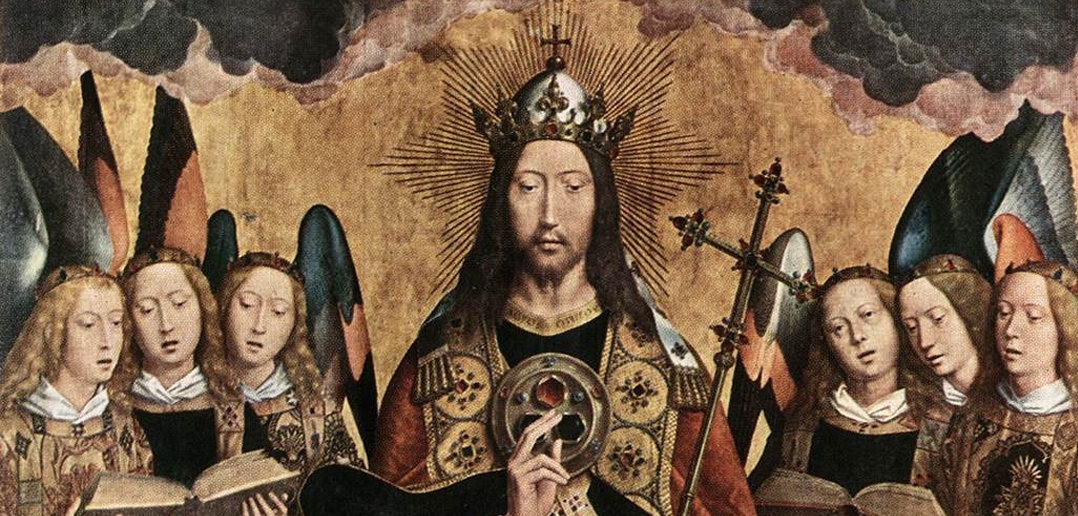
Much as the imaginary art of alchemy was said to transform common metals into gold, Christianity transmuted the substance of pagan heroism into the gold of holiness. This explains the presence of Homer’s martial vocabulary throughout the stories of the Holy Desert Fathers: Anthony the Great, Macarius of Egypt, and Pachomius the Great. Detailed philological studies of the language of The History of the Monks of Syria by Saint Theodoret of Cyrrhus (c.393–458) have demonstrated this conclusively. The difference lies in their orientation: whereas the pagan heroes are focused on military exploits, the Christian heroes of the desert tradition are engaged in the vast cosmic war against the demons of whom Saint Paul speaks in his Epistle to the Ephesians (6:12). Such parallels, however, make it possible to interpret the pagan epics through a Christian lens.
Far less well known than his controversial brother, Hugo Rahner, S.J. (1900–1968), left behind writings that deserve far wider recognition. One of these is the magnificent monograph Griechische Mythen in christlicher Deutung (Greek Myths and Christian Mystery, 1957), which contains a remarkable section entitled “Saint Homer.” There, while rejecting the interpretations of those historians who sought to regard all the sacraments and rituals of the Christian religion as mere borrowings from pagan cults, Rahner shows how certain Church Fathers—foremost among them Saint Clement of Alexandria (c.150–c.215 AD)—interpreted Homer’s works. His conclusion points to the discreet persistence, even throughout pre-Christian history, of traces of Divine Wisdom that guided those who loved her toward the Gospel.
The essence of Hugo Rahner’s interpretation remains unchanged: now more than ever, the ancients have an important message for modern people, who have forgotten their roots and their fundamental beliefs: the importance of the “unseen world” is crucial, while ignoring it is fatal. Moreover, no personal crisis, drama, or tragedy can be resolved without restoring a harmonious relationship between the two worlds. Ritual is the only means of accomplishing this otherwise insoluble task. How can a film director receive and convey such a message when, in all likelihood, he does not even believe what Homer himself believed?
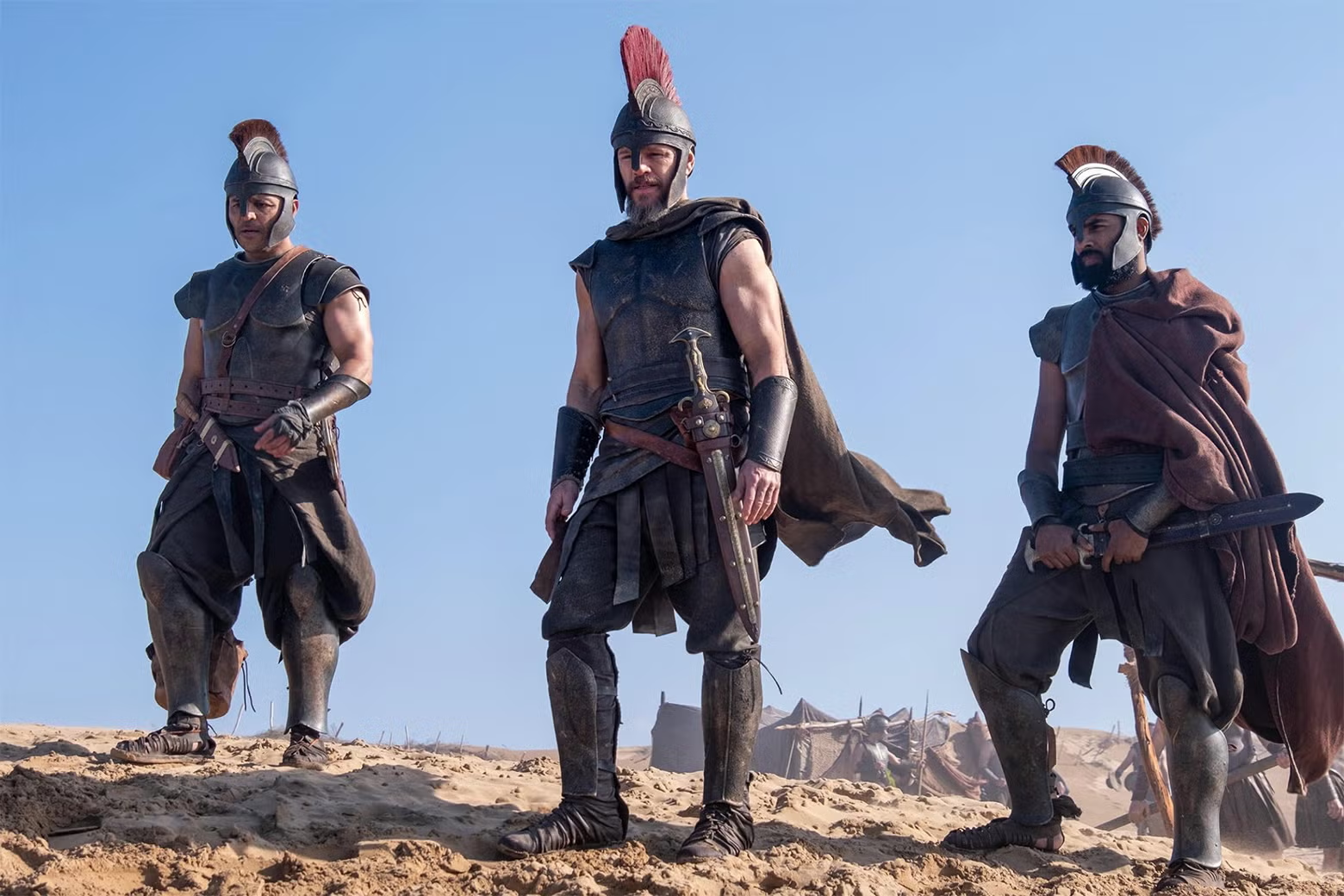
Photo credit: Universal.