Our context in the liturgical year for the 4th Sunday after Easter is our preparation for the Ascension of the Lord. We are now in the second phase of Paschaltide. The first stage looked back toward the empty tomb and drew us into the sacraments of Baptism and the Eucharist. Now the Mass formularies shift their gaze upward and forward, toward the Ascension of the Lord, the descent of the Holy Spirit, the birth of the Church in apostolic strength, and the sacrament of Confirmation. Holy Mother Church places us once again in the upper room, in that charged intimacy of the Last Supper, where the Lord prepares His Apostles for mysteries they cannot yet bear without the coming Paraclitus.
Ascension Thursday is sometimes given short shrift, which is unfortunate. One could argue, charitably, that transferring Ascension from Thursday to Sunday was intended to emphasize the feast by making it more accessible to a weekday working congregation. Pastoral intention is usually invoked in such matters. Yet when bishops dissolve midweek obligations and transfer great hinges of the liturgical year such as Epiphany and Ascension Thursday, an unintended lesson is almost certainly taught. The faithful learn that our feasts are negotiable, that the calendar of salvation need not interrupt the calendar of Mammon, that sacrifice in time is optional when religion becomes inconvenient. Happily, in the Vetus Ordo there remains the possibility of keeping Ascension Thursday on Thursday and celebrating it also as an external feast on Sunday.
Last Sunday, this Sunday, and next Sunday, the three Sundays before the Ascension, the Gospel readings come from John 16. Christ is preparing His own for a momentous change. He will go and sorrow will fill their hearts. Yet His going is to their advantage, because when He departs the Paraclitus will come. The Lord tells them that their sorrow will be transformed, even as a woman’s anguish in childbirth gives way to joy when a child is born. The imagery is appropriate: when the Holy Spirit descends, the Church will be born in visible vigor, informed by the Spirit, the Mystical Body of Christ quickened for her apostolic mission.
In the Gospel of this Sunday, John 16:5-14, the Lord speaks about hidden things. They are mysteries. He speaks of departure, judgment, sin, righteousness, the ruler of this world, and the Spirit who will guide the Apostles into all truth. The disciples hear, although they do not yet grasp. Therefore, they need the Spirit of Truth, who enables the Church to enter into what, left to herself, she could not penetrate.
The Latin Vulgate calls Him the “Paraclitus”, from the Greek parákletos, from para, “beside”, and kaleo, “to call”. He is the Counselor, the Advocate, the one called to stand beside, to intercede, to defend. In Matthew 2:18 and 5:4 we find passive forms of the same verb, παρακαλῶ, in contexts of mourning and consolation. There the meaning is “to be comforted”. This matters because John 16 also has mourning in the foreground. Christ is going away and their hearts are full of sorrow. The Hebrew equivalent for parakletos, menahhem, means “comforter”. The RSV gives us “Counselor” as does the KJV. Both are right, because parákletos is a layered title.
“Comforter” is especially fruitful if we remember that English “comfort” is rooted in Latin fortis, “strong”. To comfort is to strengthen. A true counselor strengthens. An advocate strengthens. A defender strengthens the case and the man. The Spirit of Truth is the Strengthener, the Fortifier. In this light, we see why the Gospel belongs to this stretch of Paschaltide and why the sacrament of Confirmation comes into view. Christ ascends. The Spirit descends. The frightened are fortified. The baptized are sealed for battle.
The Epistle, James 1:17-21, places the same truth before us from another angle:
“Omne datum óptimum, et omne donum perféctum desúrsum est, descéndens a Patre lúminum… Every good endowment and every perfect gift is from above, coming down from the Father of lights…”
Desursum, “from above”, so that our hearts may be sursum, “upward”. Every good gift comes down from the Father of lights, with whom, as James says, there is “no variation or shadow due to change.” God is immutable. God is the source of all that is truly good. If the gift is not good, perhaps we should look elsewhere for its origin. Perhaps toward the “prince of this world”.
That phrase in the Gospel deserves attention. The Lord says that “the prince of this world is already judged,” or, in the RSV, “the ruler of this world is judged.” The “árchon toútou kósmou… princeps huius mundi” is the Devil. The same image of “archon… princeps” appears in the Synoptic tradition when the Lord’s enemies speak of Beelzebub as the “prince of the devils” (cf. Matthew 9:34; 12:24; Mark 3:22). In John 14:30, Christ says, “the prince of this world is coming. He has no power over me.” See also John 12:31.
There is no dualism here. God alone is King. The Devil, however marvelous a creature he once was before his fall, can never be king of anything. He can be a ruler in the sense of a tyrant. He can dominate, seduce, accuse, claim. Fallen angels have a measure of domination over material creation, always under the restraint of Almighty God. Because of Original Sin, we too fell under the domination of the Enemy of the Soul.
This explains the sober realism of the traditional Roman rites.
In the ancient rites of Baptism there are exorcisms. In the traditional Rituale Romanum, when priests bless certain objects, especially important sacramentals, there are exorcisms before constitutive blessings. When Father blesses an object in that way, he tears it away from the “prince of this world” and hands it over to the King. It is no longer ordered to ordinary, temporal, profane use. Profane comes from pro-fanum, “outside the sacred place”. After a constitutive blessing, the thing or place is sacred and demands reverent treatment. It now belongs, invisibly and juridically in the realm of sacred signs, to the dominion of Christ.
The new-fangled Book of Blessings, in its Preface, explicitly seeks to eliminate the distinction between invocative blessings and constitutive blessings. An invocative blessing calls down God’s favor here and now. A constitutive blessing renders a place, thing, or person sacred. That distinction matters. When we flatten such distinctions, we become poorer in our spiritual grammar.
When we eliminate, say, the Leonine Prayers after Low Mass, with their invocation of St. Michael the Archangel, and when we eliminate constitutive blessings, we are cruising for spiritual bruising. Look around.
The Epistle this Sunday, as last Sunday, is from one of the Catholic Epistles, the Letter of James. This is James the Just, the “brother of the Lord”, son of Alphaeus, first bishop of Jerusalem. “Catholic” here does not refer to our sectarian distinctions over against heretical Protestants or separated Orthodox. Greek katholikos is compounded from kata and hólos, meaning “according to the whole”. The Catholic Epistles were addressed to a wider readership rather than to a specific local community, as with Romans or 1 and 2 Corinthians. In that sense they are more like encyclicals. James opens: “To the twelve tribes in the Dispersion…”, that is, to Jews of the Diaspora, scattered throughout the ancient world.
The Letter of James was a disputed writing in the ancient Church. It was acknowledged to contain good and holy things, yet there was debate about whether it was inspired by God. Even centuries after the canon, roughly the sacred “table of contents”, had been established, renegade theologians fought against James and denied its divine inspiration. The most famous was Martin Luther, who infamously called James an “epistle of straw”.
Luther came to espouse a solifidian doctrine of justification, sola fide, “by faith alone”. James 2:24 says that “a man is justified by works and not by faith alone”, or better from the Greek, “not by faith only”. Luther rendered James into German as “nicht durch den Glauben allein … not by faith alone”. Against James, Luther pitted Romans 3:28, “a man is justified by faith apart from works of law.” In his German translation of Romans, however, he inserted the word “alone”: “allein durch den Glauben … through faith alone”. Seeing that James undermined his solifidian notions, Luther declared that James had “no evangelical character”. When others objected, Luther replied in 1530 in his Sendbrief vom Dolmetschen, his “Open Letter on Translating”:
“If your papist makes much useless fuss about the word sola, allein, tell him at once: Doctor Martin Luther will have it so, and says: Papist and donkey are one thing; sic volo, sic iubeo, sit pro ratione voluntas. For we do not want to be pupils and followers of the Papists, but their masters and judges.” … The word allein shall remain in my New Testament, and though all pope-donkeys (Papstesel) should get furious and foolish, they shall not turn it out.”
That interpolated Latin phrase, “sic volo, sic iubeo, sit pro ratione voluntas,” comes from Juvenal’s Satire VI: “I will it, I command it, my will is reason enough.” It is also in Satire VI that we find “quis custodiet ipsos custodes… who will guard the guards?” That is custodes as in Traditionis custodes. The Latin has its own sting. When the enforcers of morals are corrupt, it is nigh impossible to maintain morality. If bishops crack down on traditional liturgical worship in the Vetus Ordo, while permitting all manner of Novus Ordo hijinx to proceed unchecked, by what right should they expect ready obedience in the crackdown? Perhaps the answer is found in the Seat of Moses in Matthew 23:1-3.
James, thank God, remains in the canon. This Sunday’s passage begins with divine immutability: “the Father of lights with whom there is no variation or shadow due to change.” Every good gift comes from Him. James then speaks of creation and regeneration: “Of his own will he brought us forth by the word of truth…” He then turns immediately to Christian conduct:
“Let every man be quick to hear, slow to speak, slow to anger, for the anger of man does not work the righteousness of God. Therefore, put away all filthiness and rank growth of wickedness and receive with meekness the implanted word, which is able to save your souls” (vv. 19-21).
How many sins could we avoid if we bridled our tongues and stayed cool under provocation? How many wounds would remain unopened? How many confessions would be shorter? Be quick to hear. Be slow to speak. Be slow to anger. Consider your words and your actions. Stay close to the sacraments. Use properly blessed sacramentals. Reduce the influence of the soul’s Enemy. This is practical asceticism, the sort which can be tested before breakfast.
Alas, the Epistle ends at verse 21 and does not continue through verses 22-27, which would have made the point still sharper:
“But be doers of the word, and not hearers only, deceiving yourselves. For if any one is a hearer of the word and not a doer, he is like a man who observes his natural face in a mirror; for he observes himself and goes away and at once forgets what he was like. But he who looks into the perfect law, the law of liberty, and perseveres, being no hearer that forgets but a doer that acts, he shall be blessed in his doing. If any one thinks he is religious, and does not bridle his tongue but deceives his heart, this man’s religion is vain. Religion that is pure and undefiled before God and the Father is this: to visit orphans and widows in their affliction, and to keep oneself unstained from the world.”
Faith without works is dead, James 2:17. There it is, whether Luther liked it or not.
This brings us back to Confirmation. The sacrament of Confirmation was instituted by Christ. This is proven indirectly from Sacred Scripture. The prophets foretold that the Messianic age would be marked by the outpouring of the Spirit of God upon humanity. Christ promised the Holy Spirit to the Apostles. At Pentecost that promise was fulfilled. The Apostles then imparted the Holy Spirit by laying hands on the baptized (Acts 8:14ff; 19:6; Heb 6:2). St. Thomas Aquinas says that Christ instituted Confirmation by promising it rather than by visibly administering it: “Christus instituit hoc sacramentum, non exhibendo, sed promittendo” (Summa Theologiae III, q. 72, a. 1, ad 1). Christ instituted this sacrament through promise, and the Church, receiving the Paraclitus, administers what He promised.
Confirmation is a sacrament “of the living”. For it to bear its proper fruit in us, we must be spiritually alive, in the state of grace, rather than spiritually dead in mortal sin. Baptism and Penance are sacraments “of the dead”, because they bring the soul from sin into life. The remaining sacraments are sacraments “of the living”. Confirmation effects an increase of sanctifying grace and strengthens faith. It presupposes Baptism, yet it is a distinct sacrament with its own purpose. An unbaptized person cannot be confirmed. Since Christ instituted it, Confirmation is indispensable for the Church considered as a whole, especially given the battles the Church must wage in the world. For the individual, it is not strictly necessary for salvation. A baptized person who dies in the state of grace is saved even without Confirmation. Yet Confirmation contributes to the perfection of salvation. After Baptism, Confirmation, and Eucharist, the Catholic is said to be “perfected”, meaning that the sacraments of initiation have been completed. One should therefore not neglect Confirmation. To disdain it would be sinful.
The Catechism of the Catholic Church 1302-1303 lists the effects of Confirmation: it roots us more deeply in divine filiation so that we cry “Abba! Father!”; it unites us more firmly to Christ; it increases the gifts of the Holy Spirit in us; it renders our bond with the Church more perfect; it gives us a special strength of the Holy Spirit to spread and defend the Faith by word and action as true witnesses of Christ, to confess the name of Christ boldly, and never to be ashamed of the Cross.
The venerable Baltimore Catechism describes Confirmation as imparting an indelible character, a permanent seal on the soul, by which the Christian is marked as a soldier in the army of Christ, the Church Militant. We benefit from this sacrament when it is active in us for fighting our spiritual battles. St. Thomas distinguishes the confirmed from the simply baptized. The baptized are members of the Empire of Christ. The confirmed are fighters of Christ. Confirmation gives a power and a right to take part in the spiritual battle waged against the Faith. It brings an obligation to make public profession of the Faith.
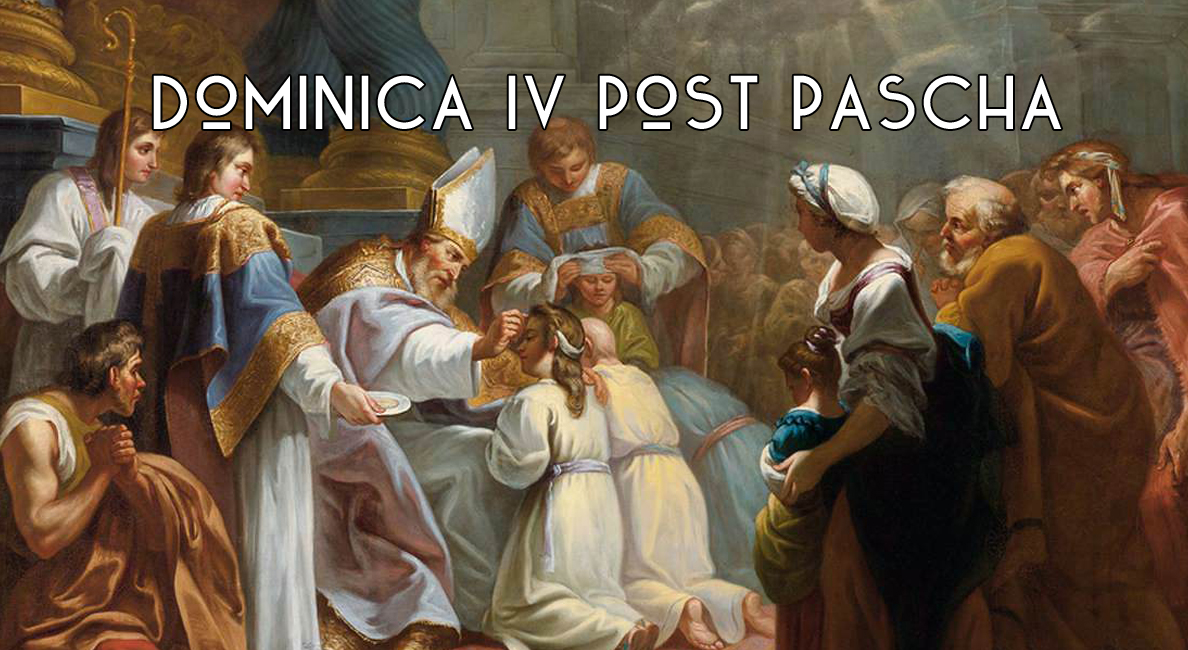
The traditional Roman rite made this memorable. The bishop, the ordinary minister of Confirmation, gives the newly confirmed Catholic a light tap on the cheek, to signify readiness to suffer for Christ. The rubric says: “Deinde leviter eum in maxilla caedit, dicens: Pax tecum…. Then [the bishop] strikes him lightly on the cheek, saying: Peace be with you.” This gentle slap was prescribed in the older rite. It was removed from the rubrics of the post-Conciliar 1971 rite.
One recalls Sacrosanctum Concilium 23:
“[T]here must be no innovations unless the good of the Church genuinely and certainly requires them; and care must be taken that any new forms adopted should in some way grow organically from forms already existing.”
Did the good of the Church genuinely and certainly require the removal of one of the most famous and memorable elements of the rite? Did that removal grow organically from forms already existing? The gesture had been around at least since the 13th century, when William Durandus wrote about it. It probably has roots in the colée or accolade of knighthood. In days of yore, a blow to the face was a grave insult, even from a superior. In the liturgical instance, the bishop delivers it serenely and fatherly with “Pax tecum… Peace be with you.” A soldier of Christ must be ready to take a blow and remain in peace.
Has the witness to the Faith in the public square by Catholics been easily recognizable in those confirmed after, say, 1971? Many social and ecclesial forces have shaped, or misshapen, Catholics during the last half-century. Still, the question presses. Have we acted like a body of confirmed believers in the face of challenges from the world, the flesh, and the Devil? Have we behaved like soldiers of Christ?
Even when local Novus Ordo Confirmation Masses include wacky accretions, one should consider seriously receiving the sacrament locally. The Ordinary Form is valid. You want the sacrament. That is what you receive. If the preparation is sound and you know what matters, then the grace is real. Yet where the older rite is available lawfully, it is understandable that faithful attached to tradition seek it. The important point remains: do not avoid the sacrament. You need this battle gear in the vale of tears.
The Catechism states in paragraph 1296: “Christ himself declared that he was marked with his Father’s seal (cf. John 6:27). Christians are also marked with a seal: ‘It is God who establishes us with you in Christ and has commissioned us; he has put his seal on us and given us his Spirit in our hearts as a guarantee.’(2 Cor 1:21-22; cf. Eph 1:13; 4,30) This seal of the Holy Spirit marks our total belonging to Christ, our enrollment in his service for ever, as well as the promise of divine protection in the great eschatological trial.(cf. Rev 7:2-3; 9:4; Ezek 9:4-6.)”
There is the Sunday in miniature. Christ goes to the Father. The Spirit comes down desursum from the Father of lights so that our hearts may rise sursum. The prince of this world is judged. The King claims His own. The Paraclitus strengthens. James tells us to hear, to restrain anger, to receive the implanted word, to do the word, to bridle the tongue, to remain unstained. The Church, born from the pierced side of Christ and quickened by the Spirit, sends confirmed soldiers into battle.
If you are confirmed, live as one sealed. If you are not yet confirmed, seek the sacrament. Others depend upon you to do your part. The heavenly patria is the goal. The road runs through combat.