The fiery tongues of Pentecost have fallen. The ancient Ember Days have passed behind us. Trinity Sunday has crowned the revelation of the God who is Father, Son, and Holy Ghost. Corpus Christi has placed before our eyes the living Bread descended from heaven. In a handful of days, the Sacred Heart will show us the furnace from which that Bread was given, the pierced Heart from which the Church and the Sacraments flowed.
Now Holy Church clothes herself again in green, the color of hope and growth, and sends us into the long campaign of the Sundays after Pentecost.
This is the first green Sunday after the great Lent and Easter cycle, since Trinity Sunday takes the place of the First Sunday after Pentecost. It feels like an opening. This Sunday, the 2nd after Pentecost, brings us to the practical school of grace. The mysteries have been poured in. Now the Church says, in effect, “ITE.” Go. Live from them.
Dom Pius Parsch called the time after Pentecost a “Golden Bridge from Earth to Heaven.” He saw in these Sundays three great themes: Baptism and its graces, the long conflict between the two camps, and preparation for the Second Advent of the Lord. Every Sunday is a small Easter, because Baptism has plunged us into Christ’s death and resurrection. Yet Baptism has not transported us into a paradise without struggle. We remain placed in the kingdom of God while surrounded by the kingdom of the world. Adam’s legacy clings to us. Our souls waver. The Church, mother and fortress, trains us for battle. She feeds us with the Word. She strengthens us still more with Holy Communion. Another battles in us and for us: Christ, always Mightier, vanquishes the mundane mighty.
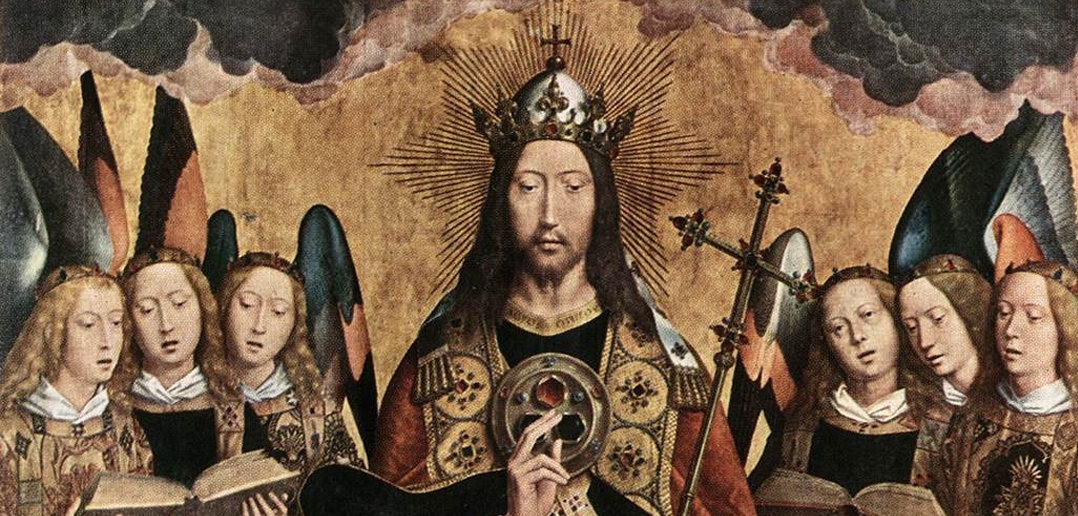
This gives the 2nd Sunday after Pentecost its particular force. Holy Church, by means of the traditional Missale Romanum, gives us more than seasonal color and assigned pericopes. She gives theology and mystagogy in the form of prayer, chant, gesture, silence, and sacrifice. Her rites, simply carried out with care and fidelity, are already doctrine in motion. Worship is doctrine. We are our rites. In this Mass the Church summons us to the heavenly banquet through the governing hand of Christ the Shepherd, King, and Pilot.
The Collect this week is one of those Roman prayers whose brevity conceals a whole cathedral of doctrine. It is ancient, found in the Gelasian tradition for the Sunday after the Ascension, retained in the later Roman books for this Sunday, used also in the Litany of the Most Holy Name of Jesus, and carried forward into the modern, post-Conciliar Missal for the Twelfth Ordinary Sunday. It is stark and lavish at once, hard as marble and warm as blood.
Sancti nominis tui, Domine,
timorem pariter et amorem
fac nos habere perpetuum:
quia numquam tua gubernatione destituis,
quos in soliditate tuae dilectionis instituis.
Make us, O Lord,
to have in equal measure
perpetual fear and love of Thy Holy Name:
for Thou never dost deprive of Thy governance
those whom Thou dost establish
in the firmness of Thy love.
Brilliant. See the balance: timor and amor, fear and love. See instituere and destituere, to establish and to abandon. See gubernatio, steering, piloting, governing. A gubernator is the pilot of a ship. God’s strong hand is on the rudder. He keeps the barque from the rocks. Were He to withdraw that hand, we would be wrecked. We would be destitute. Since He establishes us in the solidity of His love, we can stand, sail, fight, and return.
In instituo one hears a setting down, a placing with purpose. God made us and, in Christ, remade us. He sets us under His eye, near Himself, within the order of His love. In destituo one hears another setting down, a being set aside, abandoned, left exposed. The Collect begs that we should be held in the right place before God: in fear and love of His Holy Name, under His steering, firm in His dilection. That is a whole doctrine of Providence compressed into a few words.
Nomen, “name,” in both Scripture and in liturgy points beyond a mere label. The Name indicates the person, authority, presence, and power of the one named. Moses put off his shoes before the God whose Name was revealed from the burning bush. So awe inspiring were the four sacred letters of God’s revealed Name, the Tetragrammaton, that in their speech for “Yahweh” they substituted “Adonai… Lord”. The Name was not a sound to be handled lightly. It was the terrible nearness of the One who is Being itself, the One who sets captives free and forms a people out of slaves. Once destitute, they were instituted as His own.
The Name of Jesus reveals still more. Jesus, Yeshua, from Yehoshua, means “Yahweh saves.” In Him the Holy Name becomes flesh. In Him the Father is approached. “Amen, amen I say to you: if you ask the Father any thing in my name, he will give it you” (John 16:23). The Name casts out demons, changes hearts, saves souls, and opens the way to life.
“These are written, that you may believe that Jesus is the Christ, the Son of God: and that believing, you may have life in his name” (John 20:31).
Hence the Collect’s timor et amor. Fear and love are not enemies. Servile fear shrinks from punishment. Filial fear dreads separation from the beloved Father. The more one understands the majesty of God, the more carefully one desires to serve Him. The more one loves, the more one fears losing what one loves. “Initium sapientiae timor Domini, (Ps 111:10) the fear of the Lord is the beginning of wisdom. Timor Domini protects love from presumption. Amor protects fear from despair. Together they steady the soul beneath the Holy Name.
Here the proximity of Corpus Christi and the Sacred Heart matters. Before this green Sunday, the Church has sung Aquinas’s Lauda Sion and looked upon the living and life-giving Bread. The Sequence has the impact of a doctrinal sermon, a scholastic treatise set aflame. Praise your Savior, your leader, your shepherd. Praise Him as much as you can, since He exceeds all praising. Quantum potes, tantum aude! The living Bread was given to the Twelve at the Supper. At the table of the new King, the new Pasch of the New Law brings the old Pasch to fulfillment. Christ willed that what He did at supper should be repeated in His memory. Bread is changed into His flesh. Wine is changed into His blood. Under different species, which now function as signs, wonderful realities lie hidden. Body is food. Blood is drink. Christ remains whole under each species. One receives. A thousand receive. He is neither divided nor diminished.
Then comes the stern Eucharistic line that belongs beside the Epistle and Gospel of this Sunday:
Sumunt boni, sumunt mali:
Sorte tamen inæquáli,
Vitæ vel intéritus.
The good partake, the bad partake:
yet with unequal lot,
of life or destruction.
Mors est malis, vita bonis:
Vide paris sumptiónis
Quam sit dispar éxitus.
Death to the bad, life to the good:
behold how unequal is the outcome
of equal partaking.
The Eucharist is the banquet of charity. The banquet is also judgment. The same Christ is received. The outcome differs according to the disposition of the receiver. The banquet does not cease to be lavish because men approach it badly. The King’s generosity does not erase the need for the wedding garment. Corpus Christi and the 2nd Sunday after Pentecost converge here with the Feast of the Most Sacred Heart.
The Heart gives the banquet. The banquet gives the Heart. The soul must come when called, come in grace, come clothed in charity.
The Epistle, from 1 John 3:13-18, brings the doctrine down from chant and altar into concrete acts and personal goods. “My little children, let us not love in word, nor in tongue, but in deed, and in truth” (1 John 3:18). This is the test of participation in the life of Christ. “In this we have known the charity of God, because he hath laid down his life for us: and we ought to lay down our lives for the brethren” (1 John 3:16).
In a few short days, the Feast of the Most Sacred Heart underscores that charity is cruciform. Love incarnate laid down His life.
The traditional liturgy, with all its beauty, solemnity, order, and silence, must shape us into lovers who act. Chanting the Creed, kneeling at the Canon, striking the breast at Domine, non sum dignus, receiving with reverence, guarding silence before the tabernacle: these form the soul. They also oblige the soul. Feeding the poor, clothing the naked, visiting the sick, assisting the sorrowful, forgiving injuries, instructing the ignorant, bearing wrongs patiently: these show whether the rites have penetrated to our core. The altar sends us to the street. The street sends us back to the altar wounded and needy. Grace is poured in, then the Church says, “ITE.” Go pour it out.
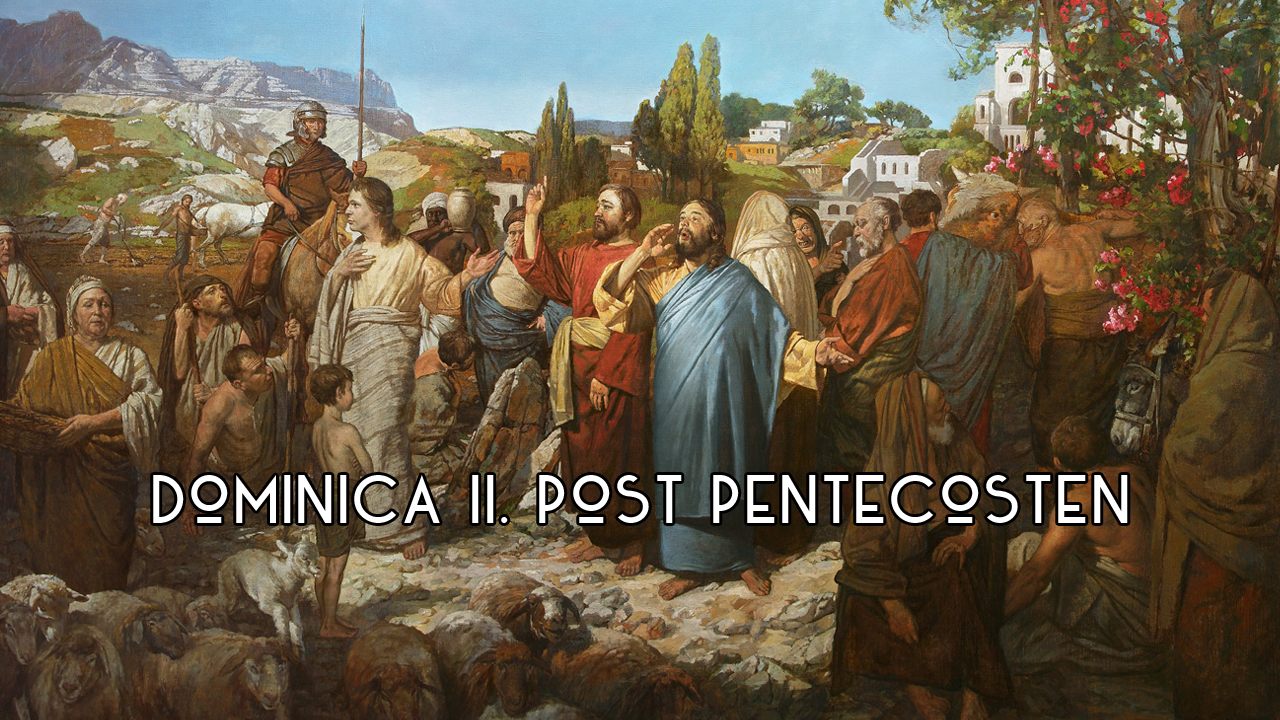
The Gospel from Luke 14 gives the same doctrine by way of parable. Christ is at table in the house of a ruler of the Pharisees. They are watching Him. A man with dropsy appears, as if placed there for a trap. The Lord heals him on the Sabbath and then with a parable teaches humility, hospitality, and the great supper. A man made a great supper and invited many. The servant is sent to say, “Come; for now all things are ready” (Luke 14:17). Then the excuses begin. “Sorry… I’ve got a farm… five yoke of oxen… a wife.” None of these things is evil in itself. That is the point. Ordinary goods become barriers when placed above the call of God. Created goods, even dear persons, become idols when enthroned where only God may reign.
The twist in the parable bites: people do not ordinarily refuse a great lord’s banquet. They certainly do not all refuse. Yet grace receives this reply constantly: I have something else to do. Eternal bliss is offered, the table is set, the Victim is prepared, the King has sent the call, and the creature answers with cattle, real estate, domestic comfort, plans, distractions, and the thousand small tyrannies of the temporal. These excuses involve no lurid crime. They are omissions, disorders of priority, failures to recognize the hour of visitation. They reveal a lack of timor Domini.
Hence, the master in the parable is angry. He sends servants into streets and lanes, then into highways and hedges to gather in the poor, the maimed, the blind, the lame, the unexpected, the marginal, the Gentile, the pagan, the wounded. All the “wrong people” are compelled to come in so that the house may be filled. This is the history of salvation in parable form. Israel was called. Prophets were ignored, opposed, and killed. Christ came unto His own, “and His own received Him not” as John’s Prologue repeats at the end of every Traditional Mass. Acting on Christ’s Great Commission the Apostles went forth and nations entered. The banquet hall filled with those who had been far off.
The parallel passage in Matthew 22 sharpens the matter through the image of a wedding garment. A king makes a wedding feast for his son. The invited refuse and mistreat the messengers. Others are brought in from the roads. Then the king sees a man without a wedding garment and commands, “Bind his hands and feet, and cast him into the exterior darkness: there shall be weeping and gnashing of teeth. For many are called, but few are chosen” (Matt 22:13-14). St. Gregory the Great famously reads the garment as charity. Faith can bring a man visibly into the hall. Charity clothes him for the feast.
The Catechism says of these parables:
“Through his parables he invites people to the feast of the kingdom, but he also asks for a radical choice: to gain the kingdom, one must give everything. Words are not enough; deeds are required” (CCC 546).
That sentence could stand as a gloss on the Epistle and Gospel together. The invited guests made a choice. The man without the garment made a choice. The Christian who receives Communion while refusing charity makes a choice. The Catholic who loves in word and tongue while withholding deed and truth makes a choice. The soul outside the banquet through refusal, and the soul inside without charity, both face exclusion from the feast.
Here Aquinas’s Eucharistic warning returns with force: “Sumunt boni, sumunt mali….the good receive, the bad receive”. The reception is alike in sacramental reality. The issue is unlike. Life for the good. Death for the bad. The same Eucharistic Lord who heals, feeds, strengthens, and unites also judges. The Bread of Angels is the food of pilgrims, “vere panis filiorum … true bread of sons”, “non mittendus canibus… not to be cast to dogs”.
That line is hard for modern ears. Good. Modern ears need hard lines when souls are soft with presumption.
The parable of the supper also has an unmistakable Eucharistic resonance. The great supper is the eternal banquet, surely. It is also the Holy Mass, the sacrificial banquet in which the New Law’s new Pasch fulfills the old. The call of the servant is the call of Holy Church. The highways and hedges are the mission field. The poor and maimed are every one of us in our spiritual poverty. The table is the altar. The Victim is salvation’s Victim. The King’s Son is the Bridegroom. The wedding garment is charity in the state of grace. The outer darkness is mortal sin and damnation.
This Sunday comes close to the Feast of the Sacred Heart. Therefore, the invitation in Luke can be heard as the pulse of that Heart. Christ does not call us from a distance. His Heart, lacerated by love, beats the summoning tattoo. Sunday’s Introit sings, “He brought me forth into a broad place; he delivered me, because he delighted in me.” The broad place is the freedom of divine charity, away from the cramped little rooms of excuses, anxieties, appetites, resentments, and idols. “The Lord is my rock,…” No, let’s try again and get this right…. The introit verse sings: “I LOVE YOU, O Lord, my strength, O Lord, my rock, my fortress, and my deliverer.” He who invites is also the refuge. The banquet hall is fortress, sheepfold, pasture, and harbor.
Our sacred rites are a refuge in a ravaging world. They are also a starting block. They gather us, heal us, feed us, teach us, clothe us, strengthen us, and send us. The green Sundays after Pentecost are the Church’s long drill in Christian realism. We are baptized, yet we must fight. We are invited, yet we must come. We are fed, yet we must be properly disposed. We are loved, yet we must fear the Holy Name. We fear, yet we must love. We receive charity, then we must love in deed and in truth.
Hence the practical conclusion is: make a good examination of conscience and go to confession. Do not receive the Bread of Angels as though disposition does not matter. Do not refuse the banquet because of farms, oxen, comforts, screens, grudges, projects, entertainments, or self-importance. Do not enter the hall without the garment. Invoke the Holy Name with fear and love. Trust the gubernatio of God, whose hand remains on the rudder. Let Him establish you in the solidity of His love.
The fiery tongues have fallen. The Eucharistic hymns have sounded. The table is set. The servant has gone out with the call which sounds like a pierced Heart beating: Come, for now all things are ready. Holy Church, in green vestments, asks with maternal firmness: Will you make excuses? Or will you rise, come to the feast, receive worthily, and then go out again to live in deed and in truth?