Context is always important, as I am wont to say. For example, where are we in the liturgical year on this 20th Sunday after Pentecost? Historically, in an earlier reckoning before the concretization of seasons, this was the 5th Sunday after the feast of St. Cyprian. Bl. Ildefonso Schuster explains that Rome once reckoned Sundays near the feasts of the Apostles and St. Lawrence, then Sundays after St. Cyprian, and finally, in some manuscripts, Sundays post Sanctum Angelum, after the dedication of St. Michael. Hence the distinctive character of the Introits toward the end of the year, drawn from the Prophets rather than, as was usual, from the Psalms (cf. The Sacramentary, vol. V). The liturgical year is marching to its close. As the daylight gets shorter, harvest imagery is cropping up. Holy Church starts to number our days also in regard to final gaze of the Judge who is coming.
This week let’s start with a glimpse at the Collect, which is ancient:
Largire, quaesumus, Domine,
fidelibus tuis indulgentiam placatus et pacem:
ut pariter ab omnibus mundentur offensis,
et secura tibi mente deserviant.
LITERAL VERSION:
Having been appeased,
impart to Your faithful, O Lord, we beseech You, remission and peace,
so that alike they may be cleansed from all offenses
and may zealously serve You with a mind free from anxiety.
This prayer is found as is in the Liber Sacramentorum Gellonensis, copied around the end of the 8th century. The Gellone Sacramentary belongs to the family of manuscripts descending from the Gelasian tradition, from which the Roman Missal received many prayers.
The imperative largire, from the deponent largior, asks God “to lavish or bestow”. We beg Him (placatus, having been appeased), to grant “indulgentiam et pacem… remission and peace”. The same pairing sounds in the post-Conciliar formula of absolution, “indulgentiam tribuat et pacem… may [God] grant you pardon and peace.” In liturgical Latin indulgentia first describes an attitude of tenderness, gentleness, or the relaxation of severity. God lays aside the punishment justly due to sin and restores the sinner to friendship. Peace follows pardon because a conscience reconciled to God no longer desires to hide. That peace is inherent in secura mente. Securus means “free from care, untroubled, fearless, composed”. The word securus acquires tremendous weight when juxtaposed to death and judgment. The Dies irae of the Requiem Mass asks:
Quid sum miser tunc dicturus?
Quem patronum rogaturus,
cum vix iustus sit securus?
What shall I, a wretch, say then?
Whom shall I ask to plead for me,
when scarcely the just man is free from fear?
The same ideas are echoed by the priest during Mass after the Lord’s Prayer:
Libera nos, quaesumus, Domine, ab omnibus malis, praeteritis, praesentinbus et futuris et …. da propitius pacem in diebus nostris, ut, ope misericordiae tuae adiuti, et a peccato simus semper liberi et ab omni perturbatione securi.
Deliver us, we beseech You, O Lord, from all evils, past, present and future and … graciously grant peace in our days, that, helped by the aid of Your mercy, we may be always free from sin and secure from all disturbance.
Were God to judge us on the basis of our own efforts, without regarding us through Christ’s Sacrifice, every day would be an occasion of sheer terror.
Let’s turn to St. Paul’s admonition the Sunday Epistle from Ephesians 5:
“Look carefully then how you walk, not as unwise men but as wise, making the most of the time, because the days are evil” (v.15)
Paul wrote this to the fledgling flock surrounded by the pagan ethos of Ephesus. They had received a new identity in Christ and, therefore, they were no longer to live according to their former ways. Paul’s command to walk circumspectly is implanted by the Church at this point in the liturgical year. Days are getting short. The wise man discerning the Lord’s will while the opportunity to do so remains.
The Apostle to the Gentiles then places two kinds of “fullness” side by side. Paul says, “Do not get drunk with wine, for that is debauchery; but be filled with the Spirit” (v. 18). There is physical drunkenness and spiritual inebriation. Both result in song, though of quite different orders. Physical spirits can result in the raucous and exuberant. The Holy Spirit, however, produces another kind of song: “psalms and hymns and spiritual songs, singing and making melody to the Lord with all your heart” (v.19) This spiritual abundance issues in thanksgiving, eucharistia, “always and for everything giving thanks in the name of our Lord Jesus Christ to God the Father” (v.20) The Christian’s response to short and evil days is vigilance joined to praise.
The Church Fathers picked up on the imagery of inebriation and called it sobria ebrietas, sober intoxication. At Pentecost some supposed that the Apostles, filled with the Holy Spirit, were full of new wine (Acts 2:13). St. Ambrose (+397) applied the “sober intoxication” paradox in his hymn Splendor paternae gloriae, used at Lauds on Mondays in the Roman Breviary:
Christusque nobis sit cibus,
potusque noster sit fides;
laeti bibamus sobriam
ebrietatem Spiritus.
And let Christ be food for us,
and faith our drink;
joyfully let us drink the sober
intoxication of the Spirit.
Joseph Ratzinger, treating sacred music in The Spirit of the Liturgy, contrasts the Spirit’s sober inebriation with a Dionysian intoxication that dissolves reason and enslaves man to the senses. Liturgical song arises from the Logos, the Word. The Word draws intellect, will, body, and affections into a higher harmony. Because ordinary speech strains to express the depth of the intellective and affective roused by the Spirit, song bursts forth.
sometime people says, “he who sings prays twice”, attributing the phase to St. Augustine. Augustine, alas, did not write that. Rather, he wrote “cantare amantis est… singing belongs to one who loves” (s. 336.1).
The theme of song is underscored in the Offertory antiphon, though in the register of sorrow and nostalgia, properly understood. The deeper meaning of nostalgia is, as the Greek indicates, a pain (algea) we feel for our “return home” (nostron): “pain for the return, ache for the homecoming.” It is an essential longing. Often when we are given a single verse or short excerpt for an antiphon, we are meant to recall the whole. The Offertory is the haunting Ps 136[137]:1, ringing with the weeping of exile: “By the waters of Babylon, there we sat down and wept, when we remembered Zion.” Psalm 137 completes a group beginning with 120. The Babylonian captors demanded mirth from those whose harps were hung up silent upon the willows: “Sing us one of the songs of Zion!” The response is “How shall we sing the song of the Lord in a strange land?” The psalm contains the vow never to forget Jerusalem as well as a plea to God for retribution.
The Church knows both the sorrow of displacement and the supernatural joy that no captor can provoke or suppress. In a sense we are all displaced. We are not yet where Christ’s victory has won. We are in a state of “already but not yet”. As we pray, we are “exules filii Hevae … exiled children of Eve”. Our sacred liturgical worship is its therapy and remedy. Today, there is no greater exemplar of the sorrow of displacement than those Catholics who have been deprived by their pastors of their inherited rites, the liturgical worship of our forebears handed down lovingly through the centuries. They’ve been told to “sing” as if no exile has occurred. The claim is made that contentment will eventually follow once they surrender, once they no longer “remember”. Babylon still asks for Zion’s songs while making Zion inaccessible.
Paradoxes abound in Christian joy. The Apostles departed from the Sanhedrin “rejoicing that they were counted worthy to suffer dishonor for the name” (Acts 5:41). Paul and Silas, fastened in stocks, “were praying and singing hymns to God, and the prisoners were listening to them” (Acts 16:25). Their song preceded the earthquake, the loosened chains, and the jailer’s conversion. Persecutors cannot extinguish baptismal character, remove the indwelling Spirit, or prevent grace from forging grief into joy and praise.
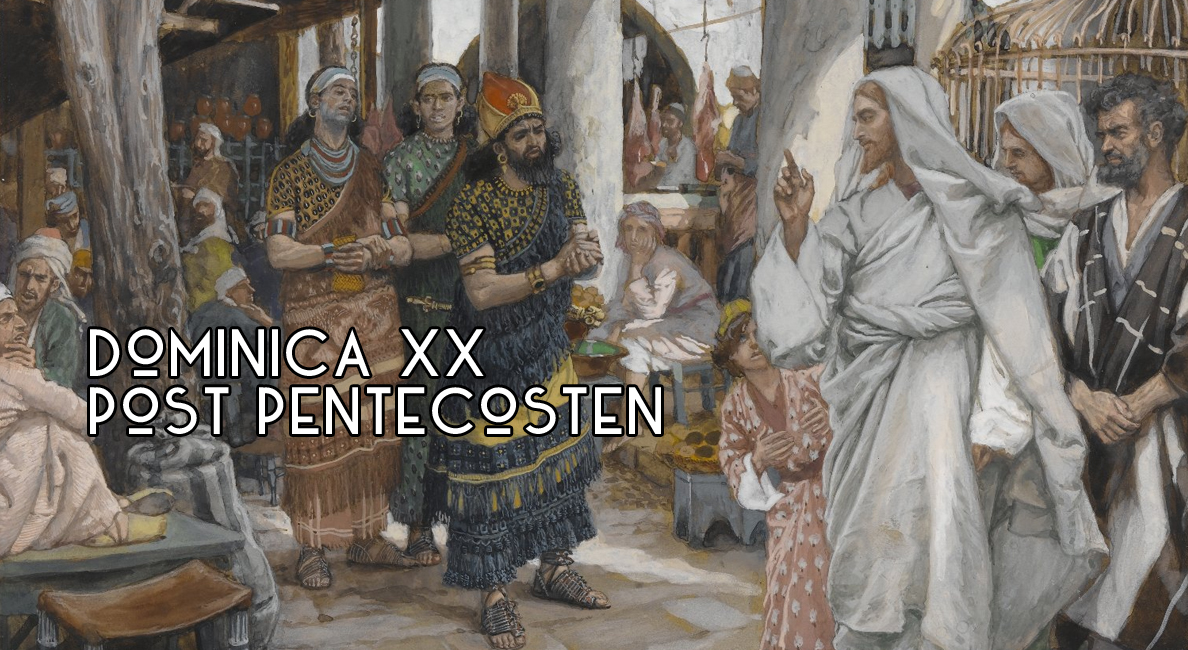
Christian joy requires faith. The Gospel reading from John 4:46-53 shows faith being purified. Christ returned to Cana after His encounter with the Samaritan woman. Many Samaritans first believed because of her testimony and then believed more deeply after hearing Him. Cana had already seen the water become wine, yet its response had been limited. St. Augustine remarks: “So great a miracle was wrought, and yet only His disciples believed on Him” (In io. tr. 16.3)
However, this time at Cana a basilikos, rendered in Latin as regulus, approaches Jesus. He is a royal official, perhaps connected with Herod’s court. His son was near death at Capernaum. He made the journey to find the Lord from desperation, certainly, but also faith. Christ answers, “Unless you see signs and wonders you will not believe” (v.48) The rebuke uncovers the incompleteness of a faith still tethered to visible proof. Nevertheless, the father persists: “Sir, come down before my child dies.” Jesus gives no visible sign. He gives His “word”: “Go; your son will live.”
“The man believed the word (lógos) that Jesus spoke to him and went his way.” That departure is already an act of obedience. He had asked Christ to travel to Capernaum, imagining that the healer must be physically present. He now entrusts himself to a “word” spoken at a distance. When his servants meet him with news that the boy lives, he asks the hour. It was the very hour when Jesus had said, “Your son will live.” The Evangelist deliberately says again, “he himself believed, and all his household.” His first and incomplete faith sought the miracle. His second and more complete rested upon Christ Himself. St. John Chrysostom sees in this encounter a double cure: Christ “heals the father, sick in mind, no less than the son, in order to persuade us to give heed to Him, not by reason of His miracles, but of His teaching” (Hom in Io. 35.2). The boy’s fever in distant Capernaum reveals the malady in the father’s soul. Mercy reaches both. Christ accepts an imperfect approach, corrects it, and brings it toward maturity. He does something similar in Mark 9, when another anguished father cries, “I believe; help my unbelief!” (v. 24). The prayer is honest because faith can be real while still needing healing, strengthening, and deepening.
Encounters with the Word draw us deeper. Just as exile and oppression can lead to purer love and self-understanding, so too can difficulties of faith.
Here a necessary distinction helps. St. John Henry Newman wrote,
“Ten thousand difficulties do not make one doubt, as I understand the subject; difficulty and doubt are incommensurate” (Apologia pro Vita Sua, ch. 5).
A difficulty says, “I do not yet see how this can be so.” Doubt withholds assent while difficulties can drive us more deeply into the mysteries. “Faith seeking understanding … fides quaerens intellectum” is the phrase associated with St. Anselm’s Proslogion. Prayerful study becomes dialogue with the eternal Word because the content of faith is in truth a Person, Jesus Christ, the Way, the Truth, and the Life.
Faith names both that which is believed (fides quae creditur) and the virtue by which we believe (fides qua creditur). As an infused theological virtue, faith perfects the intellect so that we assent, on God’s authority, to what He has revealed and His Church proposes for belief. Hebrews 11:1 says, “Faith is the assurance of things hoped for, the conviction of things not seen” (RSV). St. Thomas Aquinas gives the classic formulation: “Faith is a habit of mind whereby eternal life is begun in us, making the intellect assent to things that do not appear” (STh II-II, q. 4, a. 1). We now see “in a mirror dimly,” awaiting the face-to-face vision in which faith will yield in sight to perfected assent.
Faith is necessary for justification and salvation, yet saving faith cannot be reduced to mere confidence that one’s sins are forgiven. The Council of Trent condemned the claim that justifying faith is nothing other than trust (Latin fiducia) in divine mercy remitting sins for Christ’s sake (Session VI, canon 12). Faith must be living, informed by charity. The Capernaum nobleman’s spiritual progress after his encounter with the Word therefore moves both in ward and outward. The Word healed his son, completed his own assent, and subsequently gathered his entire household into belief. “Bonum est diffusivum sui… goodness spreads itself.”
The days may be evil, as Paul wrote, yet every day remains charged with actual graces by which we can fulfill our vocation. The realization that one has squandered years, perhaps decades, regarding deepening faith, going to confession, amending problems, should spur not discourage. The hour has arrived. While breath remains in us, Christ is saying, “Go; your son will live.” Paul’s “making the most of the time” and the Collect’s deserviant meet here. There’s no time like the present to deservire, to serve God zealously and devoutly, secura mente, with a tranquil mind.
One practical response to the time we have been given is to renew the Acts of Faith, Hope, and Charity. An Act of Faith is a supernatural act of the intellect, moved by grace, firmly assenting to revealed truth because of the authority of God, who can neither deceive nor be deceived. Repeating its words can calm the bruised mind and aching heart, and place our difficulties in Christ’s keeping:
With the approaching close of the liturgical year Holy Church offers gentle warnings. The Church teaches us this Sunday to walk carefully because time matters. Whether we are exiles by Babylonian waters or fathers beside a sick child’s bedside or penitent sinners kneeling at the grate, Christ enters each of our conditions with His healing Word. He grants indulgentiam et pacem, makes our mens secura. Thus freed, we can serve Him singing in sober inebriation.
O my God, I firmly believe that Thou art one God in three Divine Persons, the Father, the Son, and the Holy Spirit. I believe that Thy Divine Son became man and died for our sins, and that He will come to judge the living and the dead. I believe these and all the truths which the Holy Catholic Church teaches, because Thou hast revealed them, Who canst neither deceive nor be deceived. Amen.