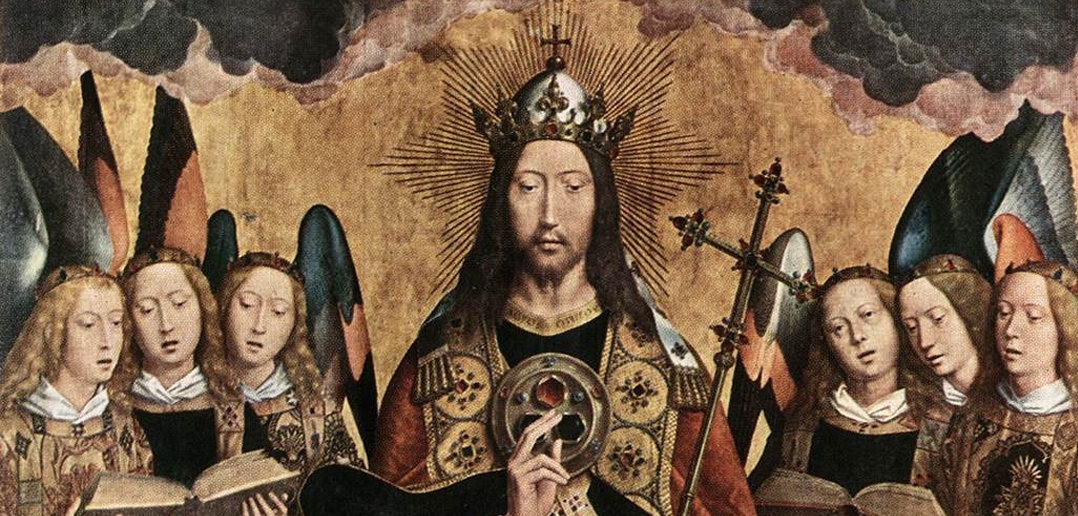

I am certain, that the time will come, when science will become all-powerful, and that it will be able to recreate a deceased organism. I am certain that the time will come when one will be able to use the elements of a person’s life to recreate the physical person.[1]
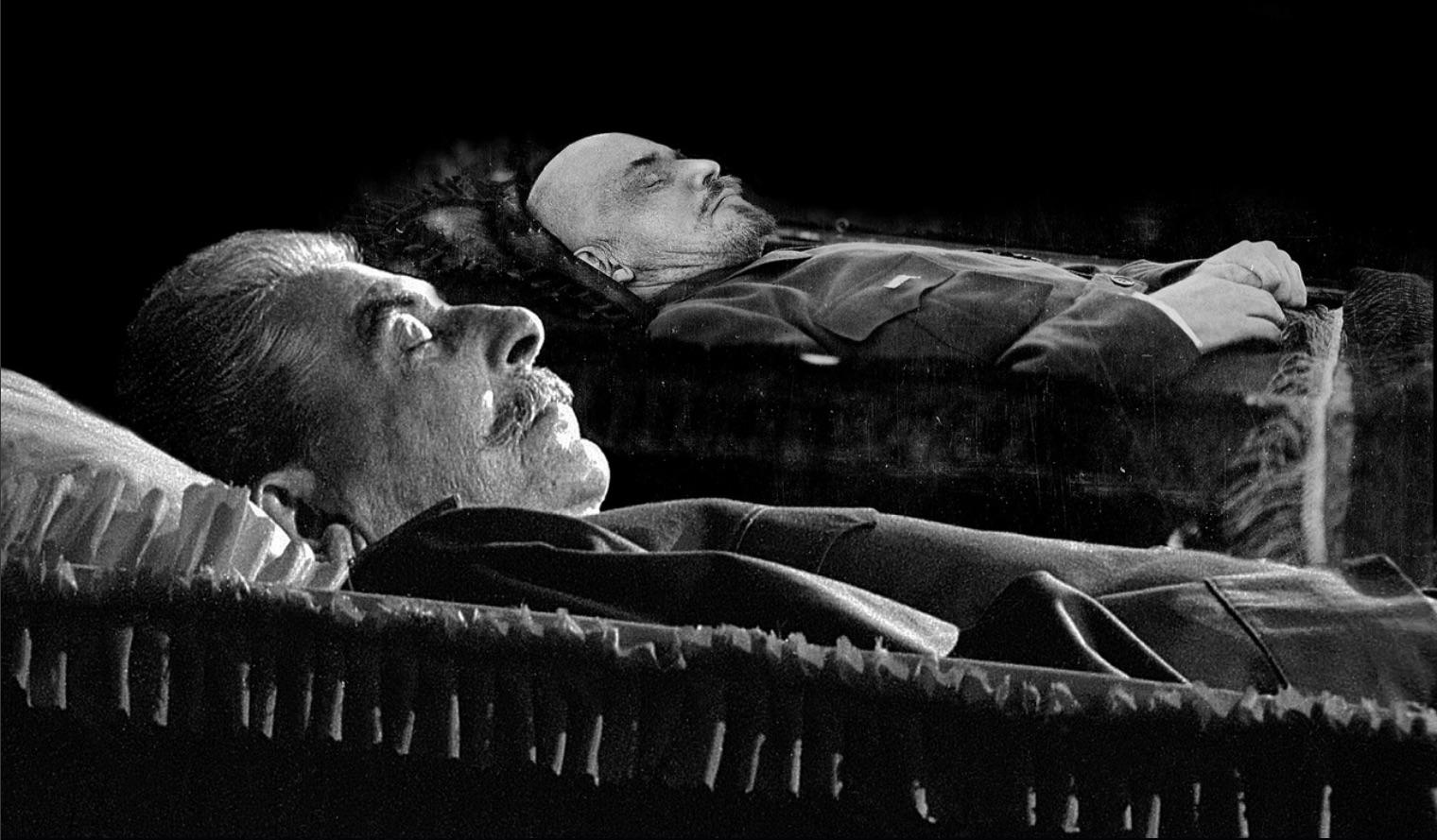
The speech you have just read above belongs to comrade Leonid Krasin and was delivered on the occasion of the death of one of the pioneers of Soviet science, Lev Karpov. Krasin was not joking. Like many of his comrades, he was convinced that death would be eradicated. This became very clear at the death of Vladimir Lenin in 1924, when members of the Communist Party decided to immortalize him using methods reminiscent of the embalming of the pharaohs of Egypt. Since then, with rare interruptions, Lenin can be visited and honored by his worshipers or by tourists fond of ghost stories.
After the dissolution of the Soviet bloc, officially recorded in 1991, one of the problems faced by the new political power in charge was the fate of Lenin’s mummy. Preserved almost continuously for public viewing, it continued to stir contradictory passions. For some, it could be a simple tourist attraction, meant to generate income like exhibits taken from the Egyptian pyramids or other famous ruins; for others, it was merely a nightmarish reminder. Secular and political controversies became well known over the years. In 2001, Vladimir Putin, who seemed inclined toward the idea of burying the Bolshevik leader, rejected the simplest solution, stating:
Our country lived under the monopoly power of the Communist Party for 70 years. This is the lifetime of a whole generation. Many people associate their own lives with the name of Lenin. To them, the burial of Lenin would mean that they had worshiped false values, that they had set false tasks for themselves, and that they had lived their lives in vain. We have many such people.[2]
So, for some of the survivors of that period, burying Lenin would mean that “they had worshiped false values” and that “they had lived their lives in vain.” Well said, isn’t it? But why would admitting a monumental error be problematic? Wouldn’t this be precisely the chance to correct a profoundly mistaken, ideological vision? And, after all, hasn’t history confirmed that the Marxist-Leninist project generated one of the greatest political catastrophes in the modern history of the world?
But perhaps what the quote suggests implicitly is something even more troubling: namely, that the ideology which animated Lenin and all those who followed him does not recognize the notion of repentance. For them, conversion is unconceivable and impossible. Could this be confirmation of the statement made by a brilliant Dominican theologian, Father Roger-Thomas Calmel (1914-1975), who argued that Marxism-Leninism not only excludes religion from society, but seeks to make the Gospel itself impossible?[3]
The elimination of religion has always been one of the main goals of Communist ideology. Considered an invention of the exploiting classes—the bourgeoisie—it was seen as preventing the channeling of citizens’ social energies toward the ideal of achieving Paradise on earth. Consequently, all religions were subjected to systematic persecution. Critically commenting on statements made by certain American politicians, Bishop Robert Barron recently referred precisely to this total struggle waged by Marxist-Leninist ideology against Christianity and all other religions.[4] In fact, to be more precise, besides the criticism and elimination of religion, one of the most significant “innovations” of Soviet Communism was its manipulation for ideological purposes.
Lenin was convinced that the realization of the Communist ideal—called the “fully developed Socialist/Communist society”—would automatically lead to the complete and definitive elimination of religion from human life. If the poor and the oppressed found spiritual refuge in religion through aspirations directed toward the “world beyond,” then once they came to fully benefit from the achievements of science, harnessed by the proletariat, they would naturally abandon all the illusions propagated by religions. This was his deep and unwavering conviction.
Lenin’s presence in the mausoleum, “canonized” by comrades who shared his ideas, remains the center of a cult among those who follow the dogmas of Marxist-Leninist ideology. They still exist today. However, as the most important modern analyst of this ideology, the French historian Alain Besançon, noted in his 1977 monograph Les Origines intellectuelles du léninisme (The Intellectual Origins of Leninism), the ideological soul that once possessed Lenin has long since escaped. The ideas he promoted can now be found everywhere—especially in the interviews, conferences, and writings of those who promise (for example through the AI revolution), a paradise on earth. Formed in the school of Augustine of Hippo, whose vision of history deeply influenced him, Besançon understood in a strictly theological sense the significance of the embalming of the anti-saint Lenin:
This corpse is public. It lies in the mausoleum that power built for it when it realized it could not bury it. From that moment on, a queue longer than any Orthodox Easter procession in Russia stretches before the entrance. Men, women, and children enter this crowded tomb to look at the body—or perhaps the wax mannequin that has replaced it—from which the ideological soul that took possession of them has escaped.[5]
Do not think that the comrades stopped with Lenin. Obviously, one might assume that the next person to be embalmed could have been none other than Joseph Stalin. Although he too was indeed embalmed in 1953, the de-Stalinization of Communist Russia led to his burial in 1961. Before him, however, the Communist president of Bulgaria, Georgi Dimitrov, had already been embalmed in 1949. After the collapse of the Soviet bloc in 1990, his body was cremated. The “fashion” of mummifying Communist leaders gained momentum. In 1969, the Vietnamese Communist leader Ho Chi Minh was also embalmed, and in 1976 Mao Zedong was mummified. As you might expect, the leaders of North Korea, Kim Il Sung and Kim Jong Il, were also embalmed. A video broadcast by Euronews shows the adoration of the latter.[6]
To avoid making the list too long, I have mentioned only the best-known dictators. All of this compels us to ask: “Why?” In a speech, Vladimir Putin stated that the idea was inspired by the relics of saints in the Orthodox Church.[7] This statement is not accurate. Actually, Communism established itself as a complete substitute for religion and especially the Christian Church, which it persecuted in the name of an earthly, fully secularized Paradise. The presence of mummies certifies both the (pathetic, in fact) achievements of the “glorious science,” and the immortality of the doctrine they supported. This was demonstrated masterfully by Alain Besançon who also revealed the identity of that spiritual being who hides behind such an abomination.
We are dealing here, without any doubt, with the machinations of the fallen angel who inspires the manifestation of the Antichrist(s) that are hastening the end of history. For us, the faithful of the Catholic Church, all of this recalls the most terrible fact in the history of the Church: although directly requested by the Queen of Heaven, the Holy Virgin Mary, through a supernatural apparition in 1929,[8] the consecration of Russia was ignored, postponed, and refused by five successive popes: Pius XI, Pius XII, John XXIII, Paul VI, John Paul I. As for John Paul II, it is still debated today whether the consecration of 1984 was valid or not. In any case, Heaven’s request was not obeyed for—at least—fifty-five years. For those who doubt the existence of a “state of emergency,” I think this indisputable fact would be a good subject for meditation.
The only way to stop the spread of the errors of Russian Communism was overlooked by the entire hierarchy of the Church. The Second Vatican Council would have been one of the best opportunities to make the consecration. What followed this refusal, we know. Today we bear the consequences. Clearly, most popes and bishops did not understand that they were dealing with a perversion of religion unlike anything seen in any form of Gnosticism or any heresy. That is why we need to understand things correctly.
Communism is a pseudo-religion that, from the very beginning, demanded adherence expressed through adoration. For anyone who has witnessed the grotesque cult displayed in congress halls and stadiums around dictators such as Joseph Stalin, Mao Zedong, and Nicolae Ceaușescu—with all of it centered on the “glory” bestowed upon them—no further commentary is necessary. Through the Paradise it promises, here and now, it stands in total competition and opposition to any religion. The Christian Gospel and the Western culture inspired by it have no place in the vision of those who promote these ideas, which have long since moved beyond the borders of the former Soviet bloc to merge with today’s technocratic-egalitarian utopias.
After all, Communists have always been fond of rockets, space exploration, android robots, and recipes for immortality. You can ask Alexander Belyaev. Or Isaac Asimov. Their science fiction novels still speak the same language today.
[1] Quoted in the article signed by Nina Tumarkin, “Religion, Bolshevism, and the Origins of the Lenin Cult,” Russian Review, 40 (1), 1981, pp. 35–46.
[2] Quoted by David Holley in his article “Debate Over Lenin’s Place of Rest Lives On” published in Los Angeles Times: https://www.latimes.com/archives/la-xpm-2006-apr-30-fg-lenin30-story.html [Accessed: 11 May 2026].
[3] See his brilliant book, Théologie de l’Histoire, the first edition of which was first published in 1966.
[4] Bishop Barron: “AOC mocks Western culture—Marx would love that, but I find it chilling:” https://www.foxnews.com/opinion/bishop-barron-aoc-mocks-western-culture-marx-would-love-that-i-find-chilling [Accessed: 11 May 2026].
[5] The quote is at the very end of Alain Besançon’s work, Les Origines intellectuelles du léninisme (The Intellectual Origins of Leninism), Calmann-Lévy, 1977.
[6] The video can be seen here: https://youtu.be/32gDNi6xwuE?si=JksPyeeRYWHzPcw0 [Accessed: 13 May 2026].
[7] See Simon Shuster, “The Corpse in the Kremlin’s Front Yard Tests the Strength of Putin’s Faith:” https://time.com/4750396/vladimir-putin-orthodox-jehovah-witness-lenin-corpse/ [Accessed: 13 May 2026].
[8] I quote the text found on the official website of the Sanctuary of Fatima: “The moment has come in which God asks the Holy Father to make, in union with all the bishops of the world, the consecration of Russia to My Immaculate Heart, promising to save it by this means.” https://www.fatima.pt/en/pages/narrative-of-the-apparitions- [Accessed: 04 May 2026]. The references indicated on the website are as follows: Memórias da Irmã Lúcia, pp. 195-196; cf. A. M. Martins, Cartas da Irmã Lúcia, pp. 77-78.