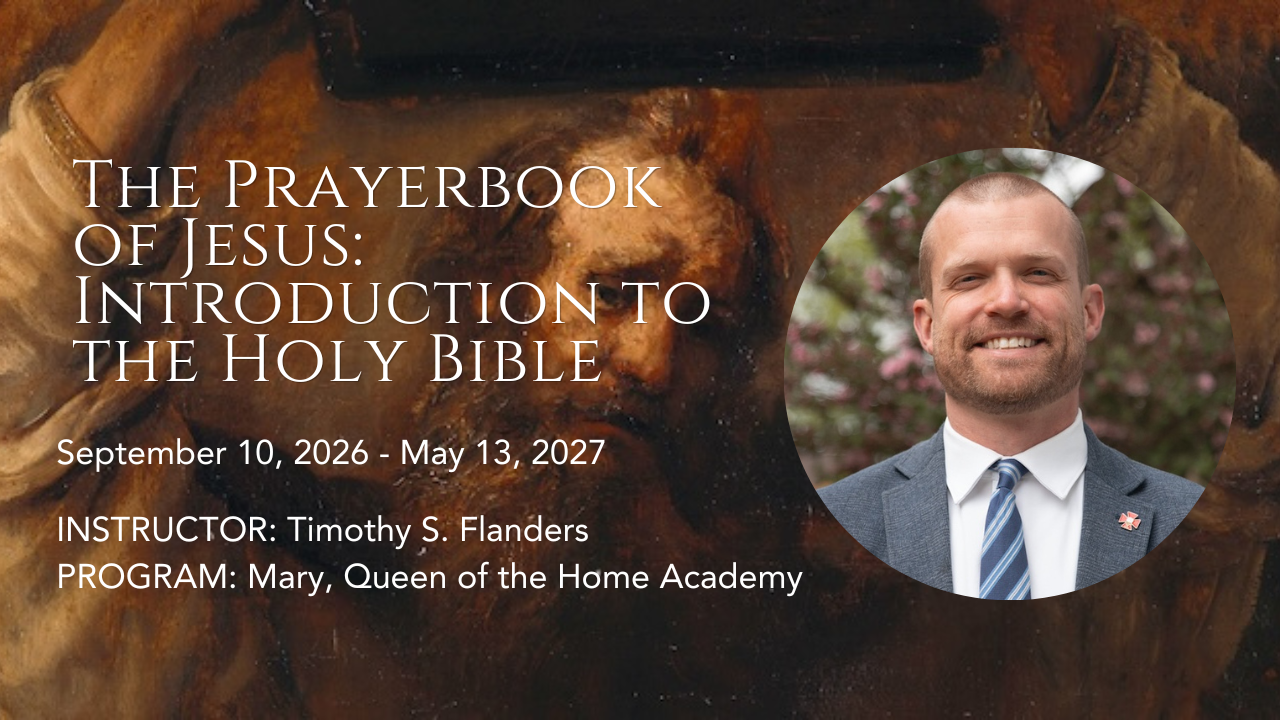

Author’s note: Mary, Queen of the Home Academy is the high school program with the Avila Institute. We are currently in “year 2” – see below.
Drawing upon the grace of the Sacrament of Confirmation, this program is designed to form Catholic young adults in high school who are equipped in mind and heart to conquer the assaults of the world, the flesh, and the devil in our modern times. This four year program is the central class offered for spiritual formation of high school age students from Mary, Queen of the Home Academy.
Our other high schools classes include a full year Apologetics formation, as well as formation in Latin, Math, Science, and the Great Western Canon of Literature.
Primacy of the Spiritual Life
At the Avila Institute, we aim to pass down the mystical prayer tradition to the next generation. Therefore this four-year formation series is primarily aimed at spiritual formation. Each year includes, before and during Lent, practical formation in the fundamentals of the spiritual life for young adults so that they can cooperate with the grace of their Confirmation in order to:
- Move into adult life relying on their elders & the wisdom of our forefathers
- Formulate and commit to a Rule of Life
- Persevere in mental prayer, guided by Holy Mother Church and her saints
- Understand Discernment of Spirits for Beginners (students will read or re-read this text as part of their pre-Lent preparation)
Church History: a Sacred Story
Building upon the primacy of the spiritual life, the program is meant to invite students into communion with the Church Triumphant by passing down the sacred history of the Church, which is the history of the lives of the saints.
Most Church history courses, even in Catholic homeschool environments, focus on the movements of history in terms of political elites and their wars and their borders. However, the sacred history of the Church, as the Holy Bible shows, is the story of God’s own Providential governance of history, by means of His saints.
Therefore, following the mind of the saints, our series looks for the movements of God’s providence and our place within that. For example, the saints understood that the invasion of Islam in the 7th century was the wrath of God for the sins of Christians. Therefore the struggle with Islam is primarily a spiritual battle, before any temporal considerations. These are the movements of God’s Hand which is at the center of God’s history.
Church History: an Integrated Approach based on Culture
A spiritual approach to history also understands that God wills or permits all things. His actions through His saints come from His divine grace which flows from the Christian cultus – the Holy Mass – into souls and societies. Cultus is the essence of culture.Divine grace then illuminates families, economics, politics, and indeed, all things.
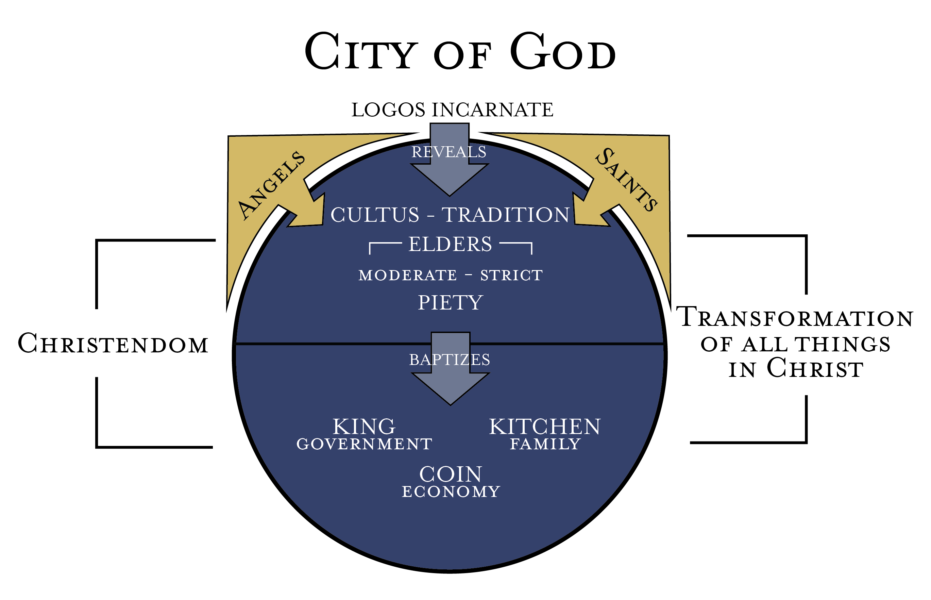
Contrariwise, the fallen angels seek to erect idols and false rites in order to exalt themselves and impede the flow of divine grace, and tear down souls and society.
This is how the saints view history, and we seek, by their prayers, to form Catholic adults to see the world with these eyes of faith, and take up the same mantle that the saints have passed down to us. Therefore, this series teaches Church history from an integrated approach to culture in one class, which integrates high school curricula for Bible, theology, post-Confirmation Catechism, Church history, cultural/world history, North American history (including Mexican and Canadian history), economics, government, and social studies, as well as art and music history.
Spiritual Reading: the Spiritual Classics List
As part of the program, every year students are asked to choose one of the books written by the saints from an exclusive list of “spiritual classics.” These are the books, more than any other books, which have built western civilisation as we know it, or at least are essential reading for all Catholics at some point in their life. In chronological order:
- Confessions by St. Augustine
- The Institutes by St. John Cassian
- The Ladder of Divine Ascent by St. John Climacus
- The Imitation of Christ by Thomas à Kempis
- The Spiritual Combat by Dom Lorenzo Scupoli
- Introduction to the Devout Life by St. Francis de Sales
- Autobiography by St. Teresa of Avila
- Spiritual Canticle by St. John of the Cross
- Humility of Heart by Fr. Cajetan Mary da Bergamo
- Abandonment to Divine Providence by Fr. Jean Pierre de Caussade
- The Story of a Soul by St. Thérèse of the Child Jesus and the Holy Face
- The Soul of the Apostolate by Jean-Baptiste Chautard
Four Year Track
Each year builds on the last, but each class can be taken at any point without any prerequisites.
Examinations / Grading
Many schools and educational programs focus on quantifiable data. However, for the content of this program, it is deeper than something that can be memorized and repeated on a quiz or test. Moreover, that form of learning can often cause students to learn, then immediately forget. Our program follows a more classical model of Socratic dialogue and rhetoric. Moreover, this is the model followed more commonly in college humanities courses. Students read a great deal, then demonstrate their knowledge not be repeating facts but by manifesting the formation of their heart and mind.
Thus our program is evaluated by two different projects in each semester. The fall focuses on intellectual formation and the spring (always running through our Lenten program), applies this intellectual formation to the heart – spiritual formation. Moreover, the class is flexible to allow students to choose the best form of rhetoric for their own intellectual exploration and expression.
Grading: these classes are pass/fail. If you do the work, you will pass. If you do not, you will fail. The work is based on critical thinking and deep prayer. The amount of work you put into this class is the amount of edification you will receive.
Year 1 – City of God vs. City of Man: Introduction to the Faith of our Fathers
Fall Semester: Overview of Church history from Adam & Eve to 1773 (Ancient, Medieval and Renaissance history)
Spring Semester: CREDO Catechism by Bishop Schneider (theological introduction to modern history)
Textbooks:
- City of God vs. City of Man: the Battles of the Church from Antiquity to the Present by Timothy Flanders (eBook provided for free)
- CREDO: Compendium of the Catholic Faith by Bishops Schneider
- Into the Deep: Finding Peace Through Prayer by Dan Burke (introduction to mental prayer)
- Time for God by Fr. Jacques Philippe (intermediate introduction to Mental Prayer)
Year 2 – The Prayerbook of Jesus Christ: Introduction to the Holy Bible
Fall Semester: the Bible as prayer – the only way to “read” the Bible, overview of the books of the Holy Bible
- The Holy Psalter: the prayers of God the Son to God the Father, the prayers of the Church, the interior of the Sacred Heart
- Gospel of St. Mark
- Gospel of St. Luke
- The Book of Revelation: an integrated approach to the Catholic exegetical tradition and Church history
Spring Semester: Rule of Life, Perseverance in Mental Prayer, History of Bible Controversies (Apologetics with Protestants, history of Vatican I and II)
- Gospel of St. Matthew, St. John
- Genesis
Required Textbooks:
- The Holy Bible (Douay Rheims or NSRV 2nd Catholic Ed.)
- Introduction to the Holy Bible for Traditional Catholics (eBook provided for free)
- The Better Part by Fr. John Bartunek
- The Catechism of the Catholic Church (print or free online)
Recommended but Optional Textbooks: Study Bible (NRSV or DR)
Year 3 – The Empress of the Americas & Our Lady of Fatima:
Modern History 1773-Present
This course focuses on the broadest possible view of the period, integrating the social, economic and political history into the spiritual history of culture focusing on the Hearts of Jesus and Mary as the axis of history.
- Christendom in North America (United States, Canadian and Mexican history)
- Modern History (Liberalism, Communism and Feminism)
Required Textbooks:
- Martyrs of the Twentieth Century by Robert Royal
- City of God vs. City of Man: the Battles of the Church from Antiquity to the Present by Timothy Flanders (eBook provided for free)
- Puritan’s Empire: a Catholic Perspective on American History by Charles A. Coulombe
Year 4 – Vatican I & Vatican II:
the Errors of Russia & the Triumph of the Immaculate Heart
This course focuses on the theological view of the period, integrating the social, economic and political history into a concentrated study of Papal Encyclicals and Council Documents in light of the role of the Two Swords – clerical authorities and the lay apostolate – in relationship to Marian interventions such as La Sallette, Lourdes, and Fatima.
Required Texts (most available for free online or in print):
- Martyrs of the Twenty-First Century by Robert Royal
- City of God vs. City of Man: the Battles of the Church from Antiquity to the Present by Timothy Flanders (eBook provided for free)
- The Popes Against Modern Errors
- Vatican I: Dei Filius & Pastor Aeternus
- Vatican II: Four Dogmatic Constitutions, Apostolicam Actuositatem
- Centessimus Annus
- Veritatis Splendor