The royal families of Europe were falling one by one. Secularist atheistic materialism was on the rise. In the wake of the gory First World War, Pope Pius XI looked out over a world in chaos. Industrialization and imperialism, aggravated by political alliances, had ignited the hideous war with its trench warfare, modern artillery, and weaponized gas. Vast numbers, many millions, died and were wounded. Then came the Spanish Flu, sweeping away more lives.
When Benedict XV died unexpectedly of pneumonia in 1922, Achille Ratti, then Cardinal Archbishop of Milan, was elected to the See of Peter in the longest conclave of the century. He probably also took the longest to accept. When asked if he accepted, he reportedly pondered in silence for several minutes, as if shouldering the weight of the world. One Cardinal quipped that they had “put him through the 14 Stations and then left him on Calvary.” He took the regnal name of Pius XI and the motto “Pax Christi in regno Christi… The Peace of Christ in the Kingdom of Christ.”
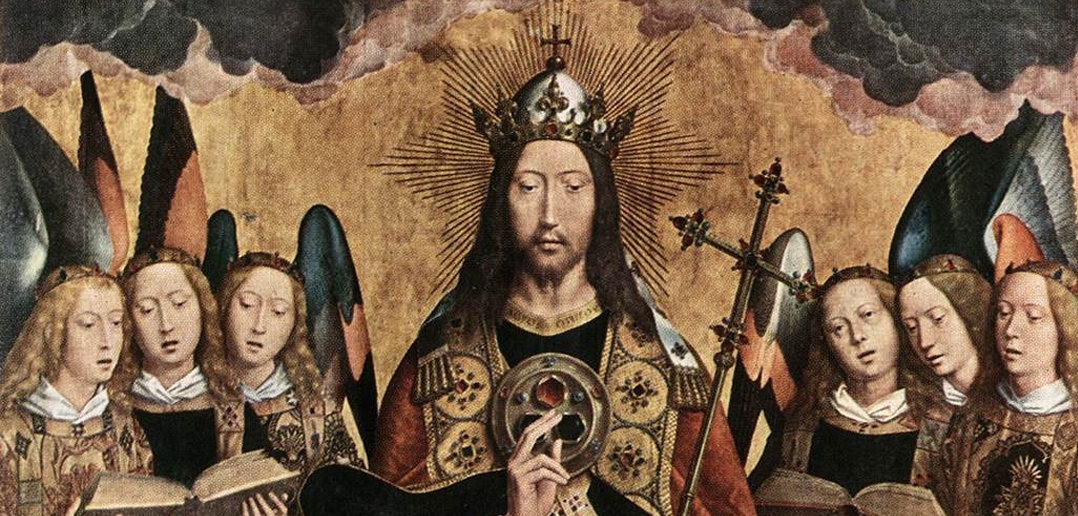
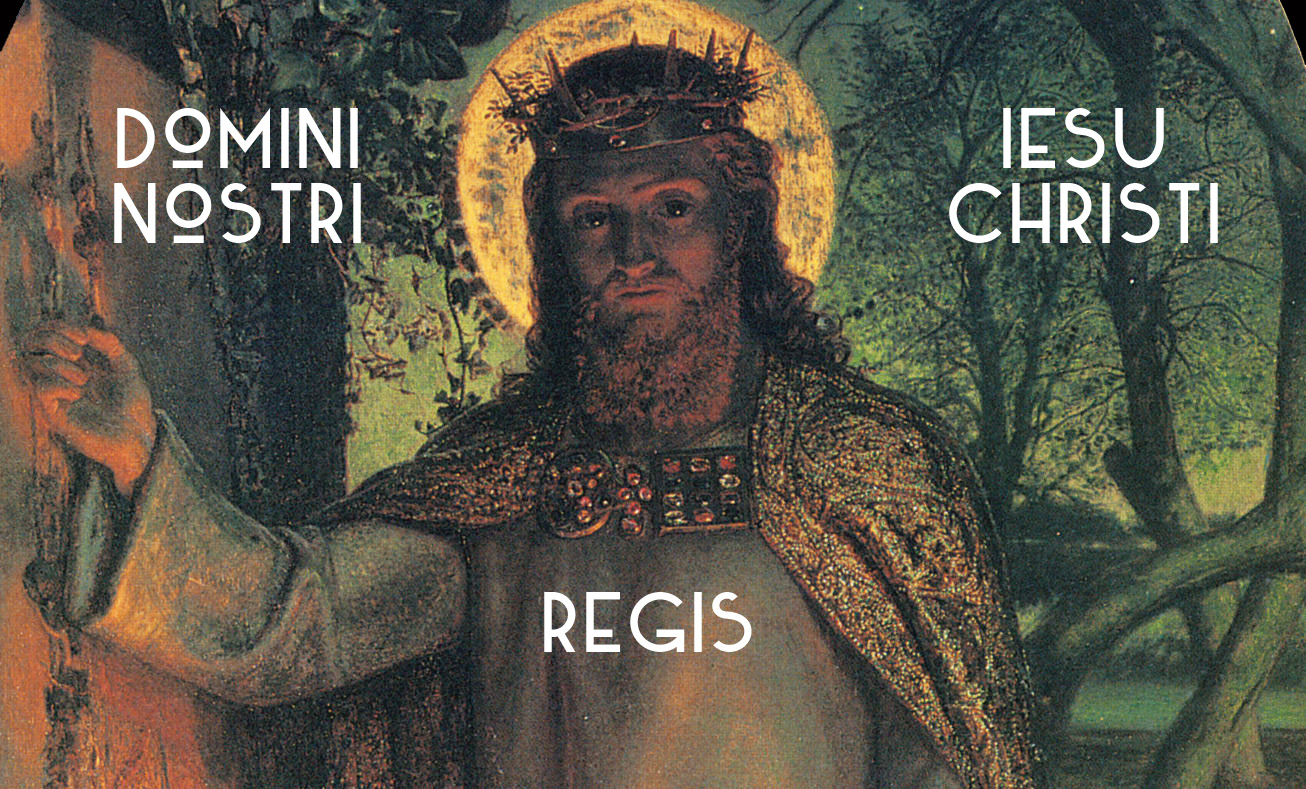
From the start, his motto signaled his intent. His first encyclical, Ubi arcano (1922), lamented that World War I had not brought peace and that new wars threatened. He deplored the conversion of churches to secular use and pointed to concupiscence as the root of societal ills. Only under the Kingship of Christ, he said, would there be true peace. Three years later, in 1925, with his encyclical Quas primas, Pius XI established the Feast of Christ the King, fixing it on the last Sunday of October, the month Communists had hijacked for the exaltation of their “permanent revolution.” In a diabolically ironic twist, the term “permanent revolution” had been penned in 1844 by Karl Marx in a work called The Holy Family. The Devil always tells you what he is doing.
“Permanent revolution” in Communist praxis meant that goals must be pursued without compromise with the opposition. Some have suggested there is a parallel with the now seemingly endless “walking together” sessions, those processes of endless redoing and reimagining that attempt to create a permanent “process” within the Church herself. “Revolution” in Latin is “res novae …new things.” For the ancient Romans, “new” was by default bad, a sign of instability and rebellion.
Thus Pius XI, by choosing the final Sunday of October, deliberately set the Kingship of Christ in direct opposition to the godless novelties of the modern age.
In placing the Feast there, he also situated it just before All Saints’ Day and the month of November, which dove-tails with Advent and its emphasis on the Second Coming of Christ. Through Christ celebrated as King, Mother Church sweeps us into a liturgical meditation on the Four Last Things: Death, Judgment, Heaven, and Hell. This Sunday begins the salutary season for getting our priorities straight.
Pius XI stressed that Christ has dominion and authority over all created things. Christ is King of Kings and Lord of Lords (Rev 19:16). Hence, both individuals and societies as a whole are obliged to submit to Christ as their King. This includes nation-states. Where Christ does not reign, when Christ is rejected, people are reduced to depersonalized widgets, disposable by the powerful in the charnel house of atheism. Lenin’s harrowing image comes to mind: “You have to break eggs in order to make an omelet.”
As Pius XI wrote in Quadragesimo anno (1931), “no one can be at the same time a good Catholic and a true socialist.” He warned that socialism was not merely an economic or political theory but a comprehensive attempt to reshape the human mind and soul:
It devotes itself above all to the training of the mind and character. Under the guise of affection it tries in particular to attract children of tender age and win them to itself… in order finally to produce true socialists who would shape human society to the tenets of Socialism.
His words read today like a prophecy fulfilled. After decades of propaganda in academia, ideologues have succeeded in producing generations who know nothing about civics or history, whose curiosity and capacity for reasoning have been stifled. Through relentless social programming, they have produced obedient little parrots in the public square. Look what is happening in the streets of large American cities, with the violent antics of the young – teamed with their aging hippie allies reliving their rebellious youth.
Speaking of broken eggs, one might recall the meme of a smiling woman who posted, “Think of socialism like a fancy baked good. Just because many have made a mess of their kitchen attempting it, doesn’t mean you go around declaring you’ll never eat soufflé again! It just means you try harder!” To which some wag replied with a black-and-white photo of soldiers standing over charred skulls and bones: “Oh no! I burned the soufflé again.”
The grim joke exposes the dark fruit of utopian ideologies. When Christ is not King, humanity burns its own soufflé, over and over again.
Pius XI’s warnings and calls are even more pressingly relevant today. One might, however, ask whether nations will bother to pay attention to the Church’s call when the Church herself has in effect stopped reading Pius XI. After all, all that unpleasantness was before the New Starting Point of 1962. The Church herself has blurred the sharp lines of the Kingship of Christ in her liturgical prayer. Lex orandi, lex credendi … as we pray, so we believe. The reciprocal relationship between liturgical prayer and belief means that when we change the way we pray, over time we change what we believe. This principle has profound consequences. In subsequent decades, those who reformed the liturgy shifted the emphasis from Christ’s immediate and present Kingship over nations to a distant, eschatological fulfillment after the Second Coming. In the old calendar, Christ the King was celebrated in October; in the new, it was moved to the last Sunday of the liturgical year. The shift is not merely calendrical but theological.
Consider the Collect for Christ the King in the Vetus Ordo:
Omnípotens sempitérne Deus, qui in dilécto Fílio tuo, universórum Rege, ómnia instauráre voluísti: concéde propítius; ut cunctæ famíliæ géntium, peccáti vúlnere disgregátæ, eius suavissímo subdántur império.
Almighty eternal God, who in Your beloved Son, the King of the whole universe, desired to reestablish all things: propitiously grant; that all the families of the nations, separated by the wound of sin, may be brought under His most sweet sovereignty.
Nations. Here and now.
Christ must be acknowledged as King over all human institutions. Now compare the Novus Ordo Collect for the Last Sunday of the Liturgical Year celebrated as Christ The King:
Almighty eternal God, who desired to renew all things in Your beloved Son, the King of the universe, graciously grant that the whole of creation, having been freed from servitude, may zealously serve Your majesty and praise You greatly without end.
No question that Christ is the King of the universe. Yet sin is not explicitly named; the reference to nations—the secular order—is gone. The cosmic replaces the social. “You decide,” the preacher says, but the implications are clear. Week after week, the prayers of the modern Missal have shifted content: less penance, less spiritual warfare, more optimism.
Change how we pray, and over time we change what we believe. Change those, and you change how we live privately and how we engage in the public square.
St. Augustine, in the City of God, wrote that earthly governments are themselves punishments permitted because of Original Sin. Our fallen institutions reflect our fallen nature. They are transient, passing forms of order that must ultimately yield to the eternal reign of Christ.
In the letter to the Colossians, chosen by the Church as the Epistle for Christ the King, St. Paul sings of that cosmic Lordship:
Brethren: [We give] thanks to the Father, who has qualified us to share in the inheritance of the saints in light. He has delivered us from the dominion of darkness and transferred us to the kingdom of his beloved Son, in whom we have redemption, the forgiveness of sins. He is the image of the invisible God, the first-born of all creation; for in him all things were created, in heaven and on earth, visible and invisible, whether thrones or dominions or principalities or authorities—all things were created through him and for him. He is before all things, and in him all things hold together. He is the head of the body, the church; he is the beginning, the first-born from the dead, that in everything he might be pre-eminent. For in him all the fulness of God was pleased to dwell, and through him to reconcile to himself all things, whether on earth or in heaven, making peace by the blood of his cross.
This hymn, perhaps drawn from the earliest Christian worship, gathers up all the dimensions of Christ’s Kingship — cosmic, redemptive, ecclesial. Christ is the image of the invisible God, as St. Hilary of Poitiers wrote: before creation the Son was the perfect invisible image of the invisible God; in the Incarnation, He became the perfect visible image of the invisible God. “He who has seen Me has seen the Father” (Jn 14:9). In Christ all things hold together: creation, redemption, and the Church herself, His Body.
“He is the head of the body, the Church,” Paul continues. The Pope, as Vicar of Christ, is the visible representative of that Head, not the Head itself. Christ alone is King, Head, and Lord. His Kingship is not an abstraction for pious meditation but a living reality encompassing “all things.” Pius XI intended exactly that: all rulership was and is His, including the secular realm. When the will of earthly rulers and the will of Christ diverge, catastrophe follows. Look around.
Modern man, wandering in the darkness of self-worship, gropes like one stumbling at night in a familiar room, searching for the light switch. In mortal sin we are blind, until through confession, through grace, light floods in. “Then — BAM! — light and relief.” So too at the end of time, when Christ gathers all creation to Himself and submits it to the Father — BAM! — there will be light. “Let us be with the saints in light when that day comes.”
On the other side of the veil and of the glass is LIGHT. Light from Light is sharing Light with us in every instant of our existence, and in special beauty and power in the sacraments and the lucid teaching of Holy Mother Church. Stick to the Light. Christ reigns now. He reigns from the Cross, by the Blood that reconciles “all things, whether on earth or in heaven.” He reigns sacramentally in the Eucharist and socially in any nation that dares to proclaim Him King. He reigns in the hearts of the faithful who live His law in their families, workplaces, and communities.
The Postcommunion prayer of the Vetus Ordo for Christ the King captures this militant note:
Immortalitátis alimóniam consecúti, quaesumus, Dómine: ut, qui sub Christi Regis vexíllis militáre gloriámur, cum ipso, in cœlésti sede, iúgiter regnáre possímus.
Fed with this immortal nourishment, we beseech Thee, O Lord, that we who glory to fight under the standard of Christ the King, may forever reign with Him on the heavenly throne.
Note the imagery: we are members of the Church Militant, soldiers under the banner of our King. There is an Enemy who works relentlessly to strip Christ the King from the thrones of our hearts. The “prince of this world” (Jn 14:30) seeks to blot out the social Kingship of Christ through confusion, compromise, and fear. We are warred upon relentlessly. We must soldier on, brick by brick, under the banner of the King, using all the weapons and gifts He has endowed His Church with.
Contrast that to the Postcommunion of the Novus Ordo: “O Lord, we entreat you, may your sacramental mysteries perfect in us that which they contain, with the result that what we are now performing in outward appearance, we may grasp in the truth of things.” Not bad, not false, but a little pale. It’s an abstraction rather than a rallying cry.
We are our rites! The texts we pray form the souls that pray them.
Some accuse the traditional liturgy of being dour, overly focused on sin and propitiation, while lauding the modern rite for its “forward look” toward eschatological joy. But joy without repentance is presumption. The Vetus Ordo too points toward Heaven, yet it shows more clearly how to attain it. The reformers, perhaps optimistic after another global war, systematically edited out those “negative” ideas — sin, guilt, penance, spiritual warfare — forgetting that without them the Cross itself becomes incomprehensible.
What can we do? As Sam Gamgee’s old gaffer would say, “It’s the job that’s never started as takes longest to finish.”
We begin by renewing our allegiance to Christ the King, both inwardly and publicly. Pius XI asked that on this feast the Act of Consecration of the Human Race to the Sacred Heart of Jesus be recited publicly. Those who participate can gain a plenary indulgence. So, find a church or chapel where it will be done.
Go to confession. Gain the indulgence. Firm up your loyalty to Christ, King not of hidden hearts only but of every street, home, and nation on earth.
And because we are all in this together, invite someone who has never been to the Traditional Latin Mass to go with you. Never underestimate the power of your invitation. With the prevenient grace of the Holy Spirit, a single invitation can change a life. The Enemy never sleeps; neither should the soldiers of Christ the King. Fed with immortal nourishment, we glory to fight under His standard. The world is in upheaval, but the banner of the Cross still flies, defying the false kings of history. The Peace of Christ in the Kingdom of Christ — Pax Christi in regno Christi — remains the Church’s watchword. And though the revolution rages and the night deepens, Light from Light still reigns, and His Kingdom shall have no end.
When we look at the chaos in the world, when we see with sorrow the conflicts in the Church, we must never leave kneeling at the feet of our King. I’ll wrap up with this from Scott Hahn:
Christ is King and His kingdom, while not of this world, exists in this world in the Church. We are a royal people. We know we have been loved by Him and freed by His blood and transformed into ‘a kingdom, priests for his God and Father.’