
For ten years, as a Theology teacher at a Catholic high school, I labored in an attempt to make sense of the confusion that spikes when Halloween draws near. Despite my education, I struggled to provide solid answers to the students about what Halloween is really all about and what happened to it. Like too many others, I lacked the understanding as well as the time needed to remedy that deficiency.
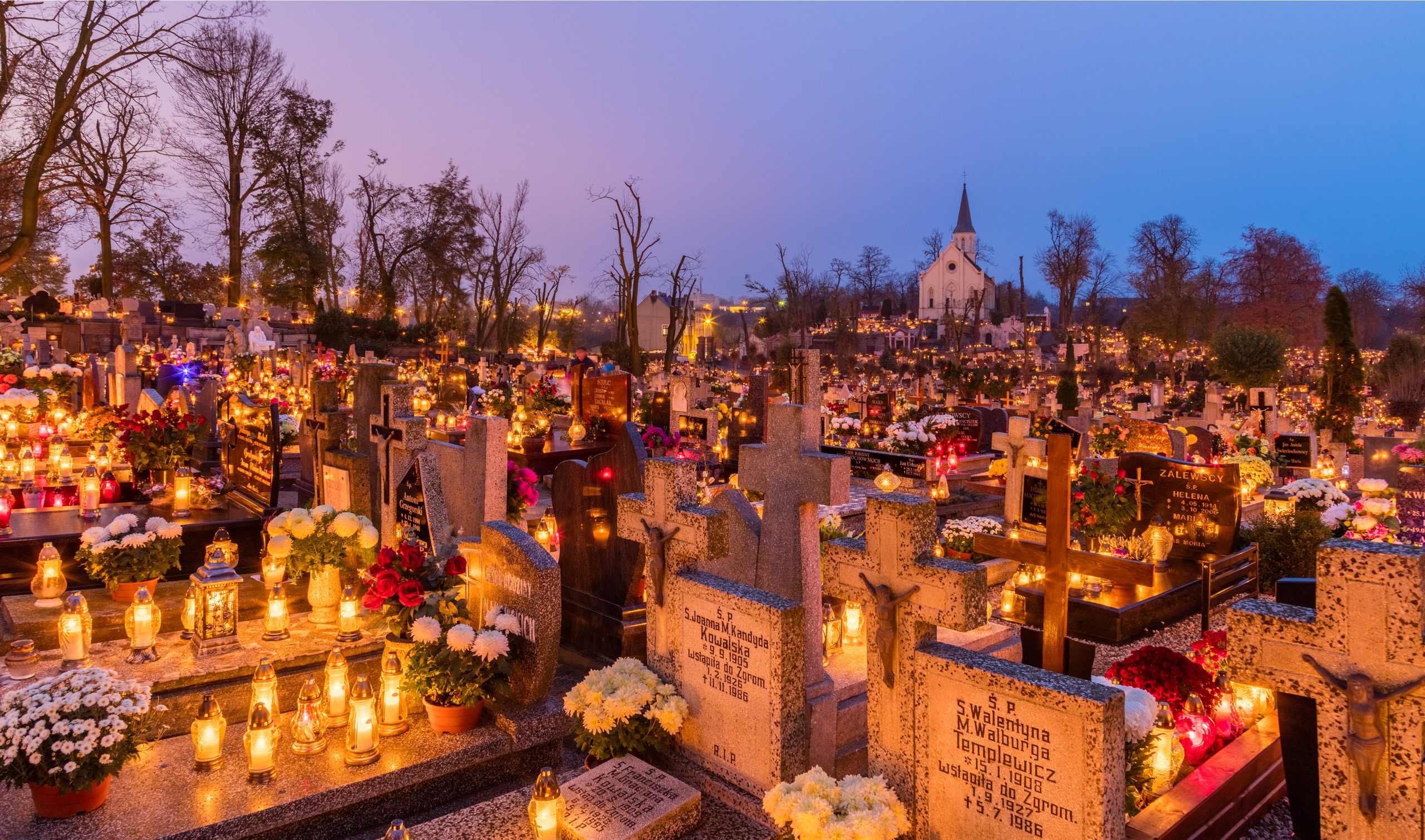
It is apparent to everyone that the observance of Halloween (a key part of Allhallowtide) has become overwhelmed by a climate of fear, death, and occult symbolism in the culture. It is also quite obvious that Halloween is a sacred word and a sacred day in the liturgical life of the Church. Many Christians are left bewildered and, sadly, rather clueless as to the true story about Halloween. As a result, this time of year is a time of worry and fear.
However, this is not the way it is supposed to be. Viewing Halloween with fear is contrary to the mind of the Church, and it is a sure way to miss out on the abundance of grace and the many opportunities for meritorious works of charity made available by the Church.
The corruption of Halloween is the result of many factors: the work of the “enemies of the Church,” the collapse of a living faith among most Catholics, and the imposition upon the culture of a counterfeit occult-influenced season…all of which we must now vigorously oppose.
The truth about Halloween must be proclaimed. The source of its corruption must be named and understood. Only then can the Church effectively restore Allhallowtide to its place of honor and power and dignity.
To assist in this effort, and to help stimulate a vigorous conversation within the Church about the matter, I wrote Exorcising Halloween. My intellectual journey on this topic has been a long and slow venture. This is the eighth book I have written, completing it in my fifth year working full-time in my Catholic publishing apostolate, Slaying Dragons Press. However, though it was published recently, in November of 2025, I conducted this research every October in my ten-year career as a high school Theology teacher (2011-2021). Every year, as Halloween approached, the students would have their questions…and I never felt like I had a solid and satisfying grasp on how to explain what was good and bad about Halloween.
Conversations among Catholics often devolve into superficial concerns: whether trick-or-treating is acceptable, what kids should dress up as, is it okay to have fun with the spooky, can kids visit haunted houses or amusement parks dedicated to fear, and similar issues. The real problem is typically not discussed. Often, it seems, most Catholics are not even aware of the real problem. This “real problem” involves the work of the Church’s enemies to eradicate her feasts and hide the Church’s inspiring teaching about the power of those Feasts.
As countless Popes have warned, the “enemies of the Church,” over the last five hundred years, have orchestrated, through a “wicked conspiracy,” “a most deadly war” intended to “overthrow the supernatural order” and strip from the nations of Christendom the blessings of the Redeemer, “little by little” banishing the truths of the Catholic Faith from every public institution.[1] The “enemies” and this conspiracy are known as Freemasonry.
As if it were not enough for these “enemies of the Church” to seek to “overthrow utterly Christ’s kingdom itself,” these men have also gone a step further, enacting a plan which directly connects these anti-Catholic efforts to our current concerns about Halloween. As Pope Leo XIII stated, these wicked men are endeavoring “to bring back after a lapse of eighteen centuries the manners and customs of the pagans.” Regarding this double effort, the Holy Father added, “In this insane and wicked endeavor we may almost see the implacable hatred and spirit of revenge with which Satan himself is inflamed against Jesus Christ.”[2] When we see the cultural displays of the occult and scenes of horror as amusement in the name of “Halloween,” know that an enemy has done this (Matt. 13:28).
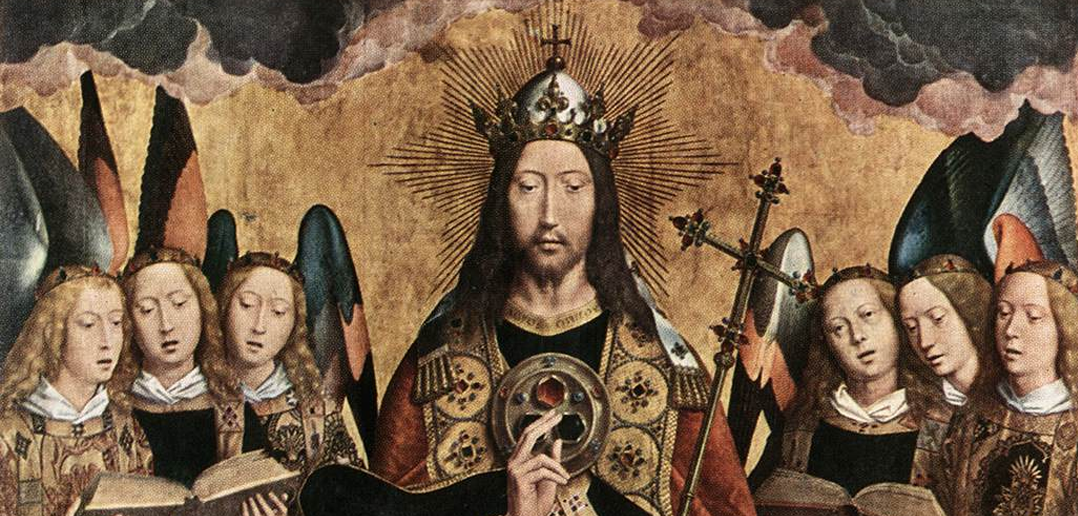
When I finally had time for what would be my first round of deep research on Halloween, it was the year 2021. What was special about that year is that another important feast day fell on Halloween – the Feast of Christ, the King of All Nations. Providentially, my research was inspired by this overlap of feasts, which enabled me to understand how truly great the Church imagined the triduum of Allhallowtide to be.
Pope Pius XI, in 1925, established a new and universal Feast of Christ the King of all Nations as a challenge to the growing secularization of the world, brought about principally by the malicious work of Freemasonry. He intentionally placed this Feast on the Sunday prior to All Saints in order that, “Before celebrating the triumph of all the Saints, we proclaim and extol the glory of Him who triumphs in all the Saints and in all the Elect.”[3] It could be understood to be a prelude to this triduum.
When Catholics sit down and prayerfully read and reflect on the liturgy for Christ the King, comparing it to the liturgy of All Hallow’s Eve, and the liturgy of All Saints, a unified purpose becomes clear: on these days, the Church desires to proclaim to all her children, and to all the world through them,that Christ has conquered the Kingdom of darkness and has ransomed mankind from the grip of Satan, healing us by the immense love and power which pours forth from His Sacred Heart. This is the mind of the Church regarding these feasts.
In that same encyclical (Quas Primas), the Holy Father articulates the reasoning behind the Church’s feast days. He powerfully stated,
Man is composed of body and soul, and he needs these external festivities so that the sacred rites, in all their beauty and variety, may stimulate him to drink more deeply of the fountain of God’s teaching, that he may make it a part of himself, and use it with profit for his spiritual life.
Further, he declared:
For people are instructed in the truths of faith, and brought to appreciate the inner joys of religion far more effectually by the annual celebration of our sacred mysteries than by any official pronouncement of the teaching of the Church. Such pronouncements usually reach only a few and the more learned among the faithful; feasts reach them all; the former speak but once, the latter speak every year – in fact, forever. The Church’s teaching affects the mind primarily; her feasts affect both mind and heart, and have a salutary effect upon the whole of man’s nature.
The collapse of knowledge regarding the purpose of Halloween, and of the culture’s proper celebration of it, reflects the work of Freemasonry “to remove all traces of religion from families, schools, laws, and institutions.” Aware of the efficacy of the Church’s feast days, it should be no surprise to see this “wicked conspiracy” seek to impede their proper and devout observance.
The flow of grace passes through the ordinary means of salvation established by Christ and entrusted to His Church: the Sacraments, the liturgical life, and the sacramentals. It is essential that these means of grace be embraced by the faithful with devotion. Without this internal movement of faith, the power of God is locked away. And He did not do many mighty works there, because of their unbelief (Matt: 13:58).
When, at Halloween, the children of the Church are distracted by fear and the spectacles of the devil and the enemies of the Church, they become deaf to the calls of Holy Mother Church. Fear is a classic and effective instrument of Satan’s work of confusion and distraction.
Halloween is a call from the Church to prepare the way for the Lord, whose victory through His Saints will be celebrated the next day. It is a call that echoes the triumph of Christ the King over the works of darkness. It is a day of preparation and fasting, a day of prayer and meditation, a day of reflection on the Day of Judgment and on the life to come.
Everything we do on Halloween should be inspired by the Church’s theology and liturgy, her history and her admonitions, in the spirit of the Gospel whose commands are fulfilled by the Church’s life and activity. All debates about what should we do with Halloween should first begin with these questions: How does the Church want us to view Halloween? What is the purpose of Allhallowtide?
If we begin from these truths, all of our customs and festivities will be infused with the sacred and with the power of grace. The dark shroud of the counterfeit culture, which seeks to suffocate our festivities, will be burned up by Him from Whom, as the Gospel on Halloween announces, power came forth and healed them all.
[1] Quod Apostolici Muneris, Pope Leo XIII, 1878.
[2] Humanum Genus Pope Leo XIII, 1884.
[3] Quas Primas, Pope Pius XI, 1925.