
Prominent among recent comments on the current impasse between the SSPX and the Vatican over the Society’s planned episcopal consecrations have been those of Bishop Athanasius Schneider. His intervention here was rightly described by Eric Sammons in a recent “Crisis” podcast as coming from the heart of a true shepherd. The eloquence and sense of urgency in his words reveal a deep and charitable concern for the souls of the multitude of Christ’s flock affected by this new and perilous standoff.
His Excellency sums up his proposal for resolving this crisis in the following words: “The Holy See should bring the SSPX in, offering at least a minimum degree of Church integration, and then continue the doctrinal dialogue.” He concludes with a brief “Fraternal Appeal” to Pope Leo XIV that respectfully pleads with the Holy Father to seize this opportunity to be a true ‘bridge-builder’ (pontifex) by granting a papal mandate for the episcopal ordinations. That, in Bishop Schneider’s view, will be the first essential step in “bring[ing] the SSPX in”.
While I, and no doubt nearly all OnePeterFive readers, fully share Bishop Schneider’s longing to see an end to this 50-year rupture between the Society and the See of Peter, I am afraid his proposal looks highly problematical once we try to envisage how it would actually work. The devil, as they say, is in the details.
Let’s start with the “doctrinal dialogue” that would “continue” after the new Society bishops have been ordained with papal permission. Bishop Schneider sees it focusing on various “ambiguities” in the Vatican II documents on topics such as “religious liberty, ecumenism and collegiality”, as well as “doctrinal imprecisions of the Novus Ordo Missae.” But I doubt that the Society itself will agree to dialogue on those terms, for two reasons.
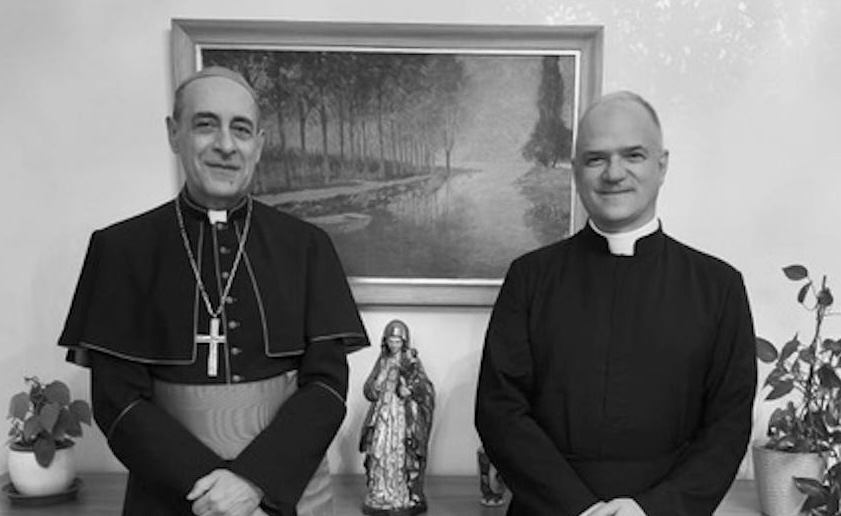
First, its Superior, Fr. Davide Pagliarani, in his reply to the offer made by DDF Prefect Cardinal Victor M. Fernández after their February 12 meeting, has insisted that the core problem with the Vatican II texts lies deeper than just “ambiguity”. Rather, for him and the Society, some of them are unambiguously heterodox. And since the orthodoxy of these texts and the legitimacy of the Novus Ordo are, from the DDF’s standpoint, non-negotiable truths and so ‘off the table’ for discussion, Fr. Pagliarani foresees that further doctrinal dialogue will be fruitless. In his letter to Cardinal Fernández of February 19, 2026, the SSPX Superior states:
We both know in advance that we cannot agree doctrinally, particularly regarding the fundamental orientations adopted since the Second Vatican Council. This disagreement, for the Society’s part, does not stem from a mere difference of opinion, but from a genuine case of conscience, arising from what has proven to be a rupture with the Tradition of the Church. . . . I therefore do not see how a joint process of dialogue could end in determining together what would constitute “the minimum requirements for full communion with the Catholic Church”, since—as you yourself have recalled with frankness—the texts of the Council cannot be corrected, nor can the legitimacy of the liturgical reform be challenged (emphasis added).
Indeed, Bishop Schneider himself, in an interview with Inside The Vatican’s Robert Moynihan posted several days after his ‘Fraternal Appeal’ to the Holy Father, admitted that he too believes several conciliar texts are worse than ambiguous. He affirmed that these expressions “are not compatible with Tradition” and are “evidently, objectively, not correct, doctrinally”, and so simply need to be “corrected” rather than just explained or clarified.
The second reason I think the SSPX will not find Bishop Schneider’s proposal for “continuing dialogue” with the DDF feasible is that the Society has in effect said, “Been there, done that. Doesn’t work”. For Pagliarani’s letter to Fernández continues as follows:
[W]e cannot ignore the historical precedents of efforts made in this direction. I draw your attention to the most recent: the Holy See and the Society had a long course of dialogue, beginning in 2009, particularly intense for two years, then pursued more sporadically until 6 June 2017. Throughout these years, we sought to achieve what the Dicastery now proposes. Yet, everything ultimately ended in a drastic manner. . . . [T]he unilateral decision of [CDF Prefect] Cardinal Müller. . . solemnly established in his own way ‘the minimum requirements for full communion with the Catholic Church’, explicitly including the entire Council and the post-Conciliar period. This shows that, if one persists in a doctrinal dialogue that is too forced and lacks sufficient serenity, in the long term, instead of achieving a satisfactory result, one only worsens the situation.
Let’s turn now from the question of theological dialogue to other aspects of Bishop Schneider’s proposal for “bringing in” the SSPX. He is asking Pope Leo to begin this process of “minimal integration” by granting his mandate for their upcoming episcopal consecrations. Well, there would of course need to be some prior agreement between the Holy Father and the Society regarding the conditions under which this papal mandate can be given.
Now, the only condition Bishop Schneider has proposed concerns a profession of faith: he recommends that the new Society bishops be allowed to make the Tridentine Professio Fidei, which all the Vatican II Fathers professed at the beginning of the Council. He is presumably proposing this, rather than the current (1989) Profession of Faith now required of all other candidates for the episcopacy, because the SSPX clergy will not profess the latter version.That’s because it adds a clause which, while perfectly traditional in itself, would now, after Vatican II, require their “adherence” to certain conciliar affirmations that they consider unorthodox. The clause reads, “I adhere with religious submission of will and intellect to the teachings which either the Roman Pontiff or the College of Bishops enunciate when they exercise their authentic Magisterium, even if they do not intend to proclaim these teachings by a definitive act.”
Now, is it likely that Pope Leo would agree to this unique concession for the Society’s bishops while all other potential Catholic bishops and theology professors will still be required to solemnly profess the above clause in order to assume their new ecclesiastical offices? After all, there are plenty of liberal bishops and theologians round the world who also resent having to profess their assent to magisterial teachings (but who do so anyway – often insincerely – for the sake of their careers). So almost certainly, foreseeing howls of protest from round the world complaining that this doctrinal “double standard” is “rewarding disobedience” with a special privilege, Leo XIV will not accept Bishop Schneider’s proposal.
The “minimal integration” requested by Bishop Schneider will also require some prior agreement on practical, pastoral issues. For the Holy Father could not responsibly grant the requested papal mandate along with a blank check for the new SSPX bishops to then go off and do whatever the Society wants them to do. By both divine and canon law, all clergy need a ‘mission’ from church authority in order to minister to the faithful. The Council of Trent condemned with anathema the proposition that clerics “who have been neither rightly ordained nor sent by ecclesiastical and canonical power, but come from elsewhere, are legitimate ministers of the word and of the sacraments” (Denzinger 967).
So is there any possible canonical mission that Leo might grant the SSPX bishops that would be acceptable both to them and to all the diocesan bishops whose rights the Holy Father must respect? I can’t imagine one. The SSPX clergy have always claimed that the profound, ongoing crisis of faith, morals and liturgy afflicting the post-conciliar Church constitutes the canonically recognized “necessity” (c. 1323, 4o) that allows them to violate ecclesiastical laws requiring full obedience to the pope and diocesan bishops. But it is obvious that Pope Leo will not accept that interpretation of canonical “necessity” any more than his predecessors since Paul VI have done. And it is equally obvious that the SSPX will not renounce it! Indeed, the Society’s whole purpose in seeking a papal mandate for new episcopal consecrations is so that under this banner of “necessity” their clergy may continue indefinitely to work in any diocese they like, whenever they like, running chapels that offer a full ministry of word and sacraments in total disregard of the local diocesan bishop.
In short, the SSPX will not be satisfied with anything other than the kind of blank check for unrestricted pastoral ministry that no pope could ever sign off on. Tragically, this and the other obstacles we have identified above show that Bishop Schneider’s heartfelt proposal for “minimal integration” is quite unrealistic. We can expect the Society to proceed on its way independently for a long time yet, undeterred by whatever papal decrees of excommunication and schism may rain down upon its clergy after July 1st 2026.