
Soldiers deserve the best sacramental support the Church can give—including the Mass of the Ages. David Sonnier’s “Rites and Wrongs” shows how the Army has denied it to them, and explains how it can and should be easily restored to them.
Imagine a soldier—decorated, diligent, obedient—who has come to believe what the Church believes, and asks only for the form of worship handed down by his forbearers. His request, on behalf of himself, his family, and the men around him, is noted. It is forwarded. It is studied. Seasons turn; the file thickens; every form of worship in the world finds accommodation among the military chaplains except for this particular form that the Pope himself has officially asked all “bishops and of all those engaged in the pastoral ministry in the Church” to be generous with. His requests are denied repeatedly. He is never really persecuted—he is managed.
This is the scenario in which an officer named David Sonnier found himself in as he repeatedly made respectful requests for the Latin Mass in the mid-1990s, as he narrates in his new memoir, Rites and Wrongs: One Man’s Struggle for the Latin Mass in the U.S. Army.
When I first encountered the Latin Mass in Berlin—there was only one whose clergy were in communion with Rome for all of the German capital’s 300,000 Catholics, founded with the personal support of the future Pope Benedict XVI—the rituals of the Tridentine Mass at first appeared as superfluous props to me, until I experienced them myself, following them as part of the Mass—as an example of Augustine’s counsel, “unless you believe, you shall not understand.” I learned it through my knees before I learned it through my head. Now, I can no longer imagine entering fully into the Mass without these many aids, which are anything but superfluous.
I first heard about the events described in this book from its author some time in 2022, when David Sonnier and I were both still teaching computer science at a small liberal arts college in Arkansas. My family and I had moved there a couple of years earlier from Berlin in my native Germany. At the time, we were still fairly recent converts to Catholicism, and we had only just discovered the Traditional Latin Mass. David and his family, on the other hand, had attended the old Mass since 1993 when he was still a soldier in the U.S. Army. I knew that he had tried hard to make a Latin Mass available to military personnel, according to the provisions of the motu proprio then in force (Ecclesia Dei Adflicta). In 2022, he was a member of a flourishing, fast-growing FSSP parish, whose Gregorian schola and choir he directed, bringing the music of the ages to the Mass of the Ages, and contributing greatly to the beautiful Masses celebrated there.
What I picked up in our conversations should have prepared me for what I was to read in Rites and Wrongs but, frankly, it did not. When I finally read the book, I was shocked: I read about a six-year struggle with bureaucracy spanning multiple locations in the US and in Europe, and involving Church and Army leadership, a growing number of Army chaplains, and even the Vatican. The more I read, the more absurd and Kafkaesque the process appeared from beginning to end.
The author must have anticipated this reaction—after all, the book registers his own surprise at the distractions, deceptions, and diversions thrown at him and the seemingly small favor he requested, which was, in essence, this: can we please have a Latin Mass anywhere on U.S. Army premises? His skillful tactical response was to document everything meticulously. Because of the author’s direct, personal writing style, this does not turn Rites and Wrongs into a heavy academic tome but instead the paper trail grounds the incredible story in concrete evidence that the reader can weigh for himself.
As I read on, I was no longer just following along with pain in my heart but I was beginning to understand what had happened to the postconciliar Roman Rite and, consequently, to the Church that had replaced the Mass of the Ages with a pale reflection of it, at least in most churches that I had attended—the new Mass as commonly celebrated: devoid of Gregorian chant, robbed of Latin, and steeped in modern sensibilities and practices. I had already heard many of the facts and much of the discussion that was alive and well among traditional Catholics of our church but I had never, until reading Sonnier, quite been able to understand the hostility, passion, and outrage that so small a request could provoke in its opponents.
That hostility cannot be explained as caused by administrative issues: no budget was at stake, and no rule forbade the request. The key to understanding it is the insight that today’s conflict is the battle between St. Augustine’s Two Cities “formed by two loves: the earthly by the love of self, even to the contempt of God; the heavenly by the love of God, even to the contempt of self” (De Civitate Dei XIV.28). In a world already infected with the Arian heresy, Augustine explained the rift between the citizens of the world, who “became fools, and changed the glory of the incorruptible God into an image made like to corruptible man,” and the City of God where “there is no human wisdom, but only godliness, which…looks for its reward in the society of the saints, of holy angels as well as holy men, ‘that God may be all in all.’”
This is the conflict of Modernism within the Church. Being traditional means being conscious of the many temptations of modern man, especially during Mass, when we are closest to God, and rejecting them in favor of the wisdom and helps we have inherited. These temptations are countered by the Latin Mass, surrounded by what might appear to others as tedious props or empty rituals, including veils for women, modesty of attire, altar boys only, and perhaps most important of all, receiving the Eucharist kneeling on the tongue from a priest only. As so many of us have discovered, these oft-maligned “empty rituals” are actually rich in meaning and significance, and they encompass the manner in which men and women have worshipped Our Lord and Savior Jesus Christ throughout at least a dozen centuries in Western Europe, and often much longer than that.
David Sonnier, in his book, does not attempt a theological account of the frequent hostility leveled against the Latin Mass. Instead, he presents a case study, grounded in historical truth. It is not pleasant but it gave me much needed clarity. He points out that the traditional practices were never the property of one faction—the use of Latin rather than the vernacular as the norm, to take only one example. What Sonnier fought for is not a tribal marker. The “Traditional Latin Mass,” as we have come to call it, is our spiritual heritage and patrimony, and it should be available within any parish in which there is sufficient interest. This was the solution that Pope Benedict XVI eventually put forward, a man who understood what makes for peace and for new life.
When the author of Rites and Wrongs gained this clarity himself, through a painful process that he describes in great detail, he was left with the question Augustine’s contemporaries must also have asked of him: What now? Sonnier does not leave the question hanging: the book closes with concrete recommendations for improving the lives of Catholics serving in the U.S. military—above all, invite traditional priests into the Catholic chaplaincy and promote or at least allow traditional Catholic forms of worship on military bases wherever a demand exists.
None of this is “merely” history; all of it has contemporary relevance. As for the Army, Catholics were then, and remain, the single largest religious body in the armed forces, but priests make up only 8% of the roughly 3,000 chaplains across all branches. In 1997, while Sonnier’s requests were being scrutinized in order to be rejected on specious grounds, Fort Hood officially accommodated Wiccan rituals on post—an arrangement the Chaplain Corps itself defended (!), at the Pentagon level, against congressional pressure two years later. At the same time, the traditional Mass, which produces vocations at rates the rest of the American Church can only envy, was forbidden everywhere. Sonnier reports that even to this day it is rarely available and certainly not on Sundays or Holy Days.
Only recently I moved to a place without a Latin Mass at all—the nearest one is four hours away. I have to make my peace with the new Mass, and I do so while hoping and praying for an old Mass to arise nearby someday. Rome restricted the old rite again in 2021, and recent months have brought no thaw. Yet it is not too much to hope that a pope formed in the school of St. Augustine will let the Mass that spans all the ages come home from exile at last.
This is why Rites and Wrongs matters, and why I hope both Catholics who enjoy access to the Latin Mass and those who have never attended it will read this moving memoir. It is the story of a man who willingly followed every rule against men who wilfully followed none, an officer who pursued a small favor with great sanctifying consequences for a single reason he finally names: he had to do this in order to preserve his faith in the Army as an institution worth following and perhaps dying for. Soldiers work in the line of fire. Protected by their faith not from death but from hell, they deserve the best support the Church can give—in the barracks, on the battlefield, and beyond. As the epilogue of the book makes clear, it would be quite easy to do much better for them.
For those of us who inherited the old Mass without having fought for it, Rites and Wrongs is a debt acknowledged. It is also a reminder that a great treasure that was taken from us and nearly obliterated from the face of the earth is still present among us, due to the great personal sacrifice that many have made, both those who met with success and those who were stymied. This treasure deserves our continued support until every Catholic can claim the inheritance once again.
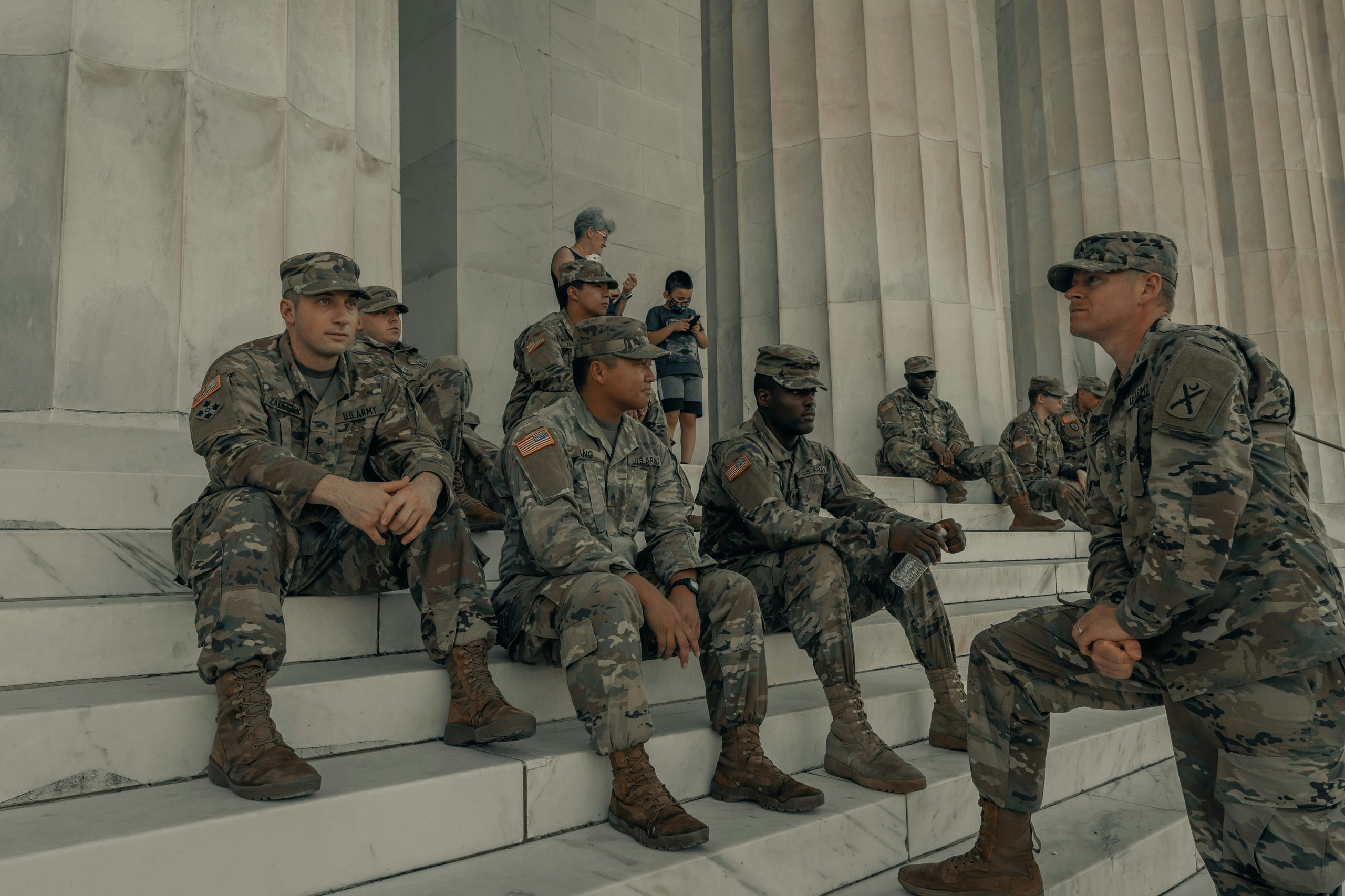
Photo by Clay Banks on Unsplash