
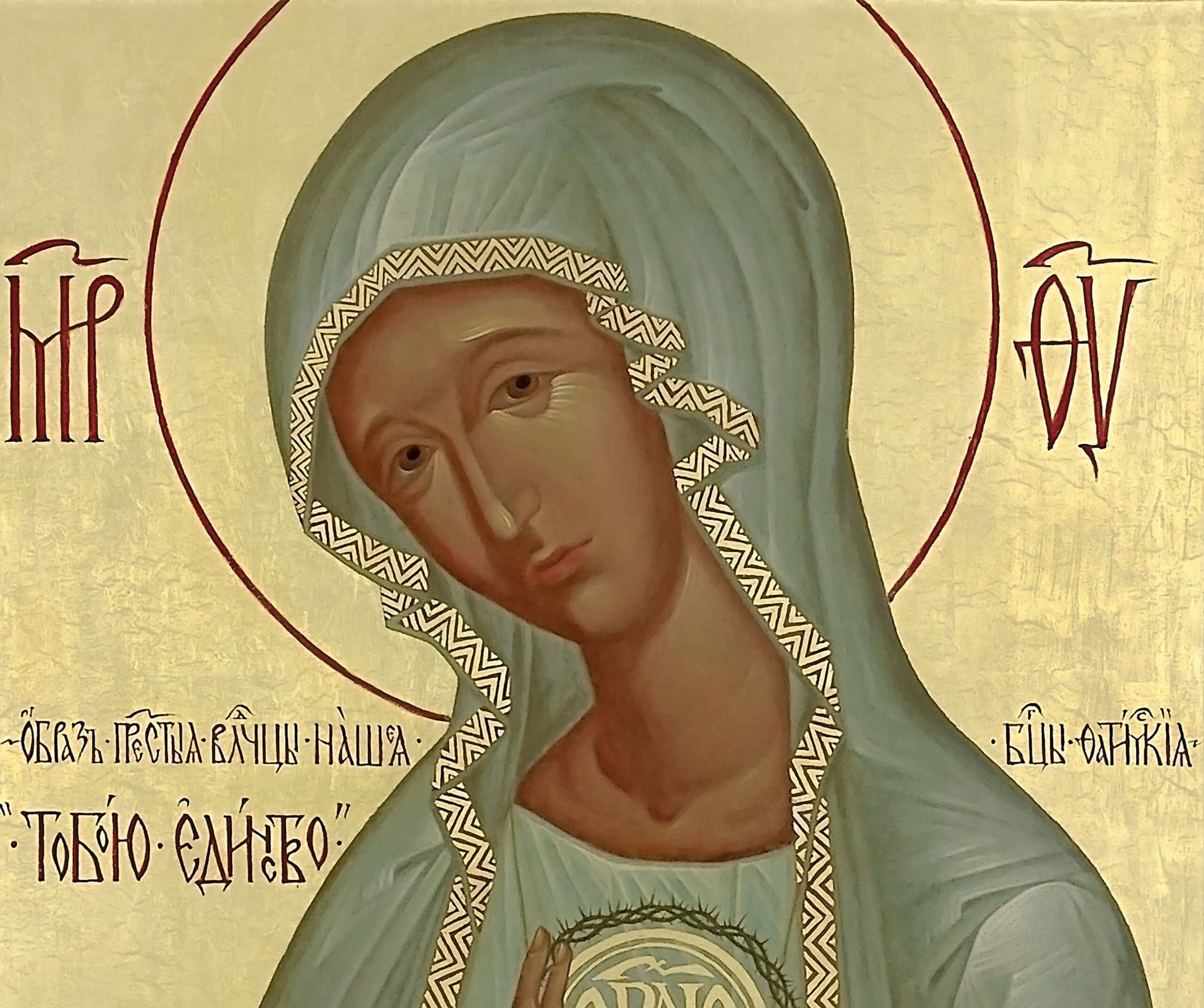


I’ve been praying about the impending break in Sacramental Communion which is threatened to occur on July 1st. As I’ve been working on our book about Russia and Fatima, I’ve been unexpectedly challenged in my spiritual life to allow the Immaculate Heart into my heart. I feel this great sorrow for the schism which may occur, and this rending of the Mystical Body of Christ, and yet I remember that the sorrow of the hearts of Jesus and Mary is so much more than I can possibly imagine.
And what happened in her first apparition on this day in Fatima, 109 years ago (which was “Fatima Sunday in Russian Orthodoxy”)? Our Lady asked the children if they were willing to enter her Immaculate Heart (which she would reveal the next month) by asking this piercing question:
“Don’t be afraid,” she said in a low musical voice, never to be forgotten. “I won’t hurt you!”
“Do you wish to offer yourselves to God, to endure all the suffering that He may please to send you, as an act of reparation for the sins by which He is offended, and to ask for the conversion of sinners?”
“Yes we are willing.”
“Then you will have much to suffer. But the grace of God will be your comfort.”[1]
As traditionalists, we face a great deal of suffering. Every Catholic of the Latin rite has experienced the great sorrow of the New Iconoclasm since Pope Pius XII imposed his will on the cherished traditions of Holy Week. J.R.R. Tolkien, one of our Trad Godfathers, said after the 1955 changes:
One feels a little dislocated and even a little sad at my age to know that the ceremonies and modes so long familiar and deeply associated with the season will never be heard again.[2]
And this sorrow has only multiplied since then, as we all well know.
It’s easy for us to blame everything on the Pope. Blame everything on the bishops. And obviously there’s blame to go all around on everybody.
Two Paths
There are two paths to take here. We can spend all our time complaining and thinking about other people’s sins. That is one path. Where does that path lead? Well, if you are spending all your energy thinking about other people’s sins, you will end up burning in hell forever. Why? Because you will become attached to the pleasure that comes from criticising others. Your brain is stressed because of this sorrow, but your brain can become addicted to dopamine – by means of our social media slave masters – so that your heart becomes hardened against sinners.
But here’s the good news, brethren in Christ. The good news is that Fatima has shown us a different path. This path helps us escape the fires of hell, and it also helps the poor sinners escape the fires of hell. But this path starts with that piercing question. You’ve got to truly turn, in your heart, to face the Mother of God herself and allow her to ask you that piercing question.
“Do you wish to offer yourselves to God, to endure all the suffering that He may please to send you, as an act of reparation for the sins by which He is offended, and to ask for the conversion of sinners?”
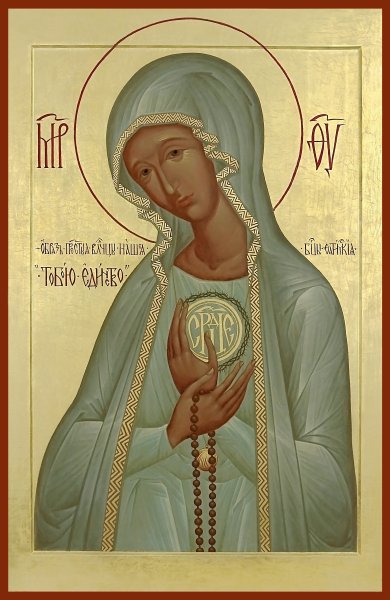
Look into her eyes, brethren. See her suffering heart. She is asking you this question right now, through me, even though I am unworthy. Allow her to ask you this question now, I beg you. What will be your answer? You can say “no, I’m not willing.” And how will this grieve Our Lady’s heart? How will this pierce her heart with yet more sorrows? And how will this imperil your own soul before the fires of hell? This is the first path – the path of complaining, effeminacy and focusing on the sins of others.
Or, you can look into Our Lady’s eyes and say “yes, I am willing to suffer and offer this up for sinners.” And what will be her answer?
“Then you will have much to suffer. But the grace of God will be your comfort.”
We will have much to suffer, brethren. But let us take heart – the grace of God will be your comfort. Here we consider the suffering of our hearts. We must understand that, unlike the Fatima children, our suffering is also a result of our own sin. Let us spend all our time in accepting the salutary discipline of Our Father in heaven as chastisement for our sins. And then let us consider the lives of poor sinners – they are in danger of hell. Let us accept the sufferings we face and offer it up for them. And there is good news in this from Fatima. “The grace of God will be your comfort.”
We will truly know comfort according to the words of His Majesty: blessed are those who mourn, for they will be comforted. Let us renounce forever the false comfort of our social media slave masters and their dopamine addictions which enslave us. Rather, let us accept the cross that Our Blessed Mother places in our hands – for our own sins and the sins of others – and understand that we will have much to suffer, but He will be our comfort.
This points to the fact that I stressed last month: there is a tradition that is actually more important than the Latin Mass, and that tradition is the “one thing necessary.” We see that Our Lady leads us into this tradition of mental prayer – she starts us on the daily, one third of the Rosary (that is, five decades), and then tells us to do mental prayer for 15 minutes every month to console her heart in the First Saturday devotions. Do you wish to consol her heart and also receive the comfort from God in your sufferings, and to know His will so that you can suffer well and inherit everlasting life? Then follow Our Lady of Fatima to the “one thing necessary” – perseverance in daily mental prayer.
I invite all readers to reflect on Fatima over the next six months of our Fatima anniversaries, which overshadow the current schism looming over the Latin rite Catholics. It seems to me we have a problem with Fatima if we are not wholly devoted to this spirit of reparation. Send submissions to me about Fatima so we can spend time re-committing our lives to the Theotokos of Fatima (onepeterfivesubmissions [at] gmail.com). Next month we will refrain from polemics about the SSPX and try to focus on Fatima’s heart: Eucharistic reparation. If you haven’t already, join the Crusade.
O Theotokos of Fatima, turn away the wrath of God from us, and spare us from this break in Sacramental Communion. Rather, soften hearts on every side, and shelter us in your Immaculate Heart from the bullets and arrows of the Errors of Russia. O Mary, Conceived without sin, pray for us who have recourse to thee, and those who have no recourse to thee, especially the enemies of Holy Church!
T. S. Flanders
Editor
Fatima Day
[1] William Thomas Walsh, Our Lady of Fatima (New York, NY: Image Books, 1990), 36., 50-2.
[2] Ben Reinhard, The High Hallow: Tolkien’s Liturgical Imagination (St. Paul Center, 2025), 27.