

I have a theory that if we study Medieval history enough and immerse ourselves in the period, we will come to a closer appreciation and understanding of our Catholic roots. That being said, I have comprised a list of the best books of the Middle Ages in this hope that modern man will be inspired by these acts of heroism, chivalry and honor that fill the pages of these novels.
In the wake of the Enlightenment, there was a revival in the study of the Middle Ages led by college professors all across England. This was implemented as a study of the student’s history.
What these professors did not foresee in implementing this course was a large number of their students converting to the the Faith of the Middle Ages: Catholicism.
When the Enlightenment was in full swing, the architects made sure that this time period would be villified as “The Dark Ages”.
But the men of the Middle Ages were not a set of faithless, gullible and simple brutes as they are often depicted today. They were practical men who were rooted in reality that was firmly founded on duty owed to God and country.
They knew who they were, where they had been, and they knew what God meant to them.
The men of the Middle Ages knew what it was to face death and fight for what they believed in. These men were in the habit of making incredible sacrifices for a higher good.
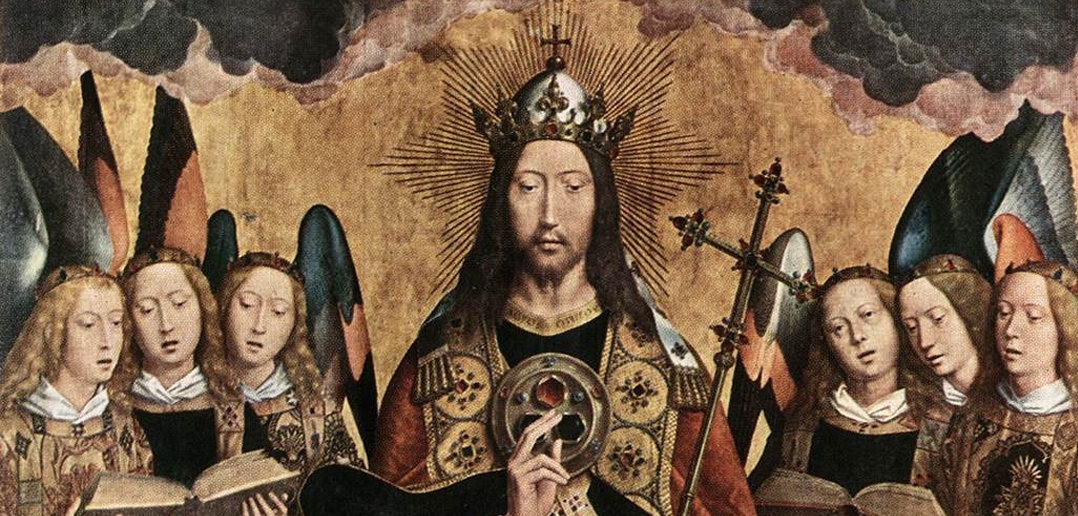
The Middle Ages begin with the 5th century, ending with the Protestant Revolt in the 15th century. They were years of crusades, study, and building cathedrals as well as the great feat of acquiring harmony between Church and State.
To riffle on that cathedral thought for a minute: G. K. Chesterton remarked that during the
Middle Ages, art was for God’s sake. In the Renaissance, art was for man’s sake. In the 19th century, art was for art’s sake. In the 20th century, no art, for God’s sake.
Therefore the works of literature below are works of art about the greatest age of art, the “age of faith.”
The Ballad Of The White Horse
One of the best books of the Middle Ages is G. K. Chesterton’s epic poem, The Ballad of the White Horse.
In this poem, he takes the reader to some of the earliest days of Briton, in the late 800’s when King St. Alfred the Great’s England is threatened by Danish invasion.
This is an important read because most other books of the Middle Ages mention the influence the Danes left behind them in England. Here you get the story told in the style of a ballad.
This story drives home the fact that Christian civilization is governed by faith and reason. Heathen nihilism is controlled by the ruling spirit of hate and superstition.
The differences between Christians and heathens is obvious when comparing their views on life and death. Christian civilization battles heathen lawlessness in Chesterton’s epic poem.
Beowulf
This is considered one of the oldest books of the Middle Ages.
This book has little historical significance exept for the fact of its ancient language and narrative.
This is a tale of a Scandinavian prince-warrior who responds to the Danes’ misfortunes by aiding them in the destruction of a monster which threatens their lands.
Having never been defeated in his life, Beowulf uses his God-given talents to aid the less fortunate. In his life, he faces three monsters, each in turn fall before his mighty strength.
Beowulf is, essentially, an allegory of the soul. The three monsters he faces are the world, the flesh and the devil. Beowulf is the soul which places all its trust in its Creator Who ensures victory.
This is an inspiring yarn of manly-virtue.
El Cid, God’s Own Champion
The honorary name “El Cid” is not given lightly to any knight. This title meant that in all Spain, there was no better man. This title was honored and this man was revered and feared by even the Moors.
Rodrigo Diaz is the one of the most famous Spanish people in history who has held this title for centuries and it identifies him more than his own name.
The inspiring biography, El Cid, God’s Own Champion, by James Fitzhenry has captivated audiences of all ages, boys and girls alike.
This epic hero lived chivalry to the fullest and inspires everyone who reads his life story to imitate his virtues as a Catholic champion.
The Cid’s heroic actions and efforts to undermine the Muslim invasion as well as combat the jealousy that was arising in his countrymen due to his success is truly met with the humility and patience of a martyr.
Exiled by his own king, Rodrigo Diaz set out to build a tiny province which lived almost at peace with the Infidel while the Spanish Christian held the upper-hand – a quest only The Cid could accomplish.
Ivanhoe
This novel’s important significance of this novel is the fact that Ivanhoe was the first historical fiction written.
This was one of the books of the Middle Ages which was written following the revival in the study of this era in the early 1800s. Scott set a pattern that every author after him (except Jane Austen) would make at least one historical fiction.
Returning home from the Crusade and representing the return of the faithful followers of King Richard is Wilfred of Ivanhoe, the disinherited son of a Saxon thane.
His father calls him disobedient; his childhood love, Rowena, is to be married off to his kinsman; his king is a captive in Austria; he returns home after a failed crusade—Ivanhoe seems to experience a weakness of circumstance, though not of character.
Under all these hardships, Ivanhoe consistently shows a chivalrous and noble character. He is not the dashing rough knight that many imagine Middle Age heroes to be, rather he is the simple, boyish hometown hero.
On the other hand, it is the nemesis, Sir Brian de Bois-Guilbert, whose fame has proceeded him. Ivanhoe and de Bois-Guilbert finally come head to head when Brian mingles another’s innocence with his villainy.
The Divine Comedy
The Divine Comedy is probably the most famous of all the books of the Middle Ages. It was written during the 14th century by Dante Alighieri.
Dante can easily be considered the Father of Poetry as it is recorded that he invented the writing of verse. His masterpiece, The Divine Comedy, was created with the purpose of showing how men’s actions appear in the sight of God.
Joan Of Arc
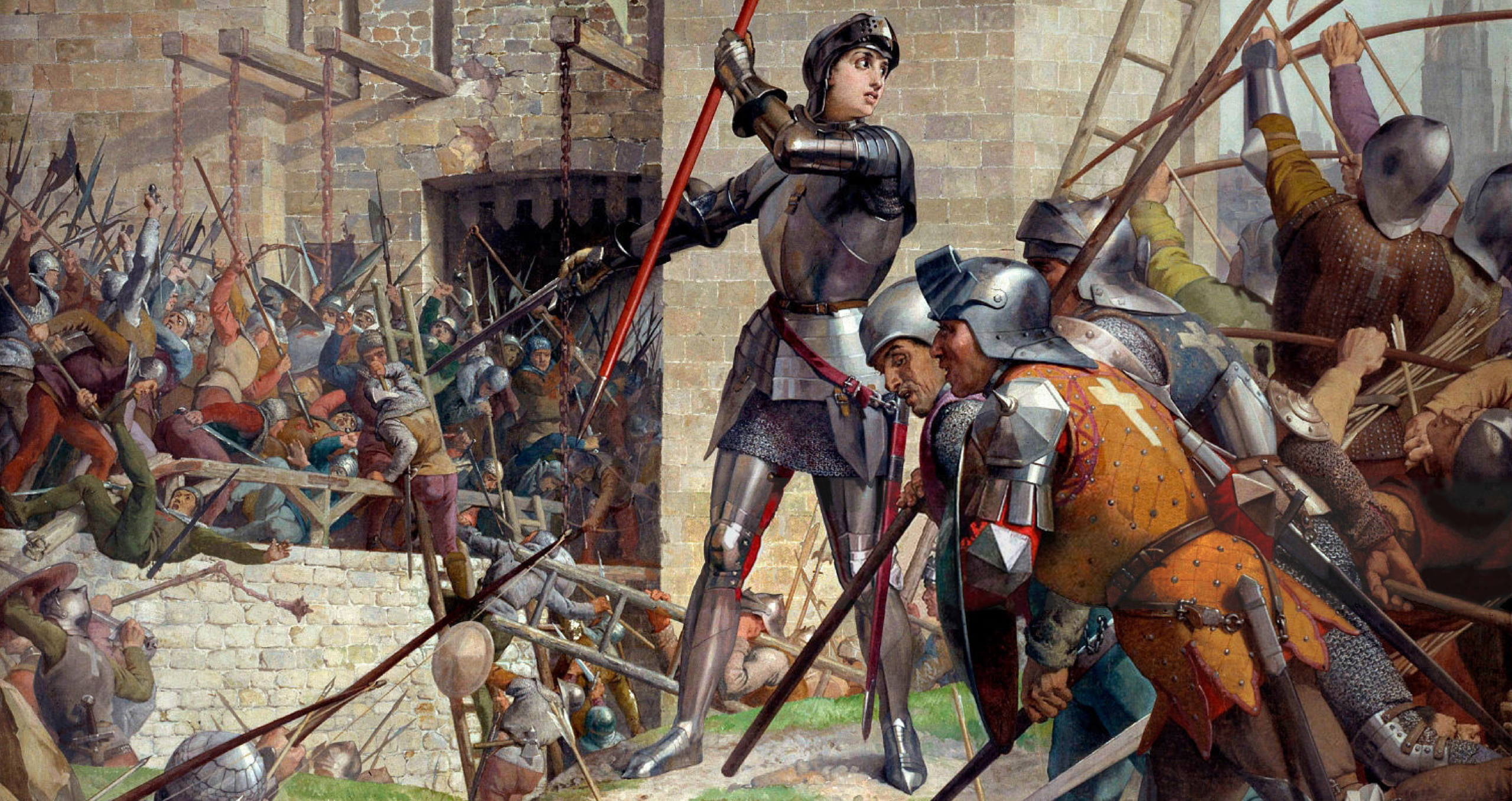
This list would not be complete without a novel about St. Joan of Arc. Did you know that Mark Twain wrote a beautiful biography on this saint? With his unique storytelling style, Twain writes as an eye witness making the story very interesting and moving.
Joan is the dreamer of Domrémy and she announces that she hears voices that tell her to free France. Joan refuses to put these voices aside and leaves her small country town and turns to the fields of bloodshed and ruin to save her country.
She is joined by fellow Domréminians who fight under her standard.
After she completes her task of raising the seige of Orleans and sees her king crowned at Rheims, she wishes to return to her home.
But King Charles VII does not appreciate all she has done for him, only how much she can do for him. He looks to her as a valuable general and will not allow her to return home.
Capture, injustice and martyrdom are dealt to her one blow after the other.
I have read this book three times and it never grows old. It is an easy read and a truly lovely story that will touch the hearts of everyone in the family.
Lances Of Lynwood
In Charlotte Yonge’s historical fiction, The Lances of Lynwood, Eustace quickly learns that not every knight exercises chivalry and honor as easily as he does.
Eustace leads a quiet life as an overaged page in Lynwood Keep. Eustace may be small and rather a sorry sight to his brother, Reginald, but he has a perfect personality and character.
Not only is he trying to prove his worthiness of knighthood to his family and prince, but also thrown on his plate is an unexpected guardianship role to his nephew. He experiences dishonorable treatment and betrayal with nowhere to turn for help.
The honor and goodness of the hero and the contrasting villainy of the foe make this an excellent book. The reader sees the many injustices suffered by Eustace while he responds with his uncomplaining nature and his unavenging attitude toward his enemies.